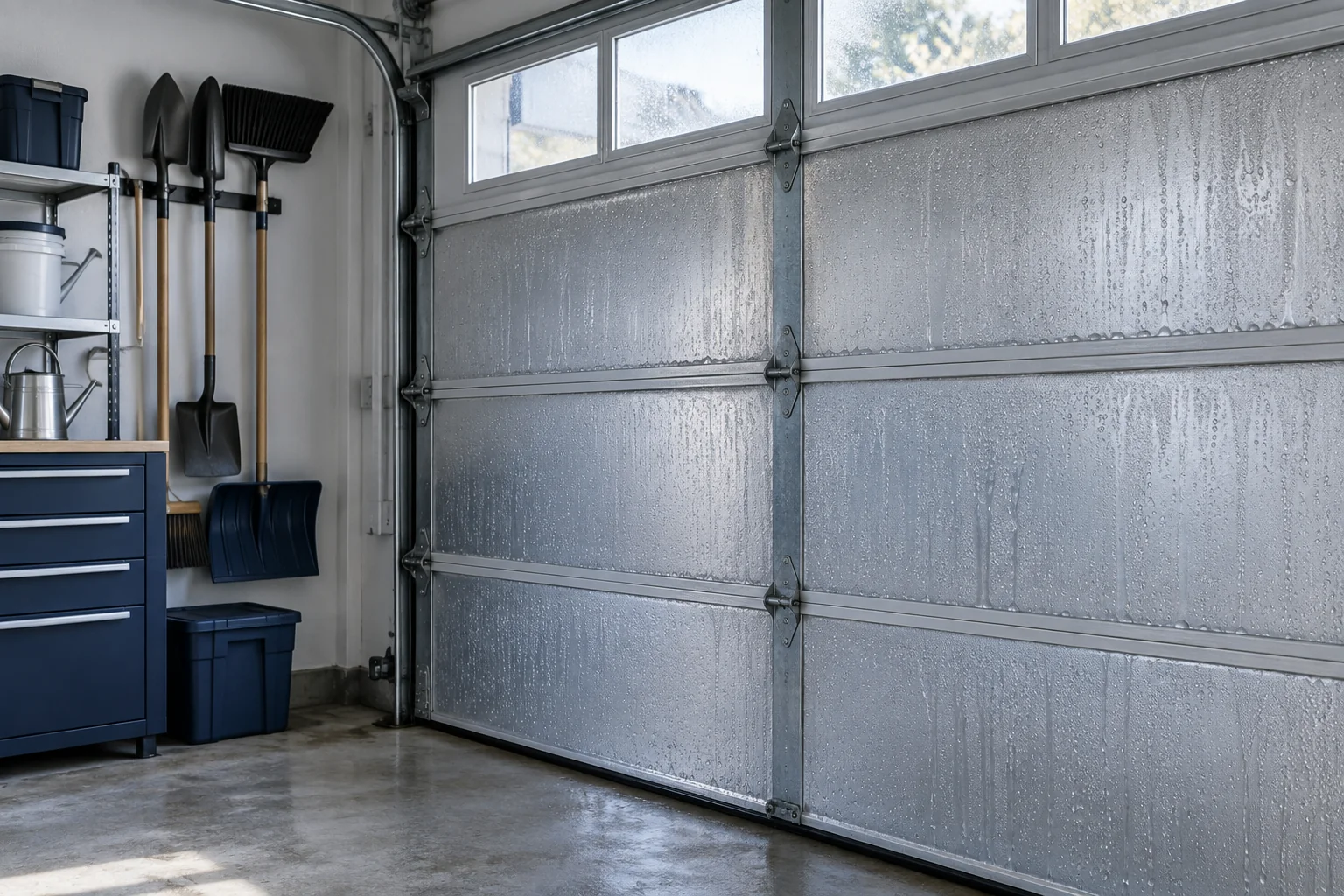
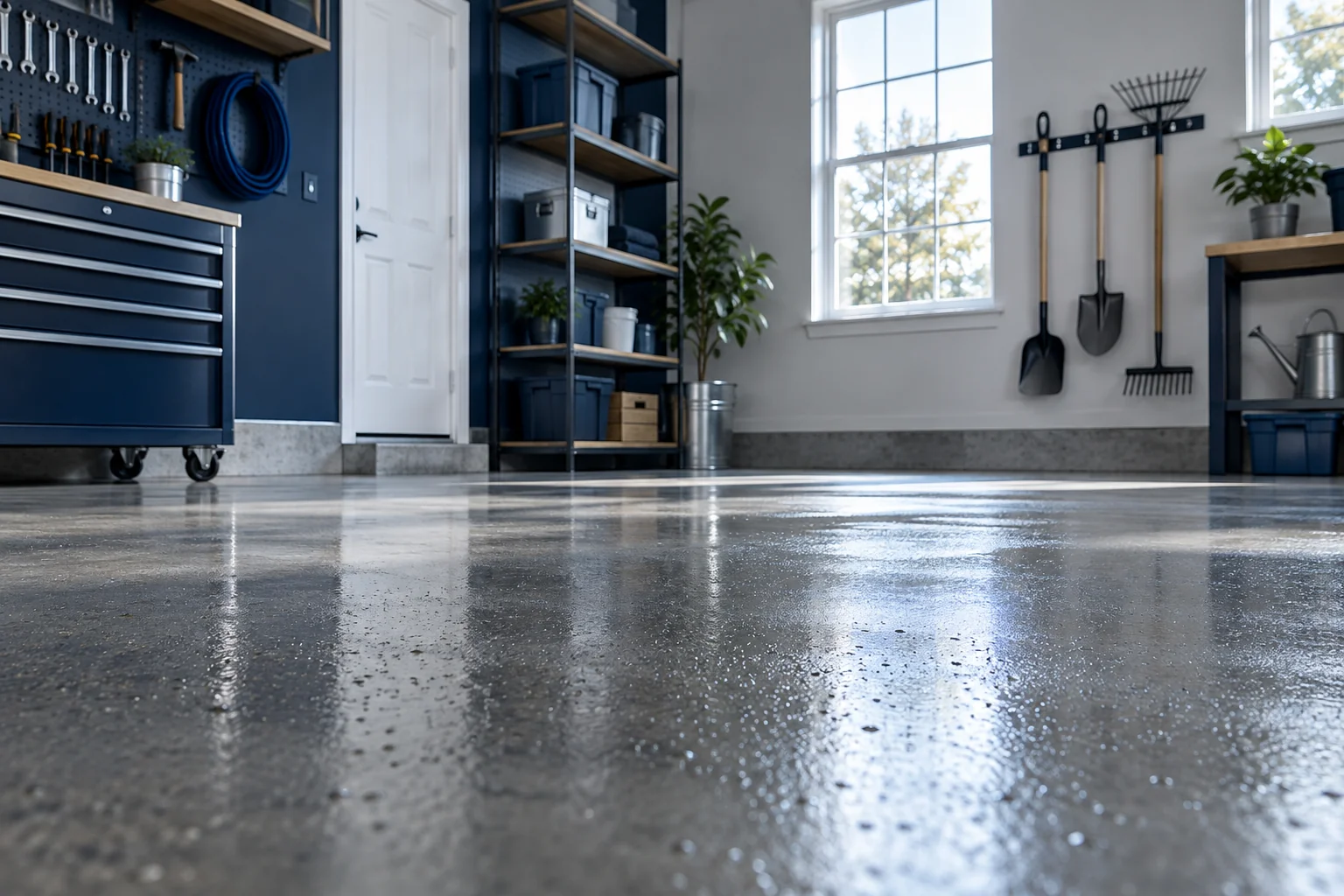
Thermal mass lag and sweating slabs
Garages present a unique thermodynamic environment. Unlike the finished living space above, garages typically feature unconditioned air, large uninsulated metal sectional doors, and a massive ground-contact concrete slab.
Because concrete has high thermal mass, a garage floor slab warms up much slower than the surrounding spring air. When a sudden warm, humid weather front rolls in, outdoor air enters through loose door seals or open garage doors. The cold slab surface temperature remains well below the ambient dew point, causing rapid, widespread moisture condensation known as Sweating Slab Syndrome (SSS). Additionally, parking rain-soaked or snow-covered vehicles inside introduces 1 to 5 gallons of liquid water that evaporates into the enclosed air, rapidly spiking internal relative humidity.
Garage diagnostic decision matrix
| Observation in garage | Underlying physical cause | Actionable diagnostic guide |
|---|---|---|
| Entire concrete floor feels slick and wet on warm spring days | Thermal lag condensation; cold slab temperature below outdoor dew point | Sweating Floor vs Groundwater Seepage → |
| Droplets beading on uninsulated metal overhead door or tin roof | Rapid radiative night-time cooling causing surface dew point condensation | Garage Condensation Causes & Fixes → |
| Rust rapidly forming on stored hand tools, bicycles, and lawn equipment | Chronic relative humidity exceeding 65% with stagnant unventilated air | Preventing Storage Rust & Dampness → |
| Water pooling in specific tire track areas after driving in rain | Vehicle runoff evaporating into enclosed space; needs floor squeegee management | Managing Vehicle Moisture Loads → |