01Map where water appears
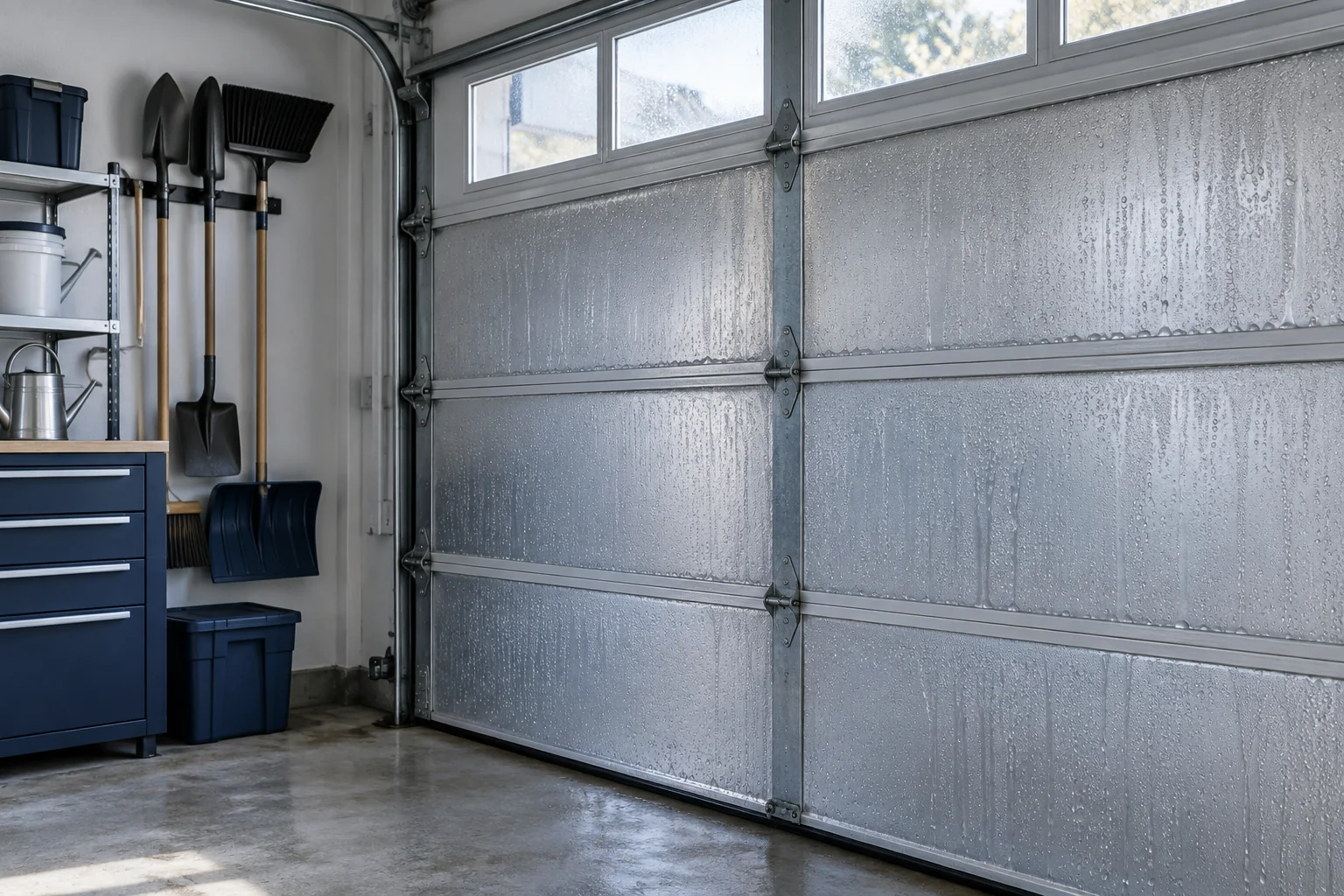
Note whether moisture forms on the roof underside, metal door, concrete slab, cold tools, or stored boxes. Check after rain, a rapid warm-up, parking a wet vehicle, and running any appliance.
Confirm that the water is condensation rather than a roof, plumbing, or door leak.
02Use dew point to test the explanation
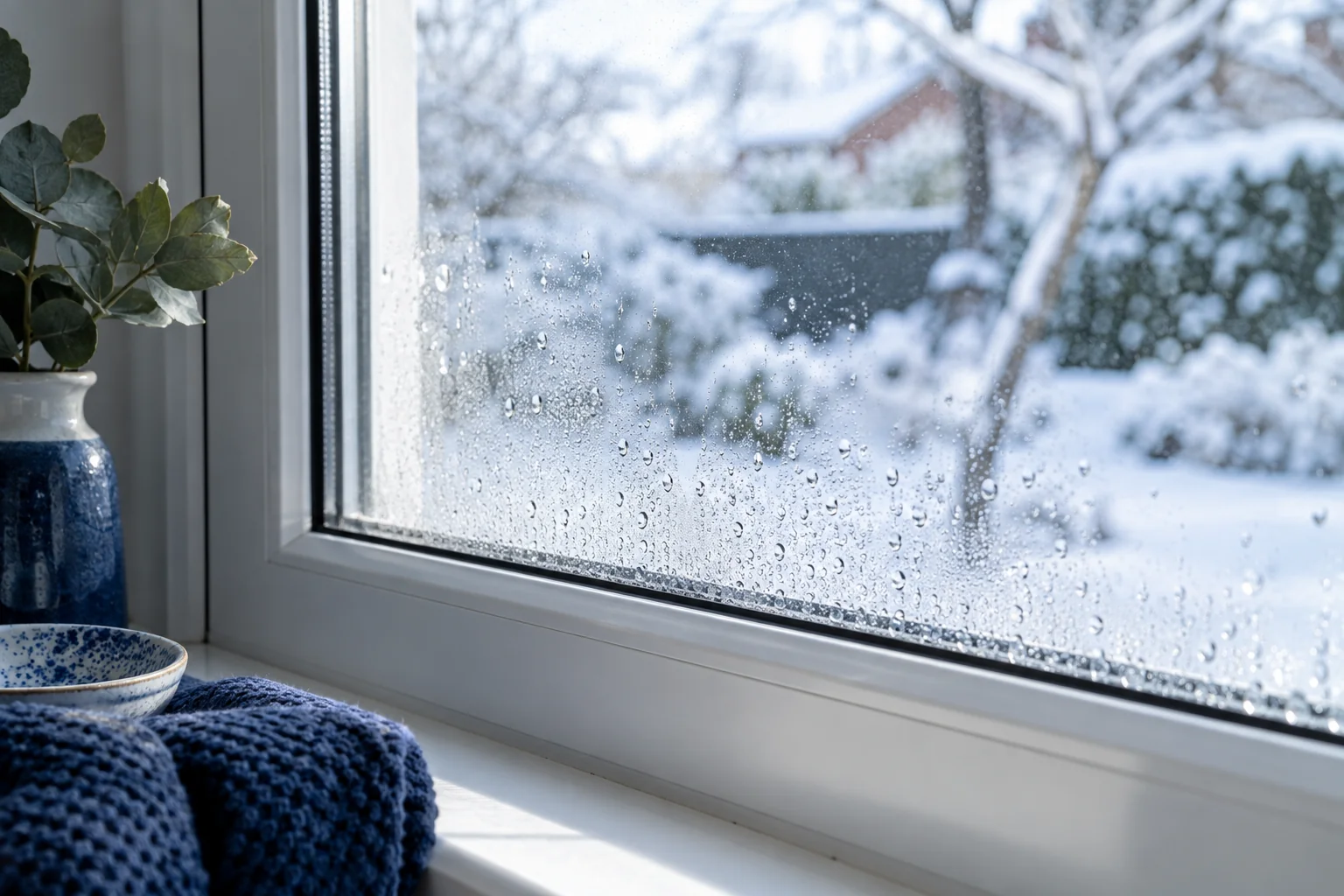
Record garage temperature and relative humidity, then estimate dew point. Condensation becomes possible when a surface is at or below that temperature. Metal objects and roof panels can cool faster than surrounding air.
An infrared thermometer can provide a screening reading, but shiny surfaces can mislead. Follow the instrument instructions.
Related check: Dew Point and Condensation: A Homeowner’s Practical Guide →
03Control moisture sources and air paths
Remove wet materials, manage rainwater, and avoid drying laundry or venting appliances into the garage. Weather-sealing and insulation choices must preserve required ventilation, combustion-air provisions, fire separation, and door operation.
Never run a vehicle engine in a closed garage.
04Choose equipment after the pattern is clear
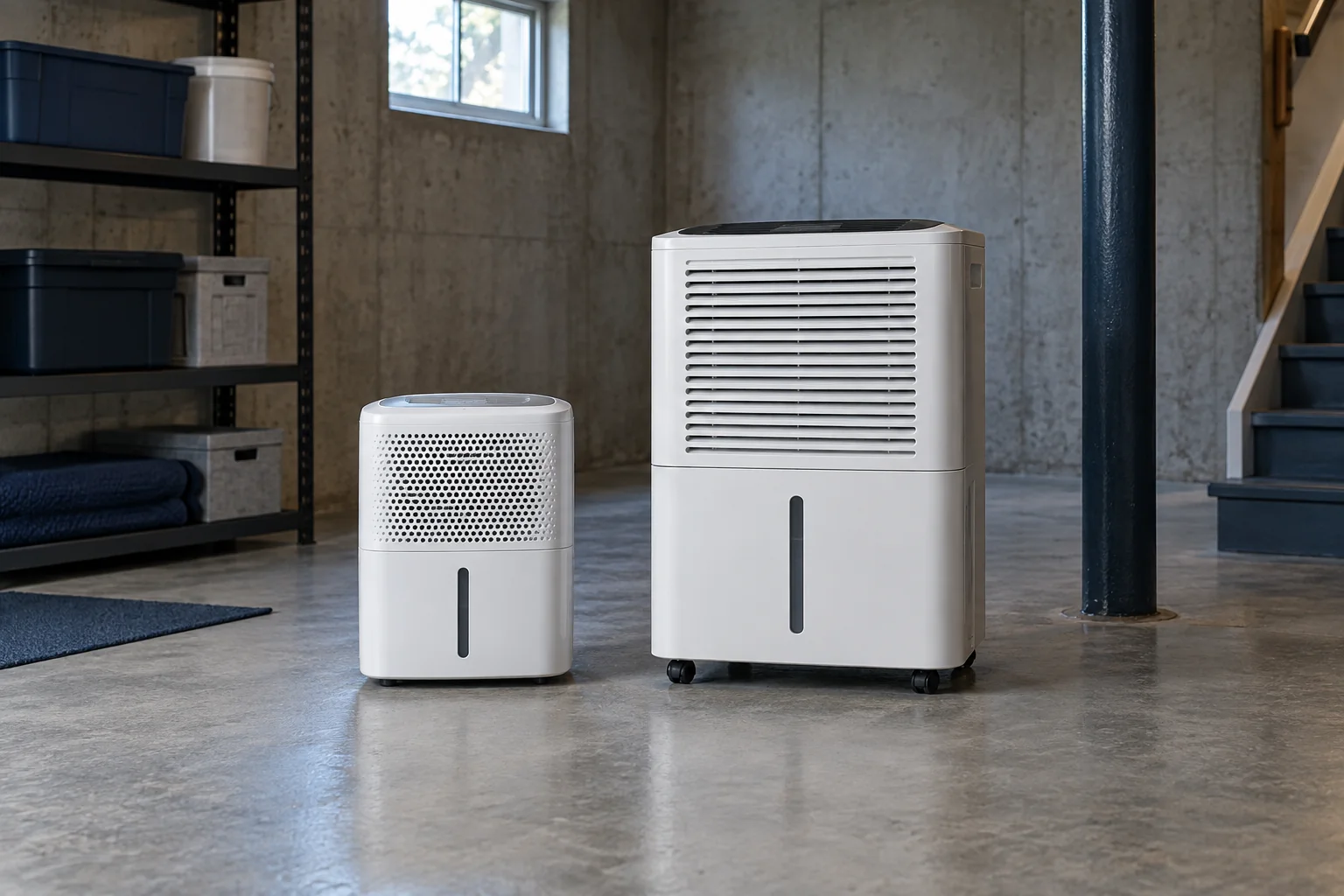
Ventilation can help when outdoor air is drier in absolute terms, but it can make condensation worse when warm humid air reaches cold surfaces. A dehumidifier can help an enclosed zone but requires suitable temperatures and drainage.
Track the same surfaces after each change. The successful fix reduces recurrence without creating a problem elsewhere.

Sources & editorial method
This workflow organizes observations; local construction, fire, and ventilation requirements still apply.
AI-assisted editorial content based on the linked references. Read our methods and review limitations.