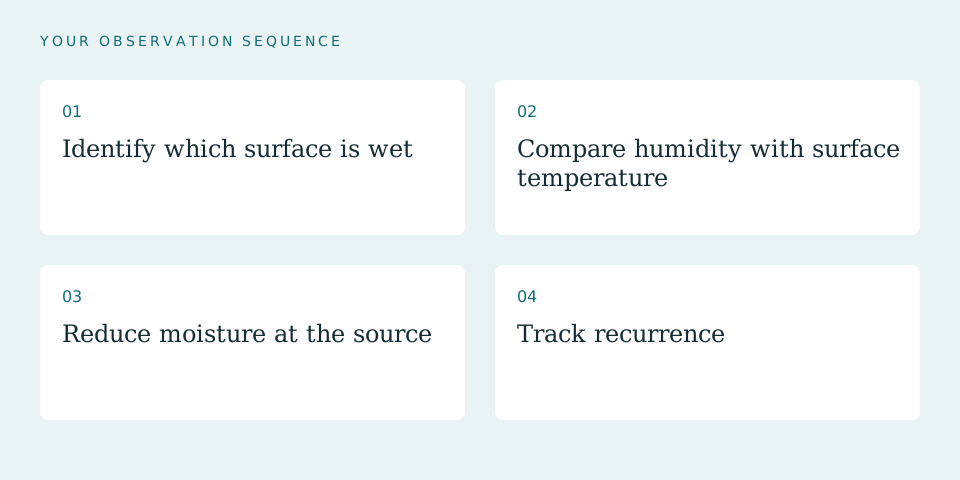
01Identify which surface is wet
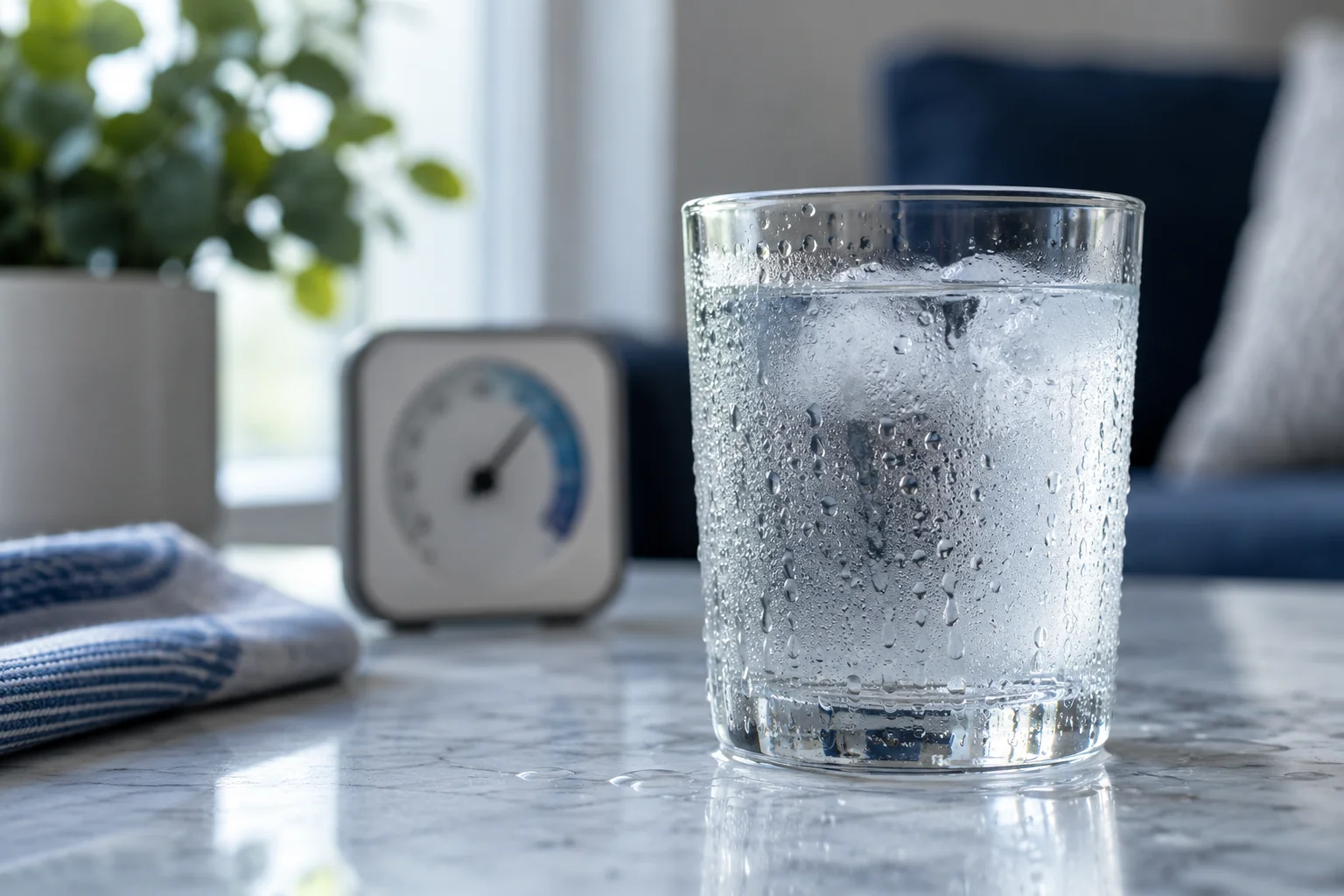
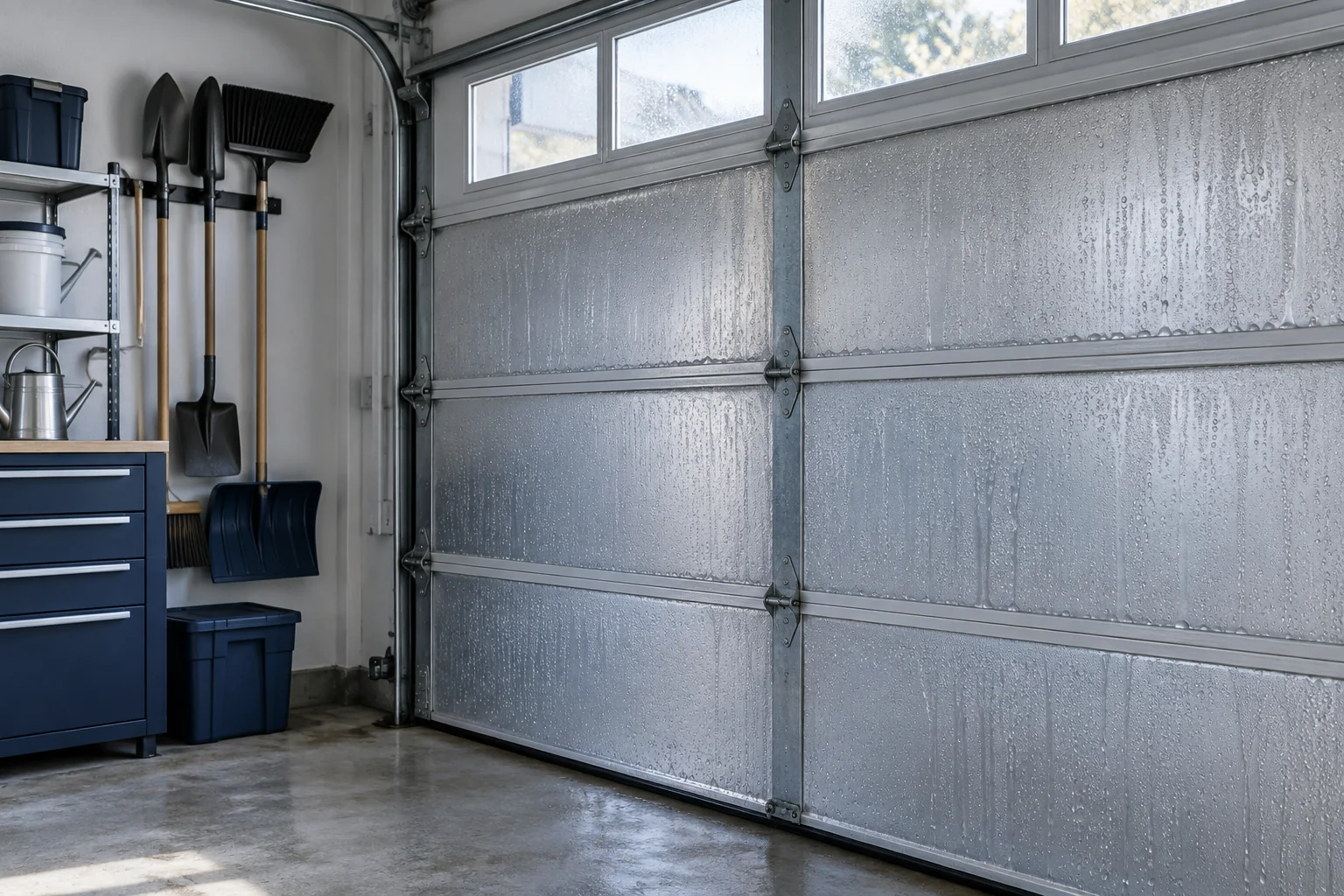
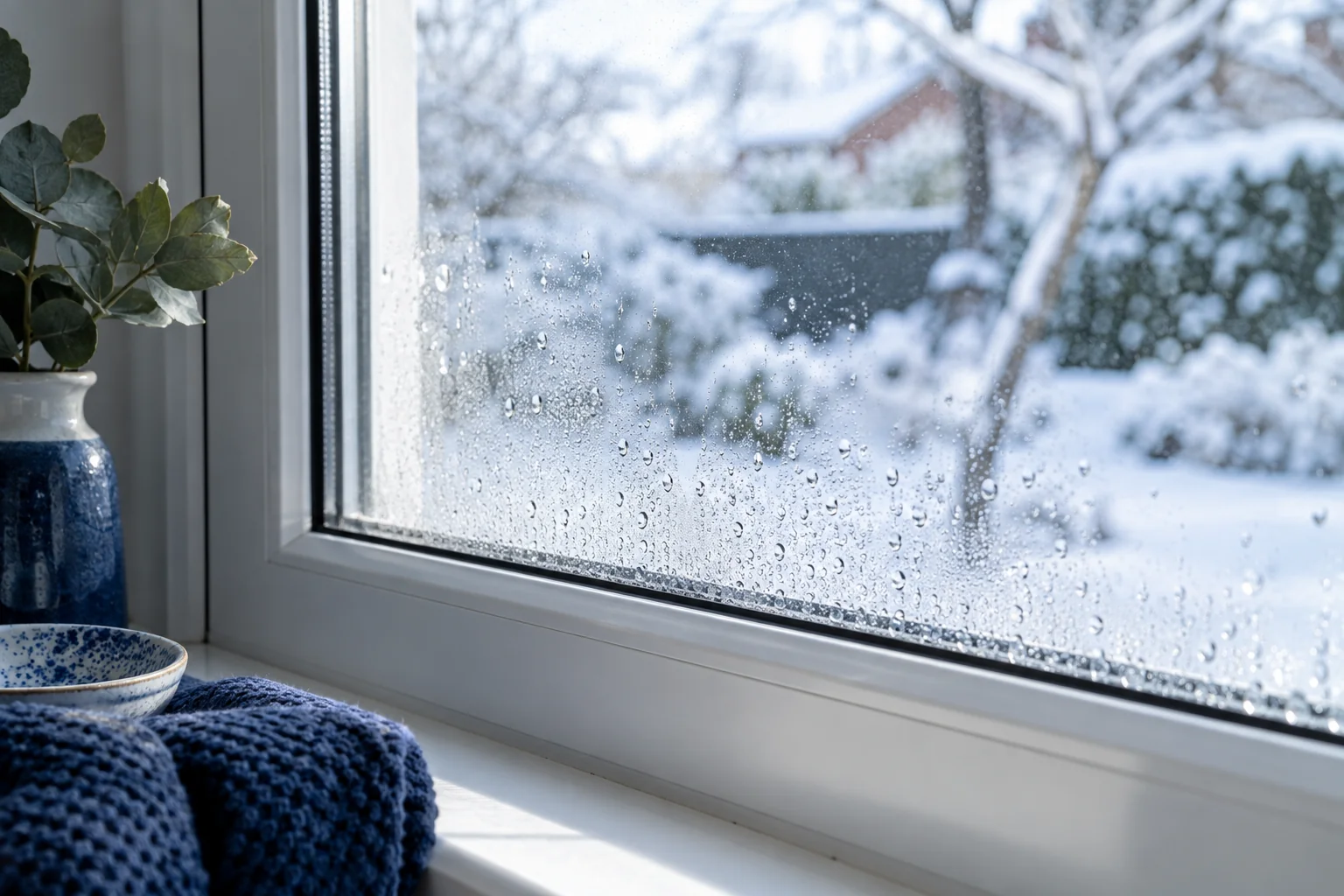
Wipe one small area and determine whether moisture is on the indoor glass, outdoors, or trapped between sealed panes. Indoor-surface condensation often reflects a cold surface combined with indoor humidity. Moisture between panes can indicate a glazing-seal problem.
Check for rain entry around the frame separately. Water staining after wind-driven rain is not automatically condensation.
02Compare humidity with surface temperature
Measure indoor temperature and relative humidity near the room center, then use the dew-point calculator. If glass temperature falls below the calculated dew point, condensation is physically possible. The calculator is an estimate and does not measure the glass.
Curtains and blinds can reduce warm-air movement across glass. Adjust them safely without blocking heaters or required vents.
Related check: Dew Point and Condensation: A Homeowner’s Practical Guide →
03Reduce moisture at the source
Use functioning kitchen and bathroom exhaust where provided, vent clothes dryers outdoors as required, and investigate plumbing leaks or wet materials. Avoid adding unvented combustion moisture to the room. Maintain required whole-home ventilation rather than sealing every opening.
If lowering humidity creates discomfort or does not address the problem, the window temperature, insulation, air leakage, or glazing system may need professional evaluation.
04Track recurrence
Dry standing water promptly and protect nearby finishes. Log outdoor temperature, indoor humidity, and affected windows. A pattern limited to the coldest nights differs from daily water accumulation across the season.
Extensive mold, deteriorated framing, or water entering the wall assembly should be assessed rather than repeatedly wiped away.
Sources & editorial method
The dew-point relationship is established psychrometrics. Diagnosis of a particular window assembly requires inspection.
AI-assisted editorial content based on the linked references. Read our methods and review limitations.