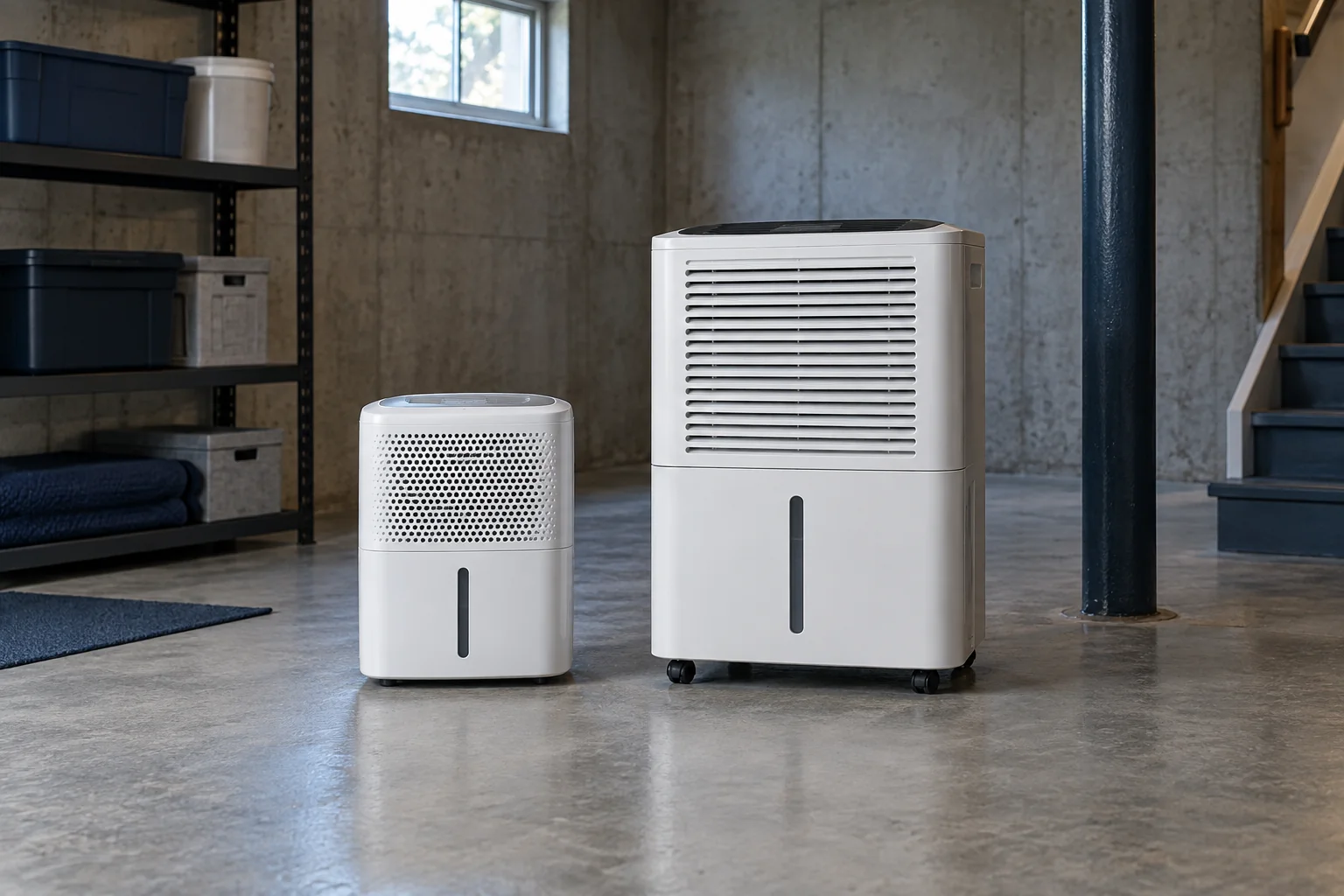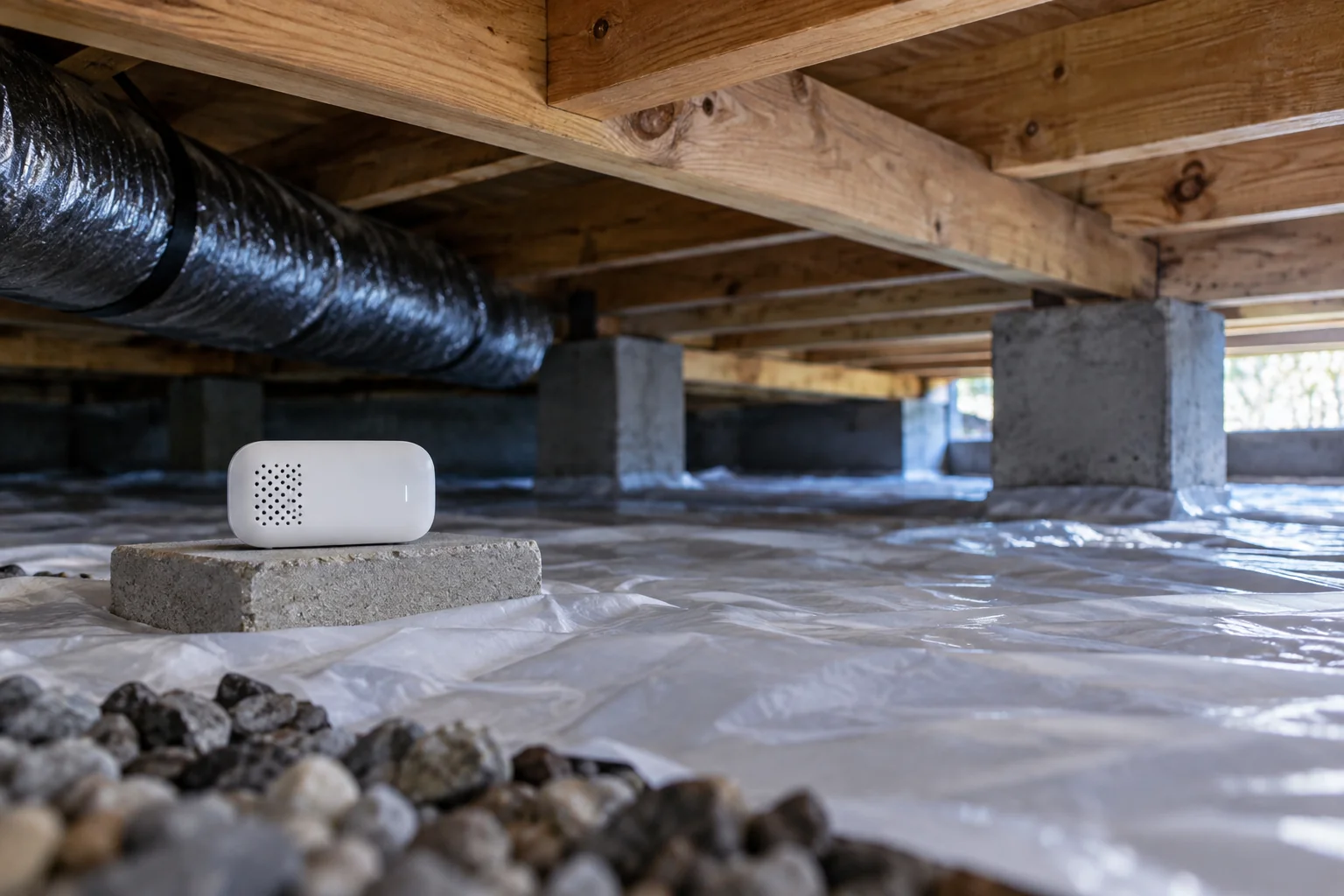
01Start with a reliable reading
Place a digital hygrometer away from the dehumidifier outlet, exterior doors, supply vents, and damp masonry. Let it settle before using the value. Compare the center of the basement with the dampest-looking area rather than relying on one convenient shelf.
Relative humidity changes with temperature. A cooler basement can show a higher percentage even when the amount of moisture in the air has not changed. Record temperature with humidity so the trend has context.
02Use a range, not a magic number
EPA guidance recommends keeping indoor humidity below 60 percent and ideally between 30 and 50 percent when practical. Treat that as a moisture-control target, not proof that every material in the basement is dry. Wood, carpet, cardboard, and cold surfaces can still hold or collect moisture.
If readings repeatedly rise above your target, look for wet materials, plumbing leaks, foundation seepage, uncovered soil, blocked drainage, and humid outdoor air entering the space.
Related check: What Size Dehumidifier Do I Need? →
03Check the source before adding capacity
A dehumidifier removes water vapor from air; it does not repair a leak or redirect rainwater. Inspect after rain, check gutters and downspouts, and look for staining around pipes and foundation penetrations. Correct liquid-water sources before treating an appliance as the whole solution.
Do not enter flooded areas where electrical equipment may be energized. Significant water intrusion, structural damage, or extensive mold needs qualified local help.
04Build a seven-day baseline
Record morning and evening humidity for one week, plus rainfall, dehumidifier operation, and any open windows. The pattern helps distinguish a persistent problem from a short weather event.
Once the cause is controlled, verify that readings improve across the room—not only beside the machine.
Sources & editorial method
The humidity range is drawn from EPA guidance. The placement and logging workflow is an editorial diagnostic sequence, not a building inspection.
AI-assisted editorial content based on the linked references. Read our methods and review limitations.