The physics of below-grade moisture
Basements are fundamentally subterranean structures surrounded by soil that holds thousands of gallons of rainwater and groundwater. Moisture enters a basement through three distinct thermodynamic pathways:
- Hydrostatic Liquid Pressure: Saturated soil against exterior foundation walls exerts physical pressure, forcing liquid water through hairline cracks, cold joints, and porous mortar.
- Vapor Diffusion & Capillary Draw: Concrete and masonry block are porous sponge-like materials. Liquid groundwater wicks upward through footing concrete (capillary action), evaporating into indoor air as invisible water vapor.
- Summer Condensation (Psychrometric Drive): Because basement masonry is cooled by deep sub-soil temperatures (often 50°F to 60°F year-round), warm, humid outdoor air entering through windows, vents, or natural air leakage rapidly cools below its dew point upon contacting basement floors and cold foundation walls.
Quick diagnostic decision matrix
| What you observe | Likely underlying cause | Recommended diagnostic guide |
|---|---|---|
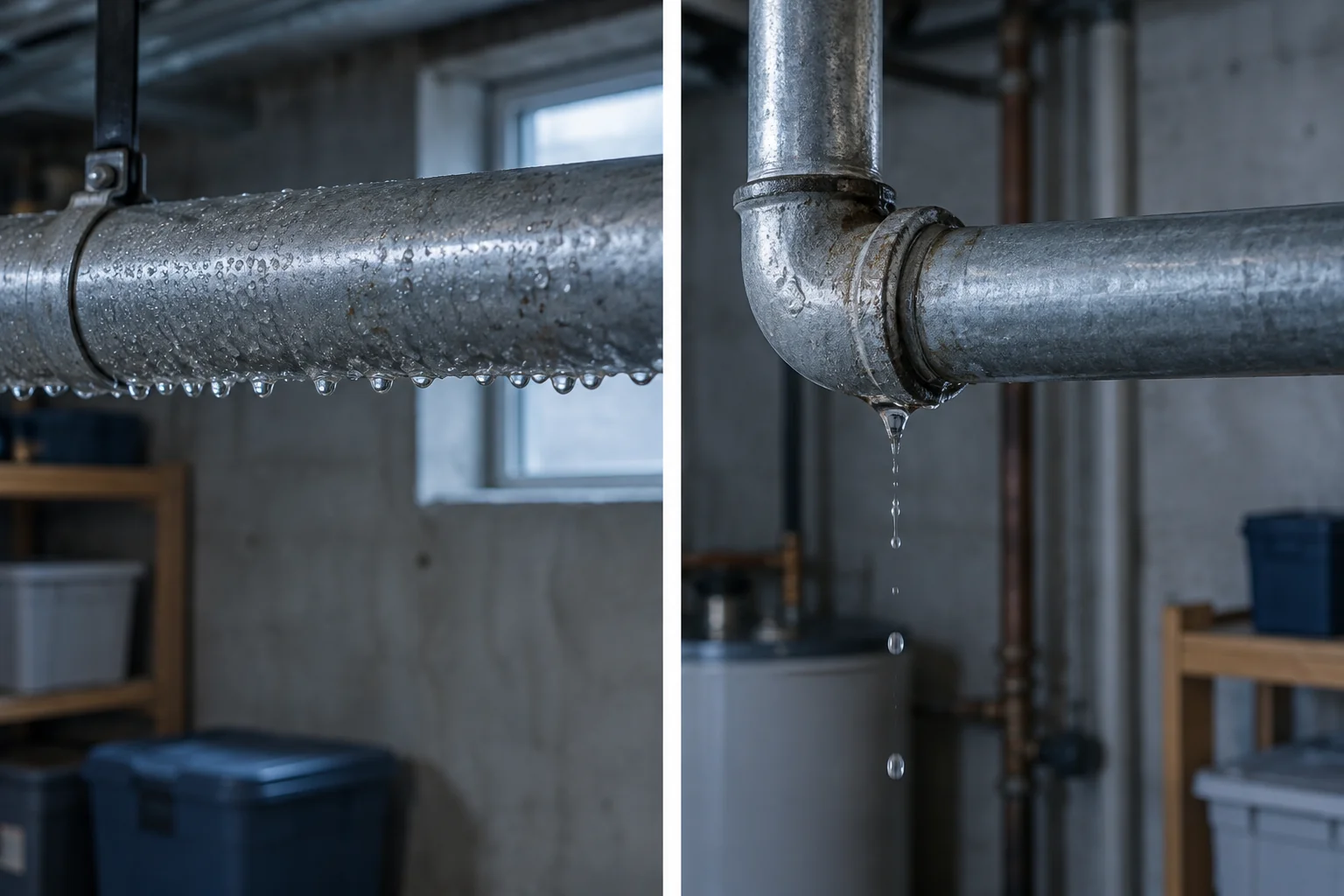
| Beads of water on cold copper pipes or ductwork | Indoor dew point exceeds pipe surface temperature | Sweating Pipes vs. Plumbing Leak → |
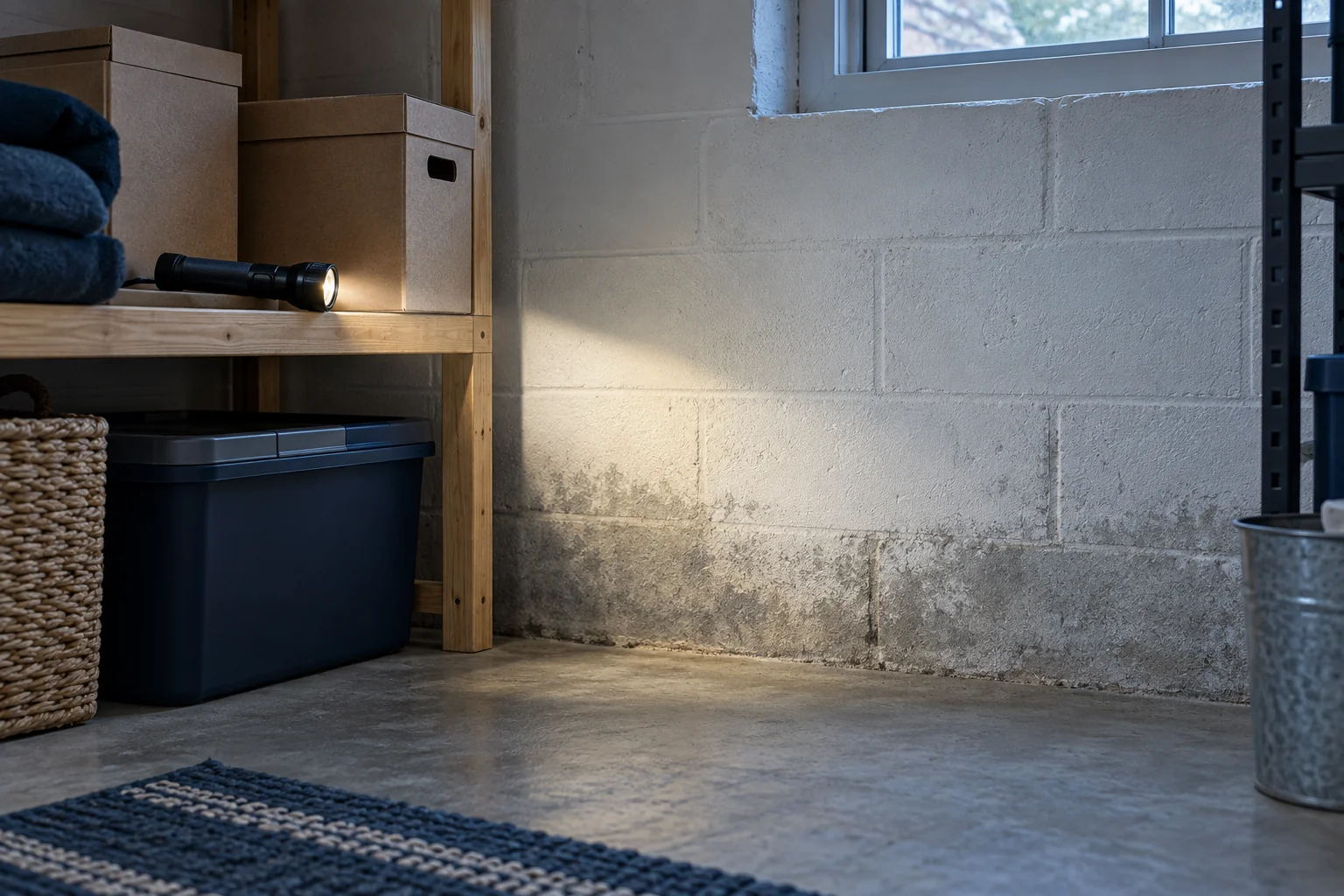
| White crusty powder (efflorescence) on block walls | Moisture evaporating through concrete, leaving mineral salts | Condensation or Foundation Leak? → |
| Dampness spikes only after heavy rainfall | Exterior roof gutter overflow, downspout pooling, or poor grade | Trace Foundation Water Paths → |
| Musty odor throughout room but no visible mold | Concealed dampness behind drywall, subfloors, or cardboard | Musty Basement Inspection Guide → |
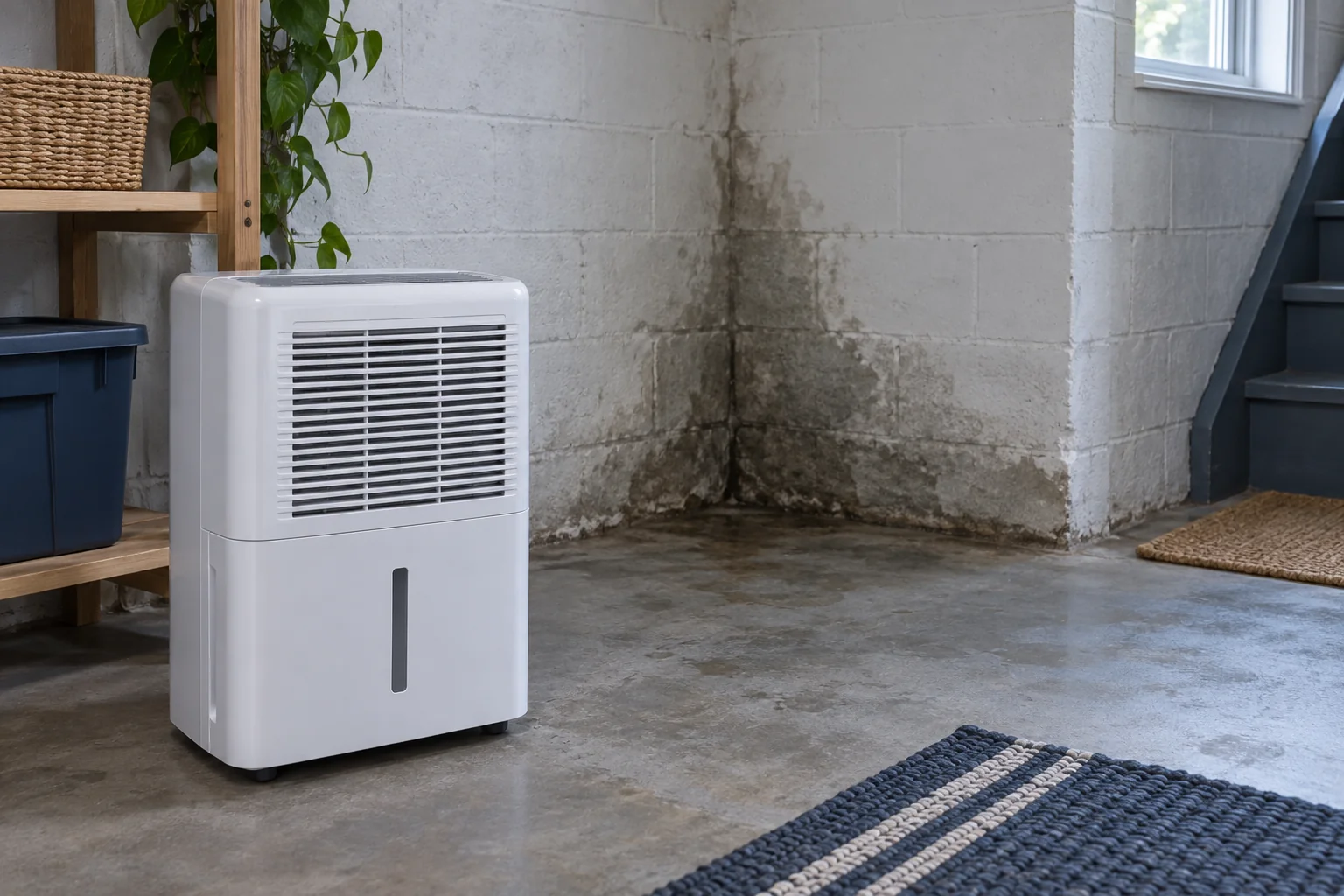
| Dehumidifier runs continuously but humidity stays high | Excessive ventilation air exchange or undersized unit | Why Basement Stays Humid → |