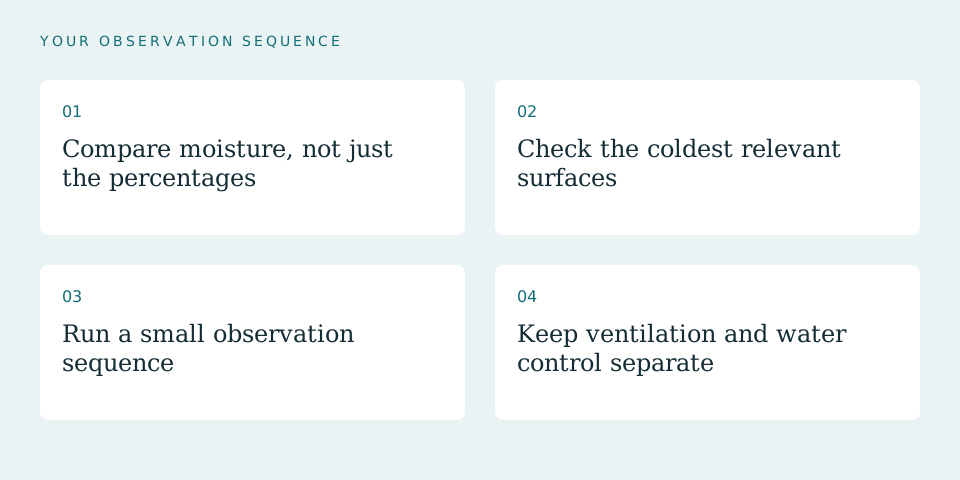
01Compare moisture, not just the percentages
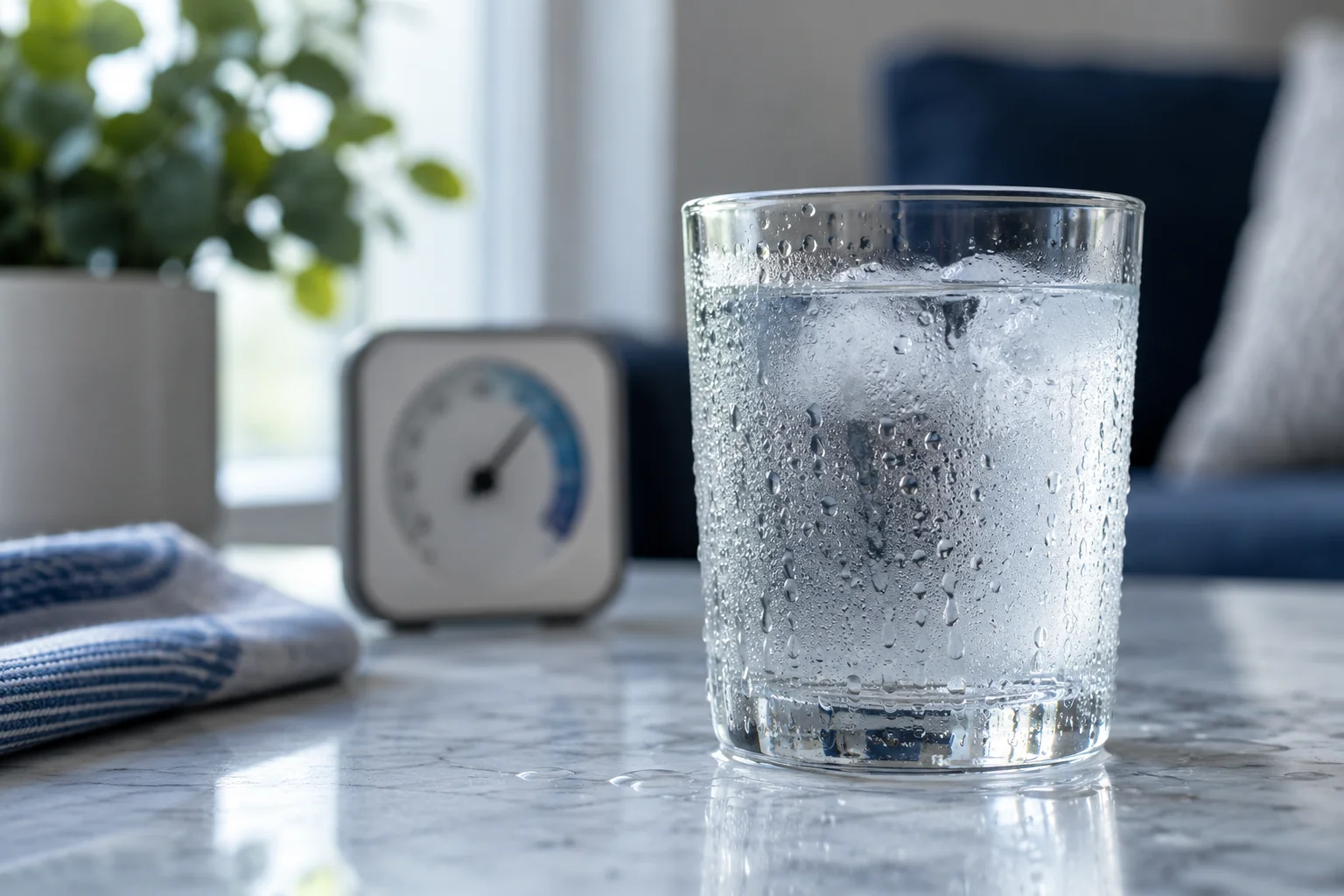
Relative humidity depends on temperature. Outdoor air at a lower percentage can still contain more moisture than cooler basement air. Record temperature with both readings, then compare their estimated dew points.
For example, 80°F air at 60% RH has a dew point of about 65°F. If it reaches a 60°F basement surface without first losing moisture, condensation is possible. This is a worked calculation, not a local weather forecast.
02Check the coldest relevant surfaces
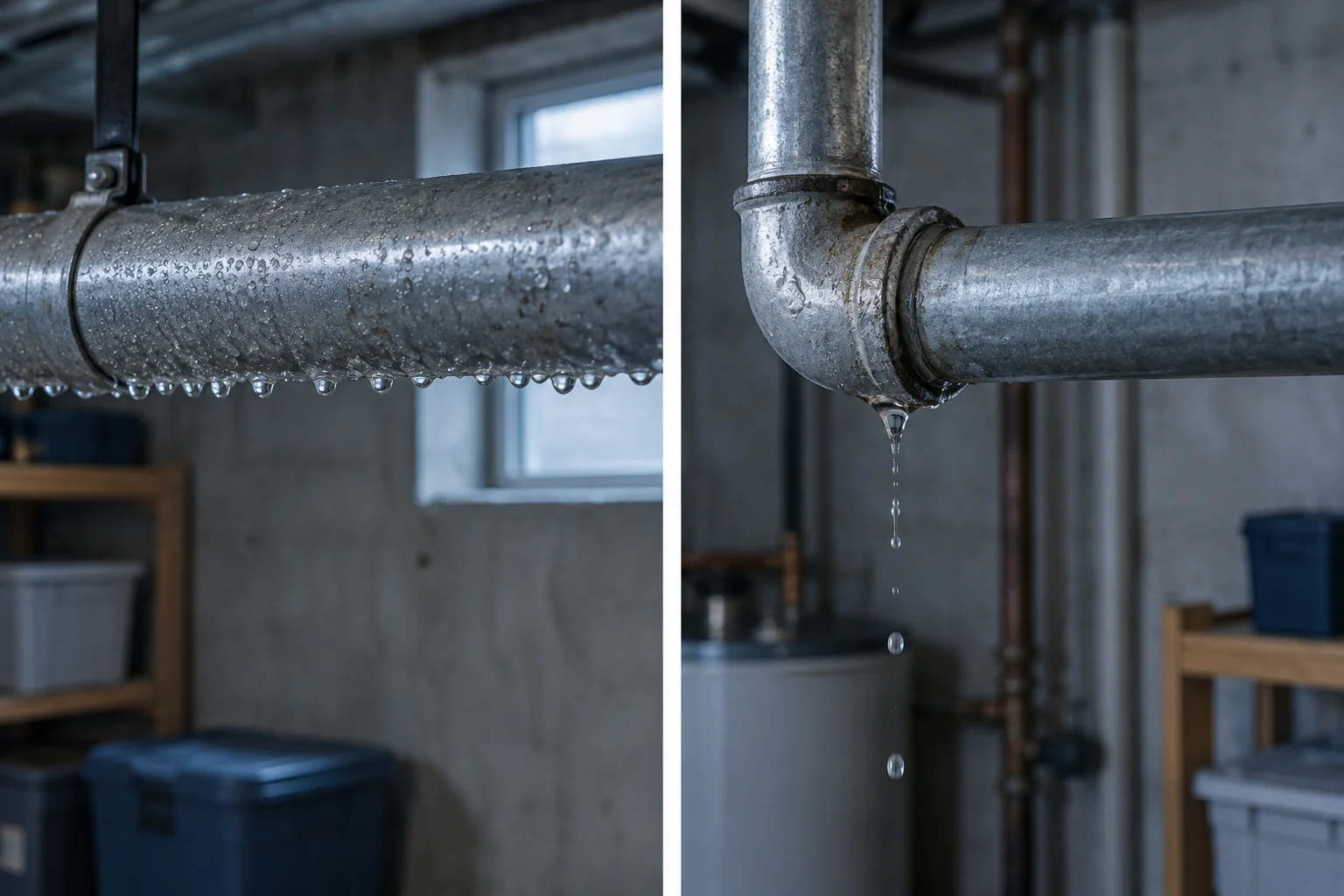
Think about concrete floors, cold-water pipes and below-grade walls, not just the temperature near the stairs. A room-average reading can miss the surfaces most likely to get wet. Take measurements only where safe and recognize instrument limitations.
If outside dew point exceeds a surface temperature, bringing in that air may increase the condensation risk. If outdoor dew point is lower than indoor dew point, ventilation may help reduce vapor, subject to the whole building’s ventilation needs.
Related check: Dew Point and Condensation: A Homeowner’s Practical Guide →
03Run a small observation sequence
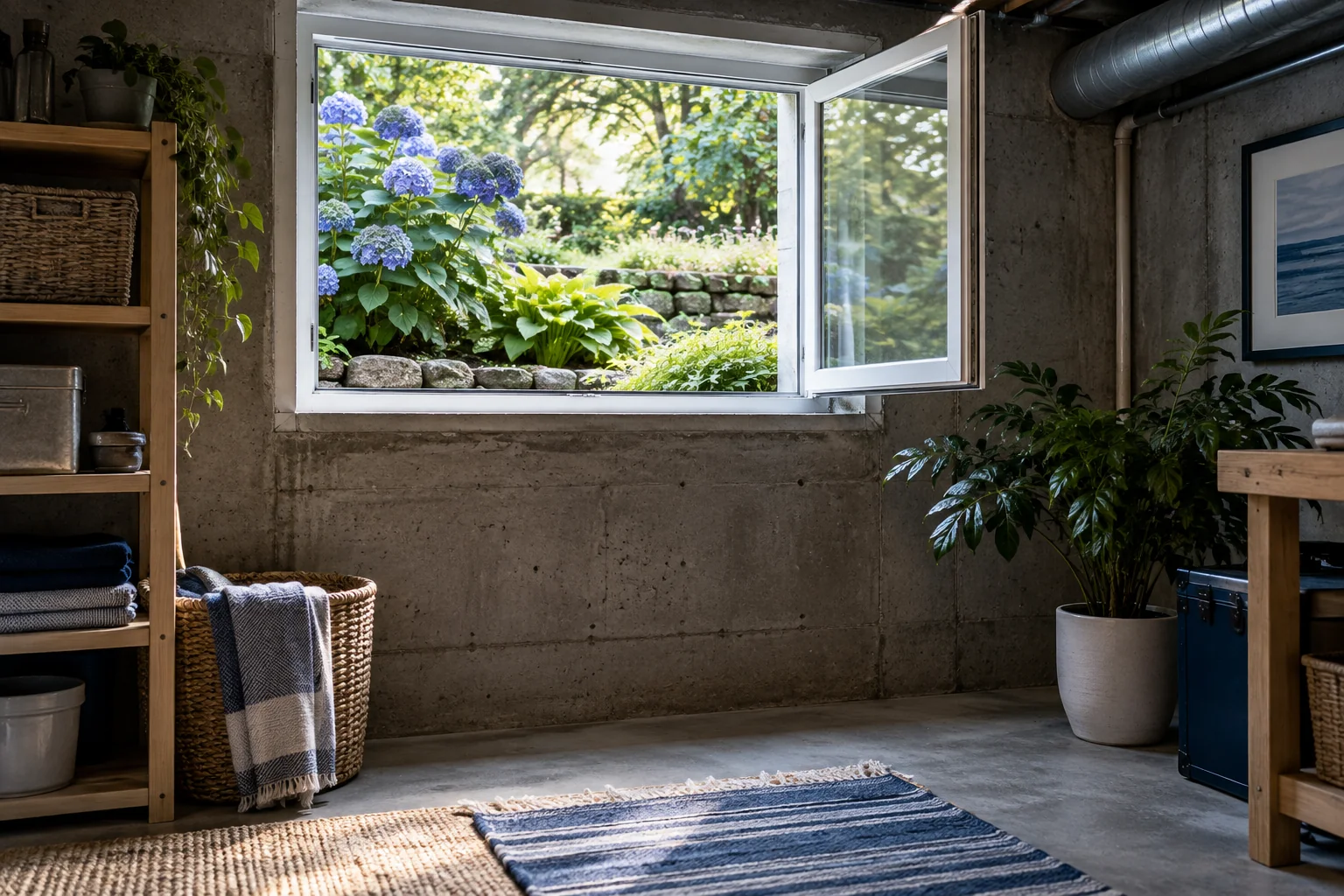
Log conditions before opening, while open and after closing. Note rain, wind and any new surface moisture. Do not leave windows open unattended where water can enter or security is affected.
When a dehumidifier is running, follow its instructions about windows and doors. Otherwise it may be working against a continuing outdoor moisture load.
04Keep ventilation and water control separate
Closing a window will not fix a leaking well or poor drainage. Inspect after rain if wetness is concentrated around the opening. Required ventilation, combustion air and local building conditions take precedence over a simple moisture experiment.
Use the dew-point calculator to compare actual readings, then keep a record of the result rather than relying on whether the outdoor air feels pleasant.
At a glance: choose your next check
| Comparison | Interpretation |
|---|---|
| Outdoor dew point above cold surface temperature | Incoming air may collect moisture on that surface. |
| Outdoor dew point lower than indoor dew point | Ventilation may reduce vapor, if otherwise appropriate. |
| Wetness localized around the opening after rain | Investigate water entry separately. |
Use readings from the same period. General weather reports may differ from conditions at the building.
Sources & editorial method
The linked references support the underlying principles. The observation sequence and examples are original editorial guidance, not an inspection, product test or installation specification.
AI-assisted editorial content based on the linked references. Read our methods and review limitations.