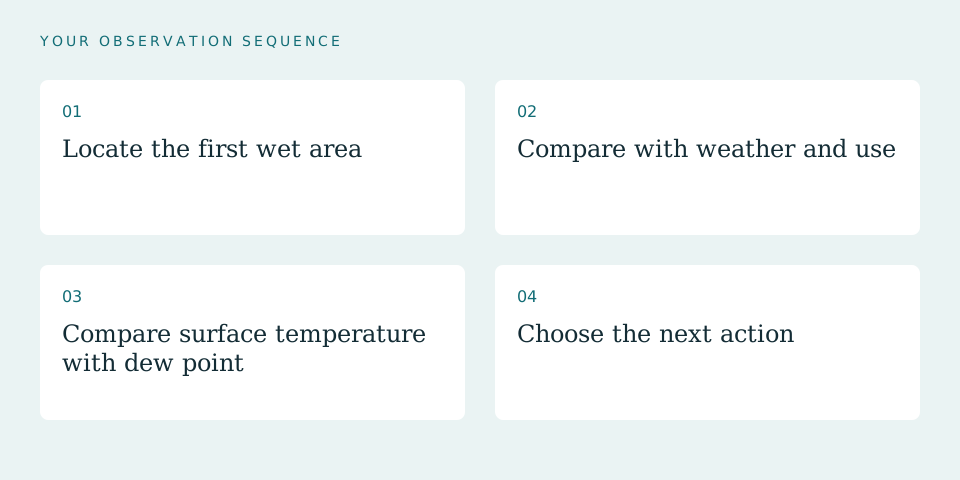
01Locate the first wet area
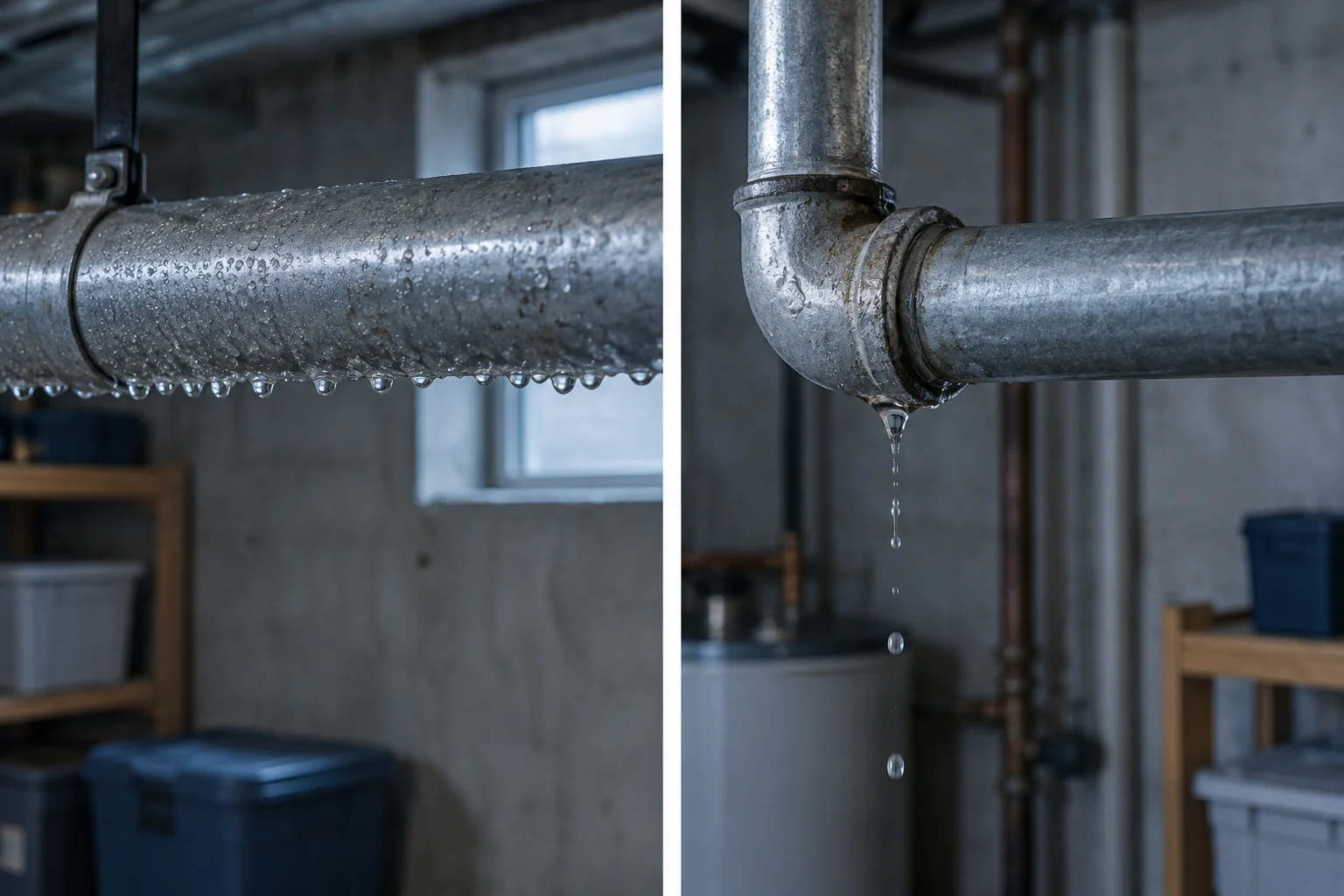
Before wiping a safe accessible area, photograph the pattern and note the time. Is water spread across a cool surface, concentrated below one pipe joint, or appearing along a wall-floor seam? Trace upward where visible rather than assuming the lowest wet patch is the entry point.
Separate active wetness from old mineral deposits or stains. A dry mark shows a past event, but does not tell you when it happened or whether the source remains active.
02Compare with weather and use
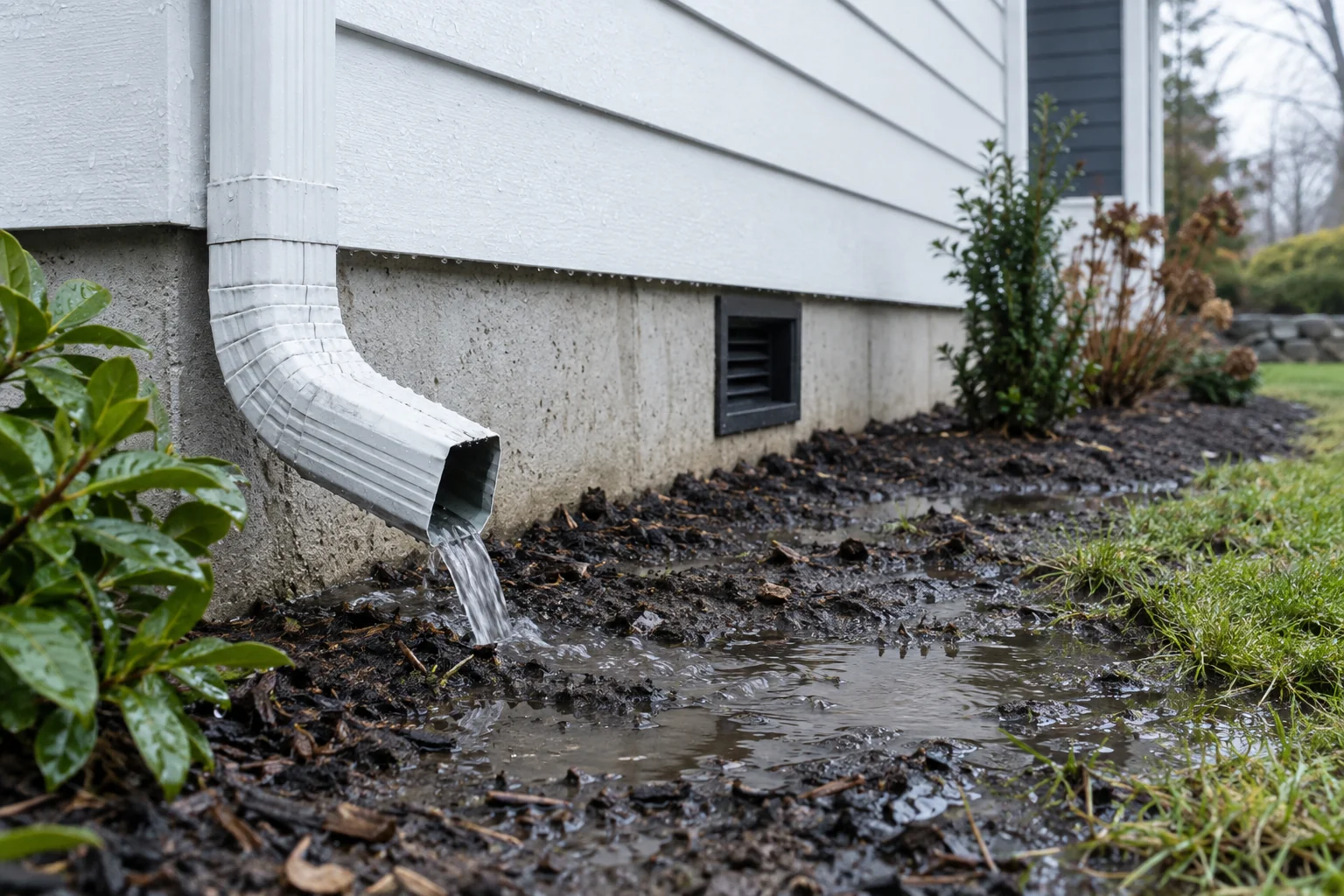
Record rainfall, snowmelt, outdoor conditions and use of nearby plumbing. Wetness after using a fixture deserves a plumbing check; wetness following rain deserves exterior drainage and entry-point inspection. The time delay may matter, so record several hours rather than only the moment you notice it.
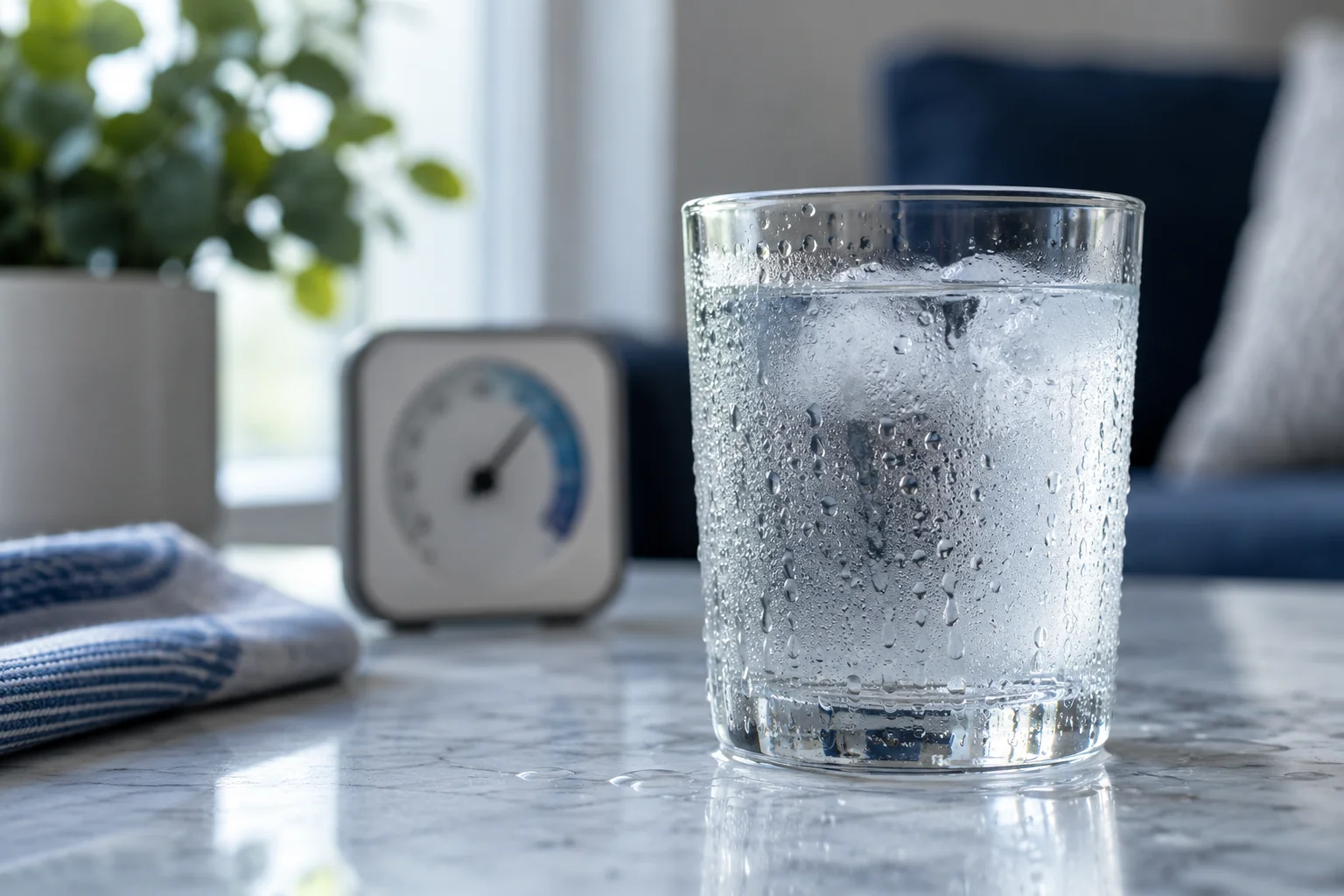
Widespread moisture on cold pipes or masonry during humid weather supports a condensation explanation. It is still possible for a leak to keep those materials wet at the same time.
Related check: Dew Point and Condensation: A Homeowner’s Practical Guide →
03Compare surface temperature with dew point
Use a room temperature and relative-humidity reading to calculate dew point. If a safely measured surface is at or below that estimate, condensation is physically plausible. Reflective materials and low-cost instruments can make surface readings uncertain.
A surface above the current dew point does not disprove overnight condensation. Take observations while the wetness is developing, and compare conditions at similar times.
04Choose the next action
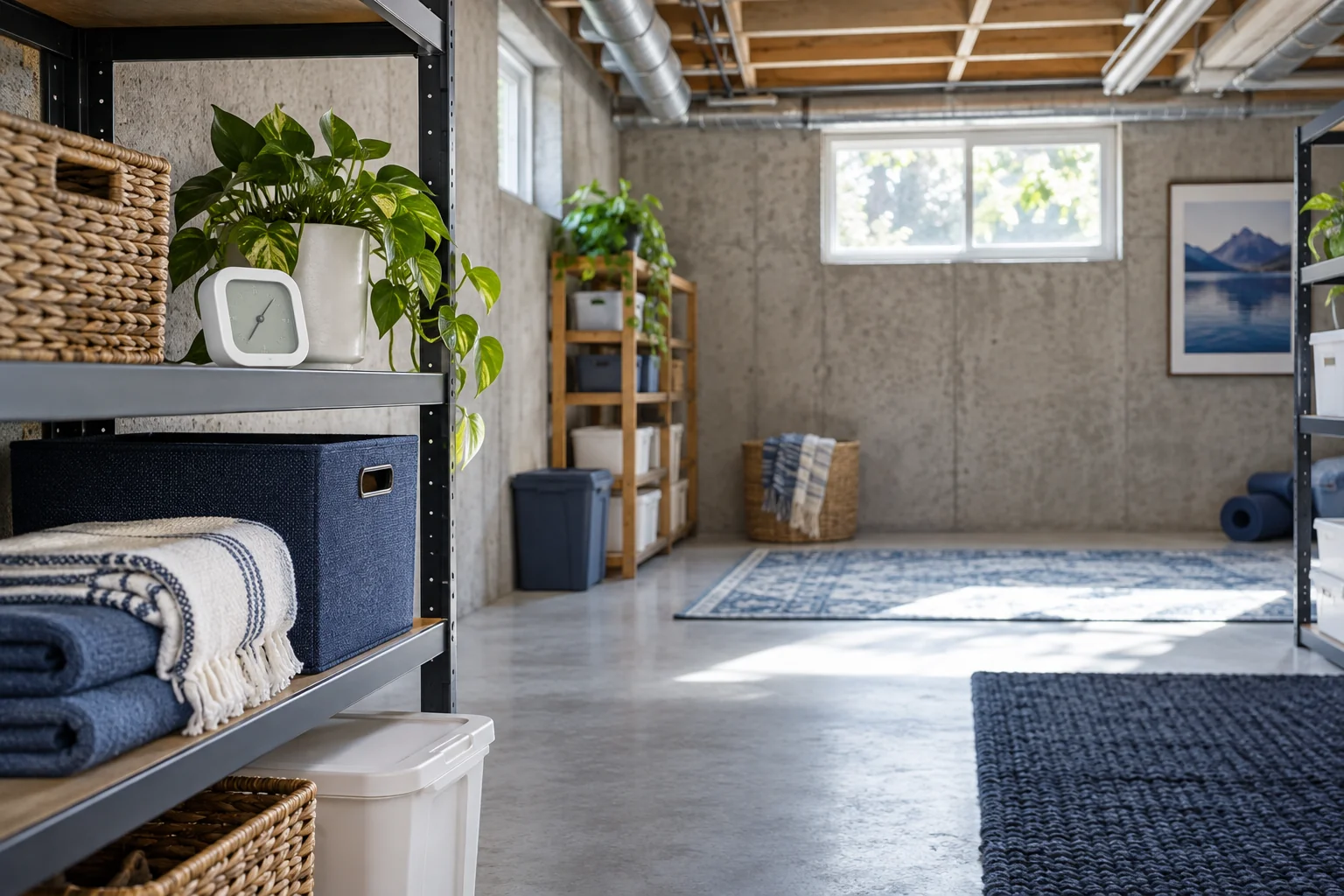
For a localized recurring flow, document the suspected source and arrange appropriate repair. For broad cold-surface wetness, investigate humidity and air movement as well as the surface. Do not apply an interior coating simply to hide an unexplained wet patch.
Stop homeowner investigation around standing water and electricity, damaged structures or contaminated water. A specialist can inspect concealed assemblies that observation alone cannot clear.
At a glance: choose your next check
| Clue | What to compare next |
|---|---|
| Droplets across several cold surfaces | Compare surface temperatures with the air dew point during the event. |
| Wetness concentrated at a fitting | Arrange a plumbing check; water can travel before dripping. |
| Wall-floor wetness after rain | Document timing and inspect exterior drainage safely. |
These observations guide investigation; more than one moisture source can exist.
Sources & editorial method
The linked references support the underlying principles. The observation sequence and examples are original editorial guidance, not an inspection, product test or installation specification.
AI-assisted editorial content based on the linked references. Read our methods and review limitations.