01Inspect safely after the weather passes
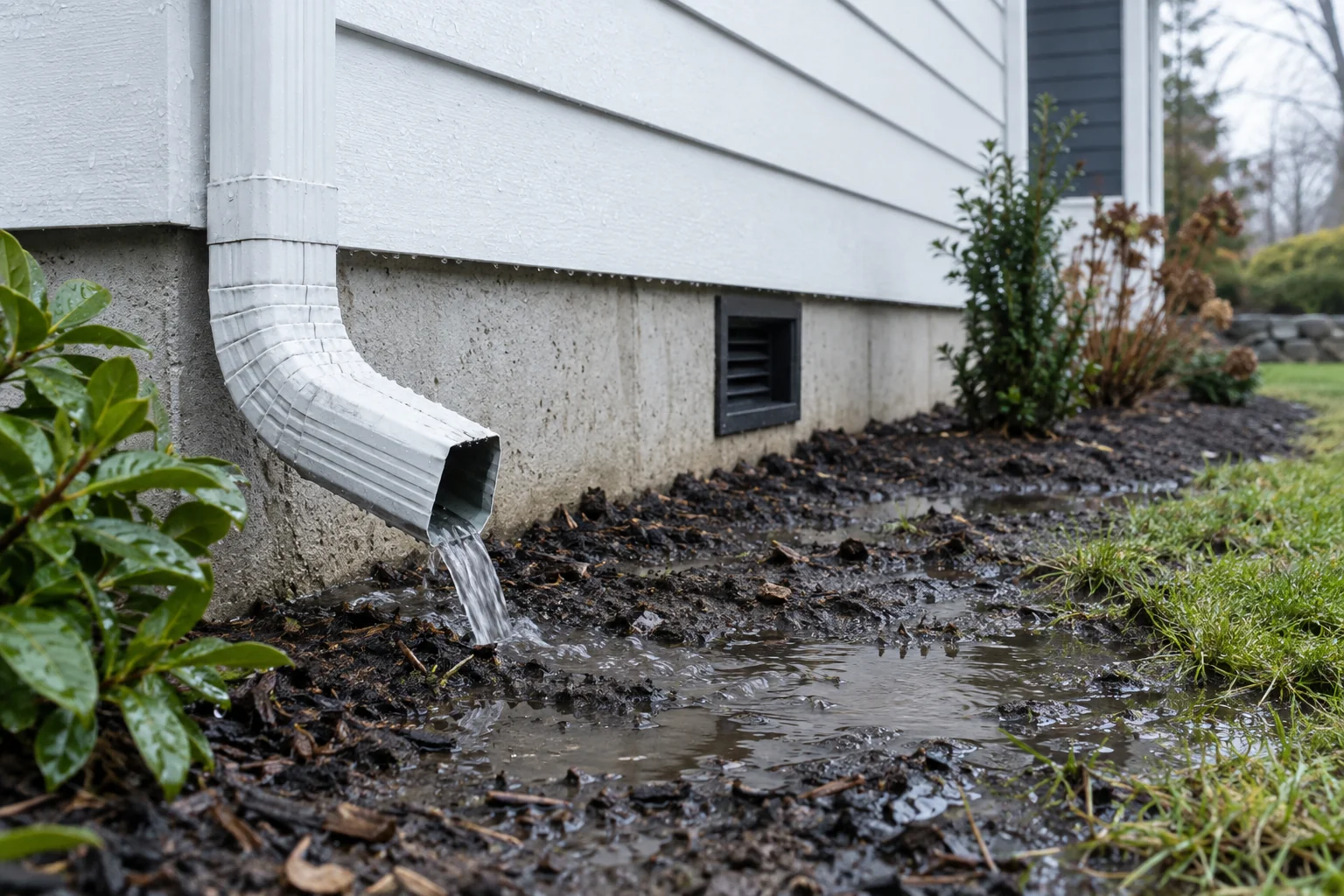
Start outdoors. Look for overflowing gutters, disconnected downspouts, ponding near the foundation, eroded soil, and blocked surface drains. Photograph conditions without entering flooded or unstable areas.
If electrical wiring or equipment may have contacted water, stay out and use qualified help.
02Match indoor evidence to the exterior
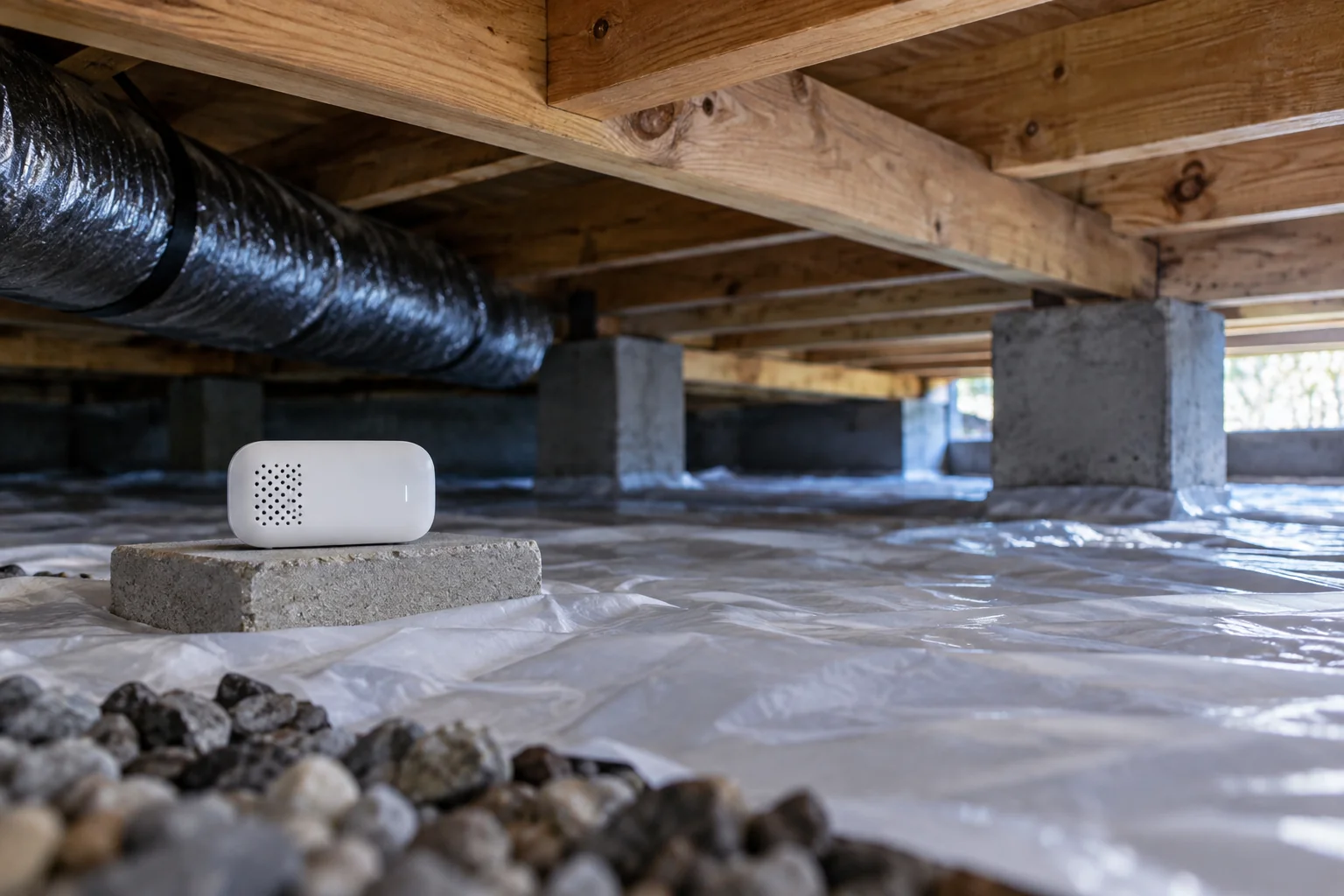
Inside a safe, accessible crawl space, note the wettest side, staining height, soil conditions, and whether water follows a pipe or penetration. Water at one wall suggests a different path from widespread vapor rising from exposed soil.
Do not assume every puddle came through the foundation; plumbing and condensate drains can fail during the same period.
Related check: What Should Crawl Space Humidity Be? →
03Correct bulk water before vapor
Roof drainage, grading, perimeter drainage, and plumbing control liquid water. Ground vapor barriers and conditioned-space strategies manage moisture after bulk water is addressed. The correct assembly depends on climate, foundation, combustion equipment, and local codes.
Avoid mixing incompatible vented and sealed-crawl-space measures without a complete plan.
04Document the next storm
Mark sensor locations and record humidity before, during, and after the next rain event. Note how quickly visible water appears and disappears. Recheck the exterior discharge points.
If water continues entering, the documentation gives a contractor a clearer starting point and reduces guesswork.
Sources & editorial method
Drainage and crawl-space assemblies are climate- and building-specific. Use qualified local advice for design and repair.
AI-assisted editorial content based on the linked references. Read our methods and review limitations.