The stack effect and subfloor dynamics
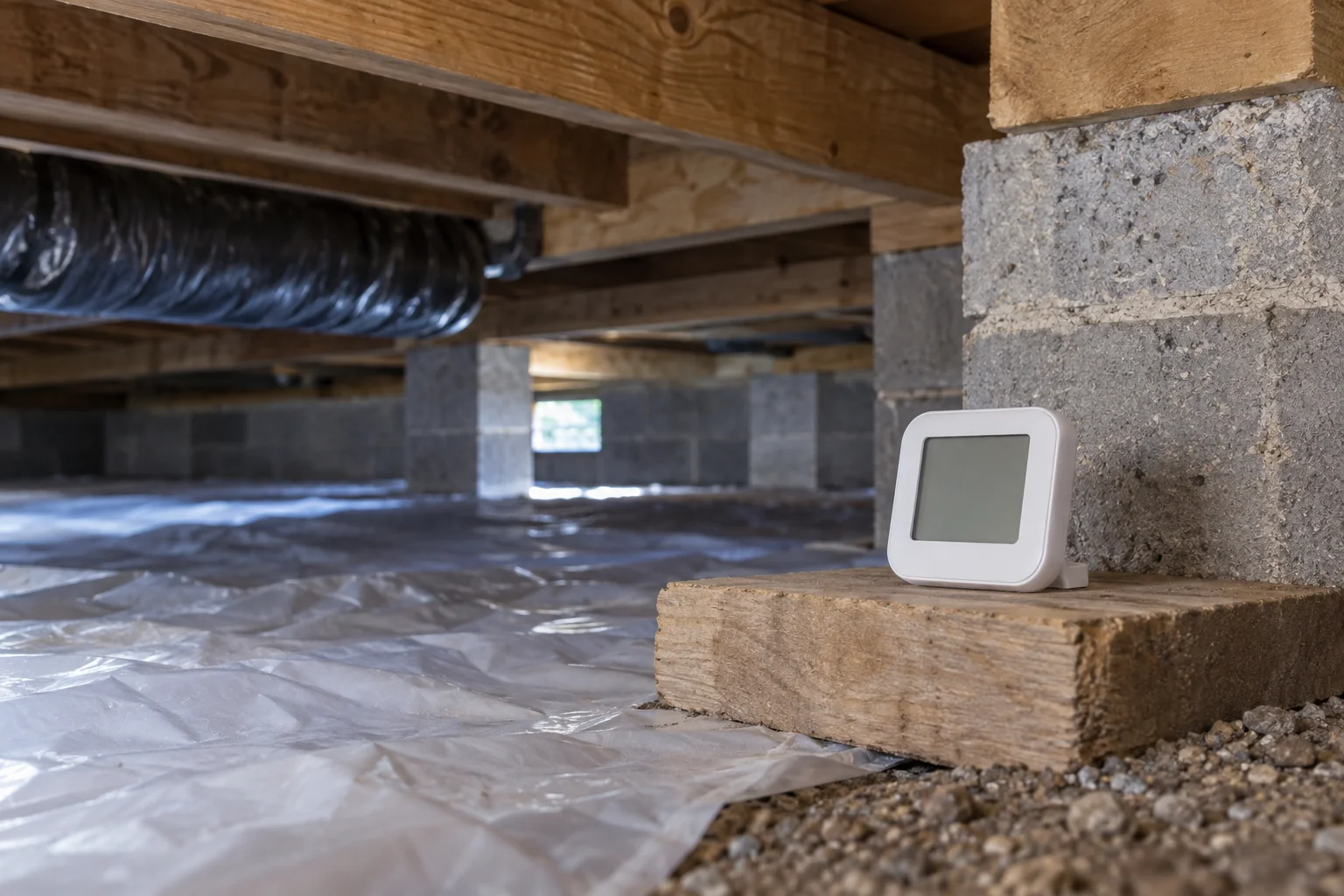
In residential building science, the crawl space plays a massive role in whole-home indoor air quality. Up to 50% of the air on the first floor is drawn directly upwards from the crawl space through the natural convective physical phenomenon known as the stack effect.
When warm air rises and escapes through upper-level ceilings, attic penetrations, and bath fans, it creates negative pressure in the lower levels. If your crawl space has exposed dirt or unsealed vents, it draws moist ground evaporation and outdoor humidity directly into your home’s subfloor structure. Keeping crawl space relative humidity strictly below 60% (and wood moisture content under 15%) is essential to prevent wood rot, mold growth, and pest infestation.
Crawl space diagnostic decision matrix
| Symptom observed | Thermodynamic mechanism | Recommended guide |
|---|---|---|
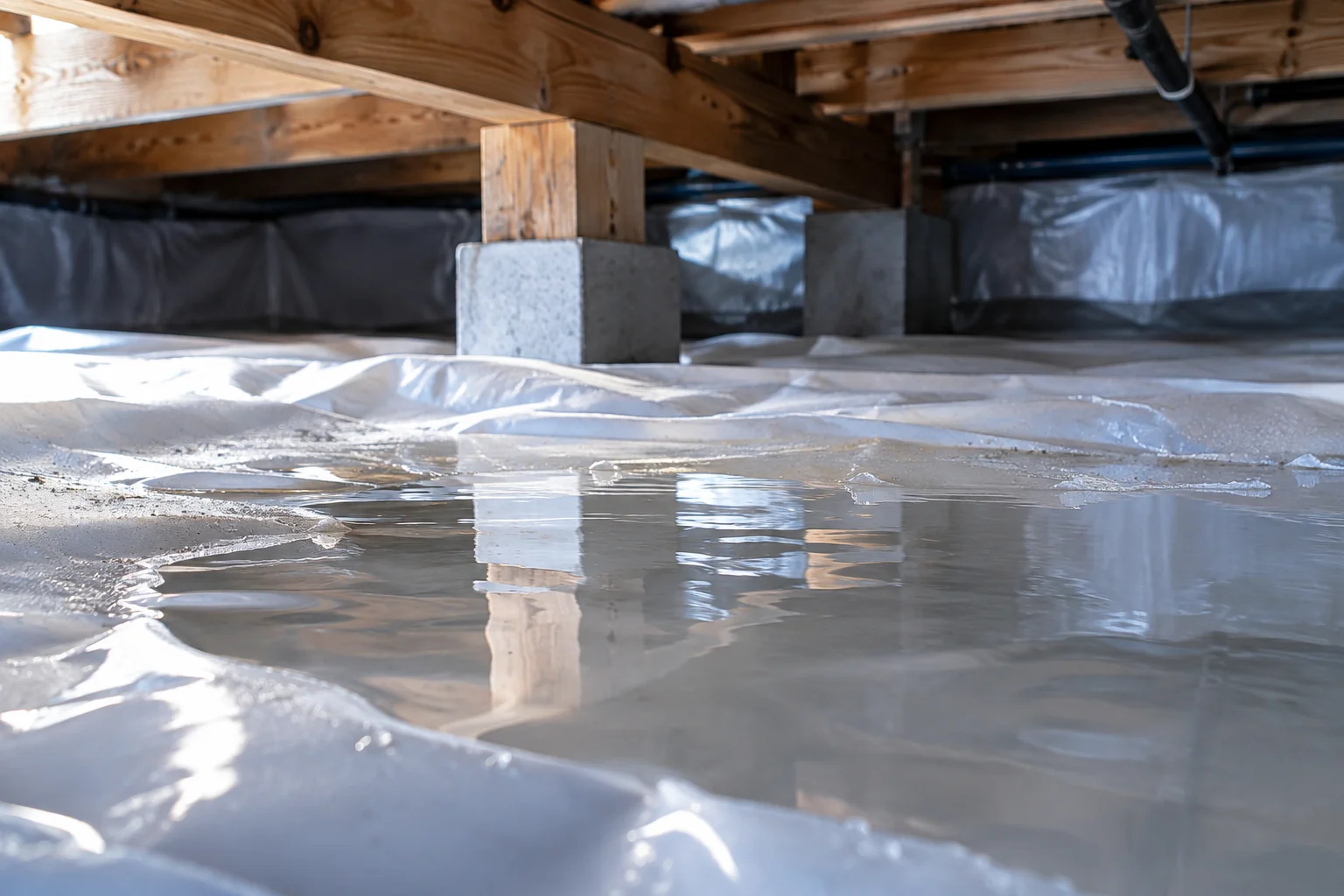
| Standing water puddles on top of black polyethylene liner | Plumbing drain/supply leak from above or perimeter wall seepage | Water on Vapor Barrier Diagnostic → |
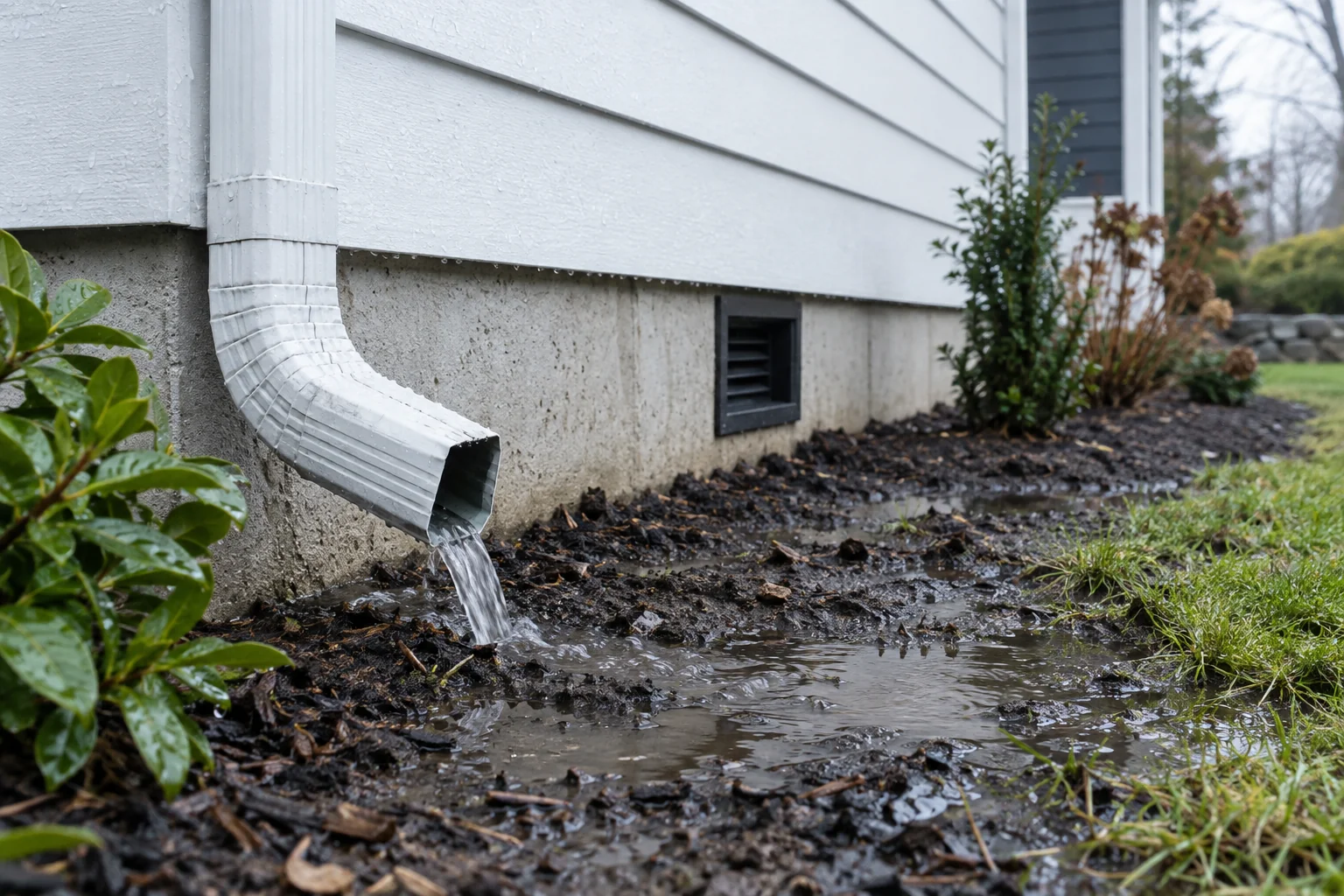
| Damp soil and high humidity specifically after rainstorms | Surface roof runoff, blocked gutters, or unextended downspouts | Crawl Space Wet After Rain → |
| Summer humidity readings exceeding 70% despite open vents | Warm humid outdoor air entering and cooling on cold ground | Crawl Space Target Humidity Levels → |
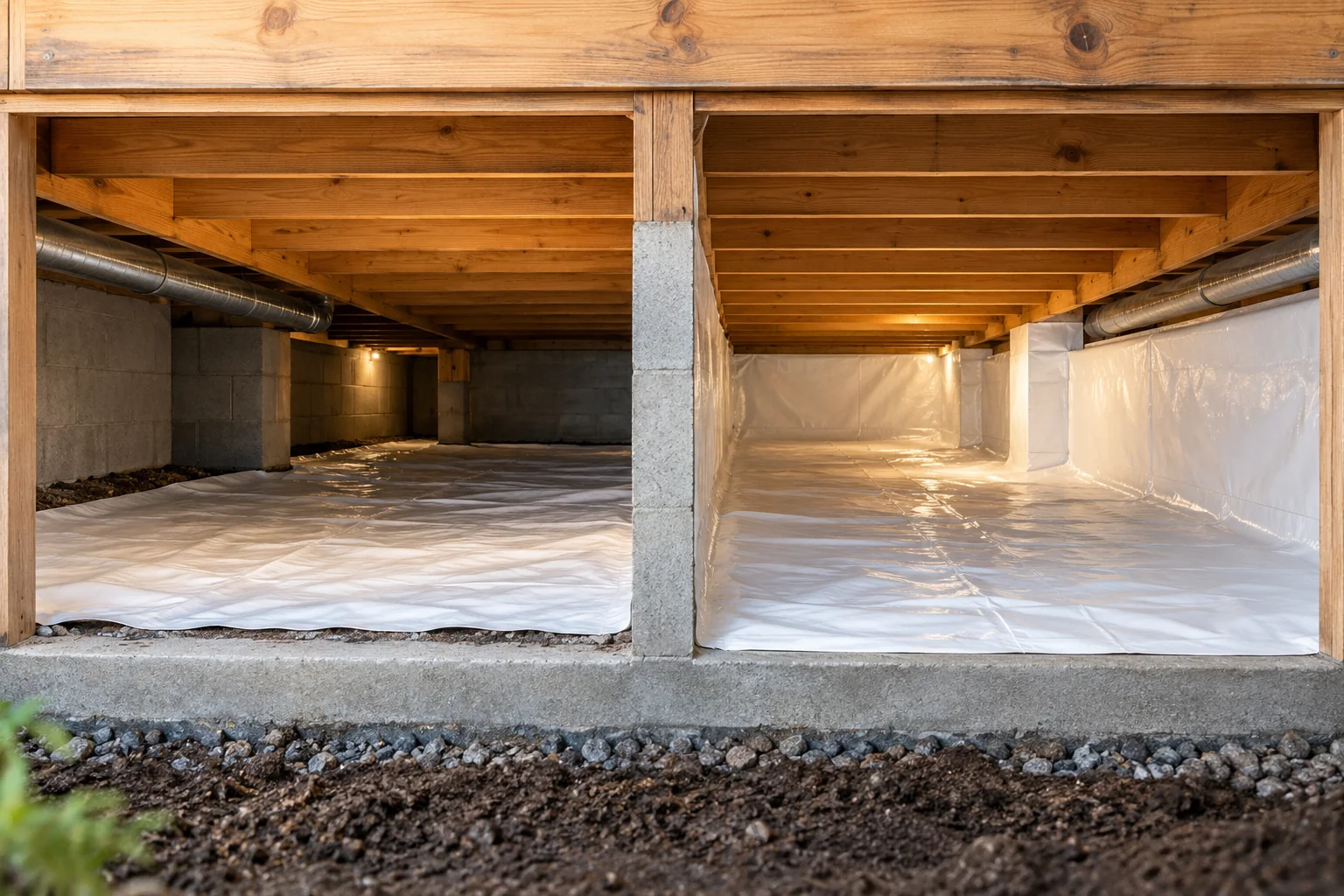
| Evaluating high contractor quotes for full encapsulation | Understanding scope: basic 6-mil liner vs sealed conditioned space | Vapor Barrier vs. Encapsulation → |
| Contractor proposals vary widely in scope and price | Comparing warranties, sump pump requirements, and dehumidifiers | Questions to Ask Crawl Space Contractors → |
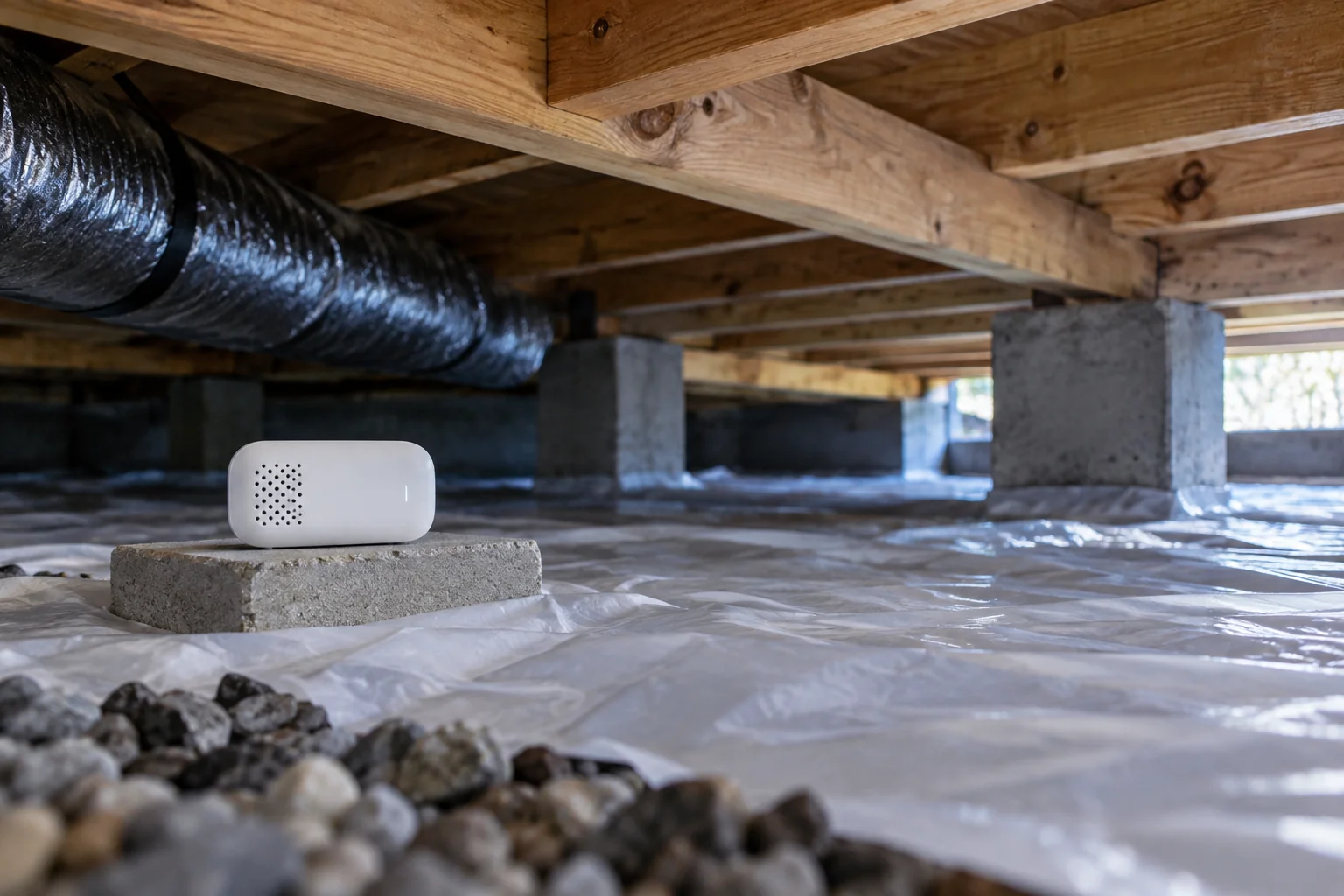
| Unsure where to install remote monitoring hygrometer | Avoiding vent drafts and locating true dampest zone safely | Sensor Placement Guide → |