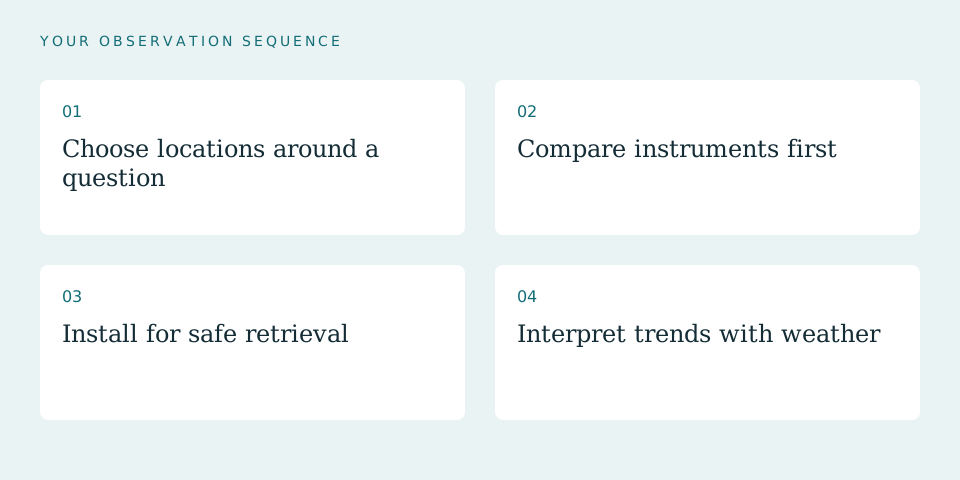
01Choose locations around a question
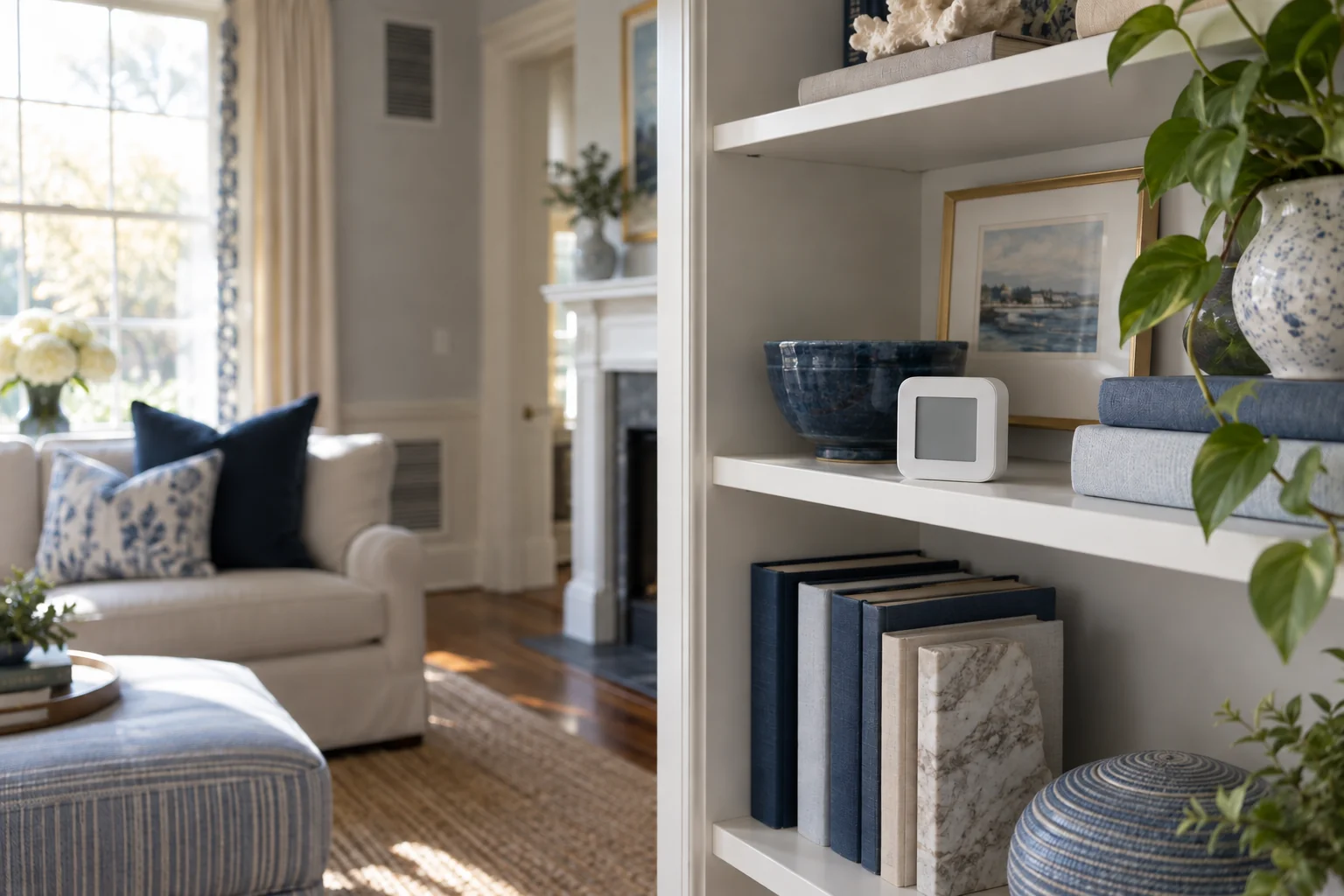
Decide whether you are monitoring the general air, investigating a specific area or checking a recent repair. Name each sensor location in your log. Two named locations are easier to interpret than a collection of unlabeled readings.
Keep a general sensor away from direct dehumidifier discharge, wet surfaces and openings that expose it to a different air stream. Follow its permitted temperature and humidity range.
02Compare instruments first
Place sensors together in an ordinary stable location before separating them. Give them time to respond according to their instructions and record any consistent difference. Agreement does not prove accuracy, but disagreement tells you to avoid overinterpreting small changes.
Check battery condition, data gaps and whether the app displays a current reading or an old sample. A flat graph can be a connection issue.
Related check: Where to Place a Hygrometer for Useful Home Readings →
03Install for safe retrieval
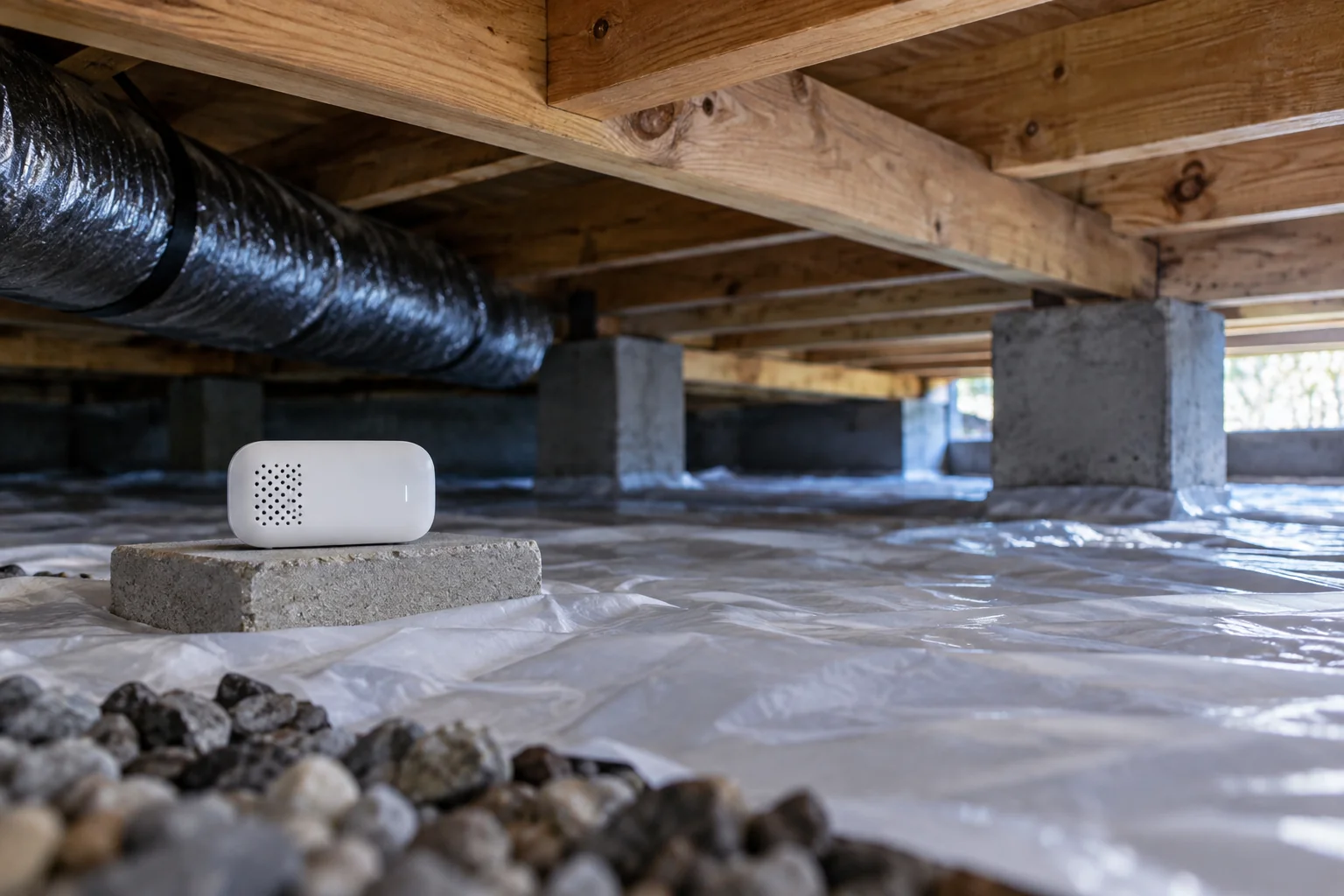
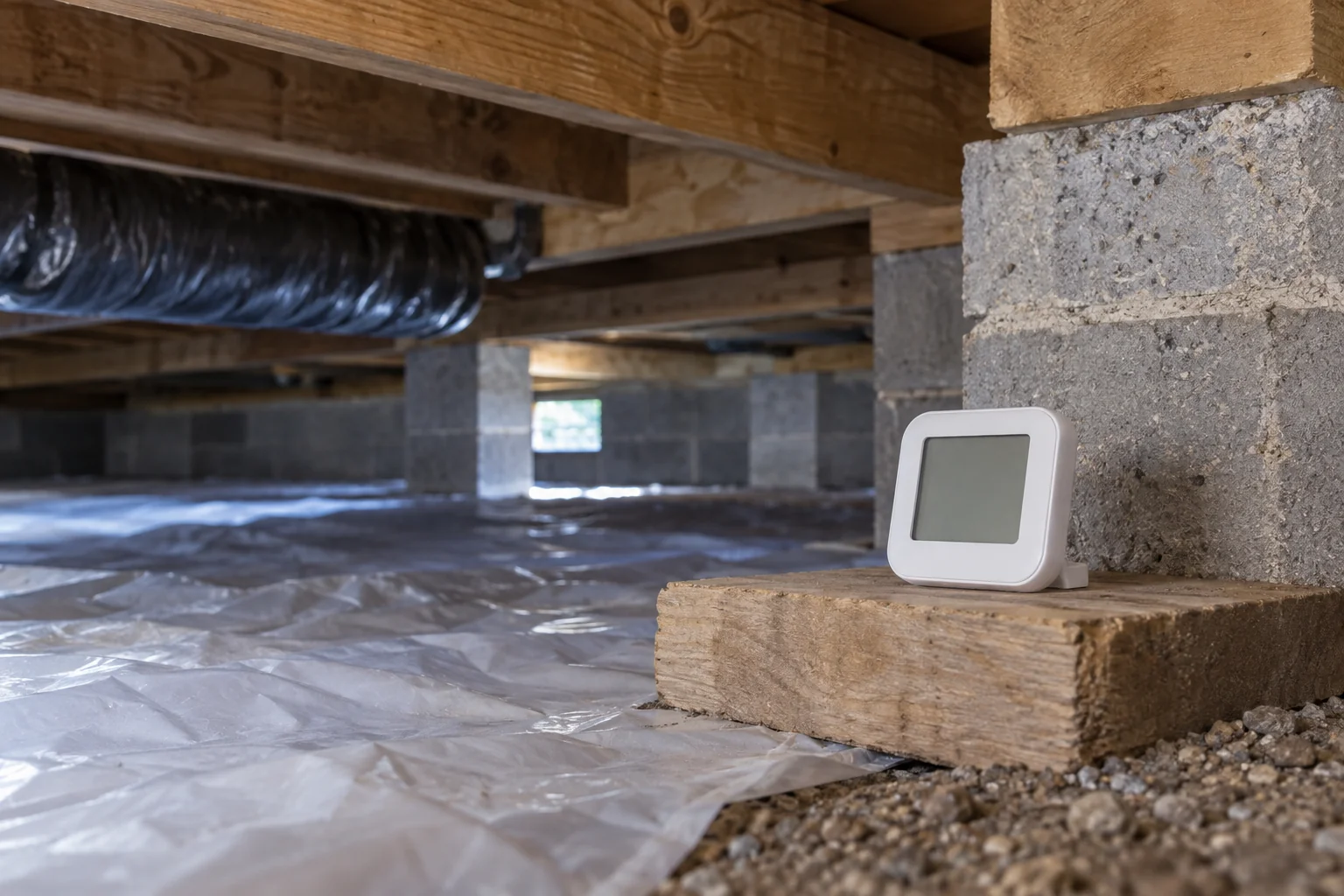
Use a suitable support and protect the device according to its instructions; ordinary indoor sensors are not waterproof. Do not attach it to plumbing or electrical equipment. Arrange qualified installation when the space is inaccessible or unsafe.
Record a photograph or sketch so future readings refer to the same position. Moving the device changes what the trend represents.
04Interpret trends with weather
Record rainfall, appliance operation and maintenance alongside readings. Compare the same locations at similar times. Temperature changes can change RH even without adding moisture, so keep both measurements.
Persistent location differences or visible wetness need investigation of the assembly. A sensor reports nearby air, not the condition of hidden wood, insulation or soil.
Sources & editorial method
The linked references support the underlying principles. The observation sequence and examples are original editorial guidance, not an inspection, product test or installation specification.
AI-assisted editorial content based on the linked references. Read our methods and review limitations.