01Ask what the proposal includes
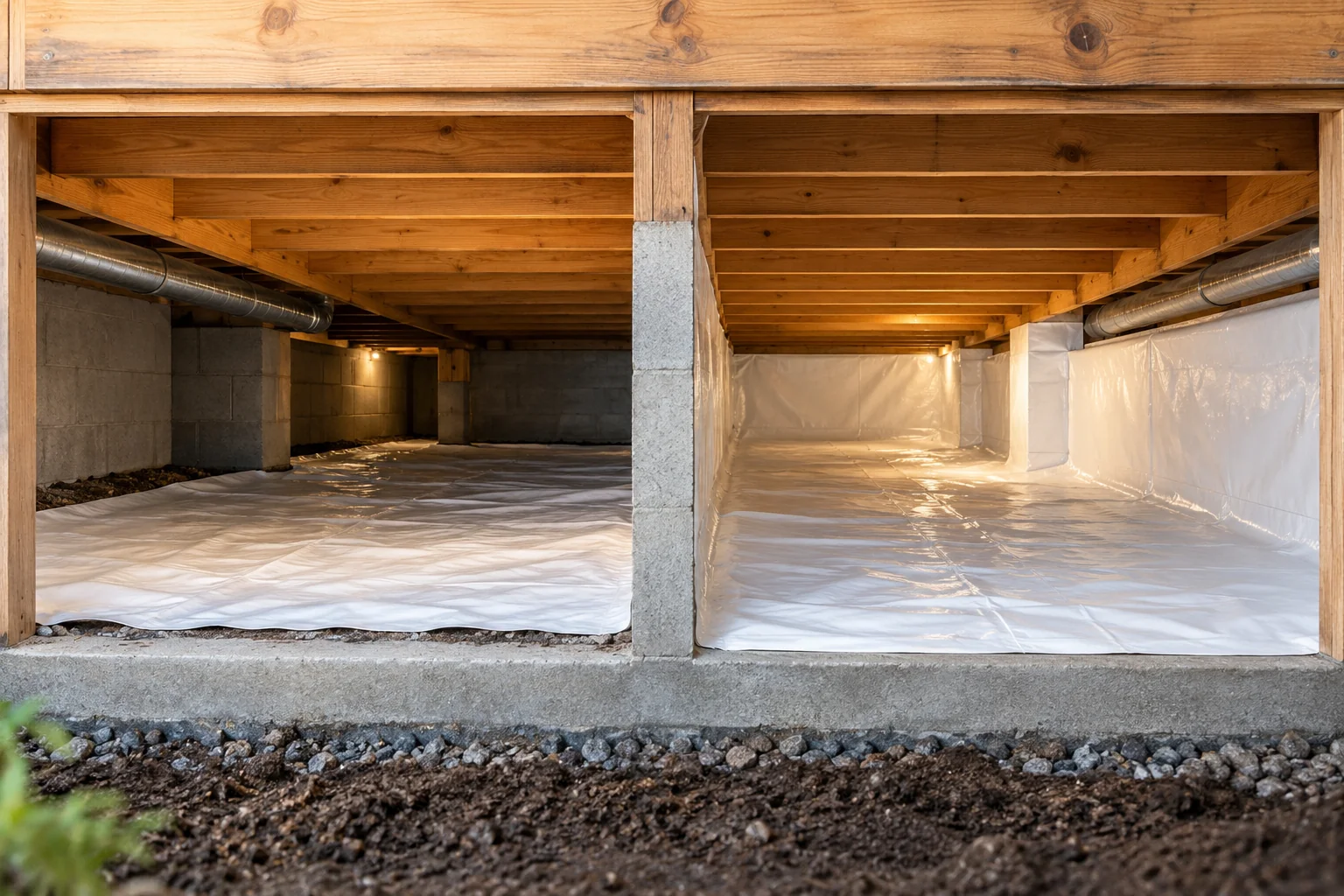
Create a list with ground covering, seams, wall and pier connections, drainage, air sealing, insulation and a drying strategy. Ask the contractor to mark each item as included, excluded or conditional. The word encapsulation alone is not a specification.
Photographs of a bright liner do not establish that drainage or hidden connections are correct. Request a written scope and details relevant to your foundation.
02Separate water entry from vapor control
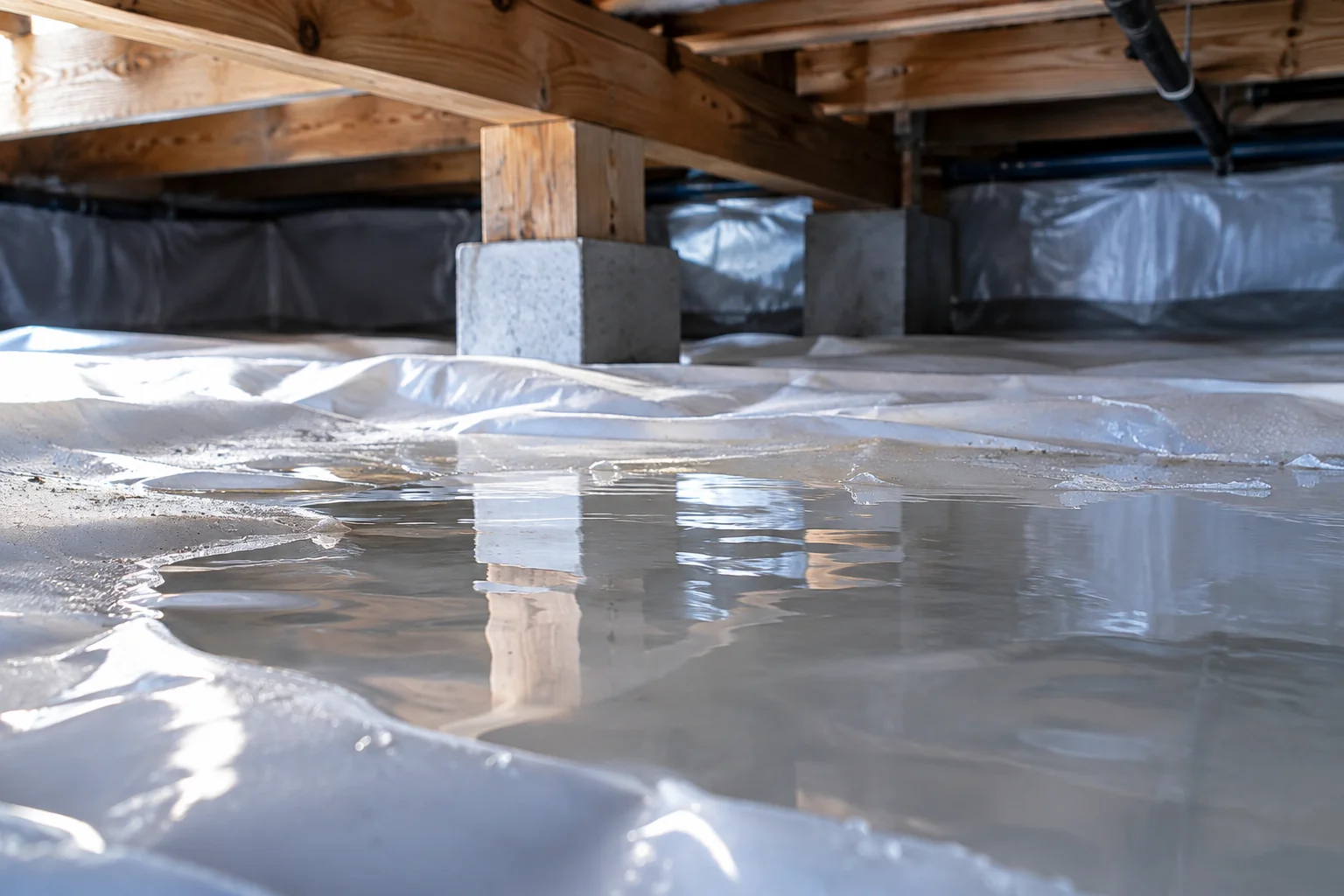
A covering over soil is not a substitute for managing flowing or standing water. Ask what happens during the wettest observed conditions and whether drainage work must precede the liner installation.
Water that appears above a liner needs its own source investigation. It could have arrived from plumbing, an opening or another path; its position alone does not diagnose the cause.
Related check: Water on a Crawl Space Vapor Barrier: What It Can Mean →
03Consider the complete building system
PNNL treats an unvented crawl space as an assembly with moisture control and a drying mechanism. A contractor should explain how the proposed design works with local climate, existing equipment and applicable requirements.
Ask specifically about radon, termite inspection access, combustion appliances and inspection of concealed surfaces where relevant. Do not copy a vent-closing detail from a different climate without qualified design advice.
04Compare outcomes and verification
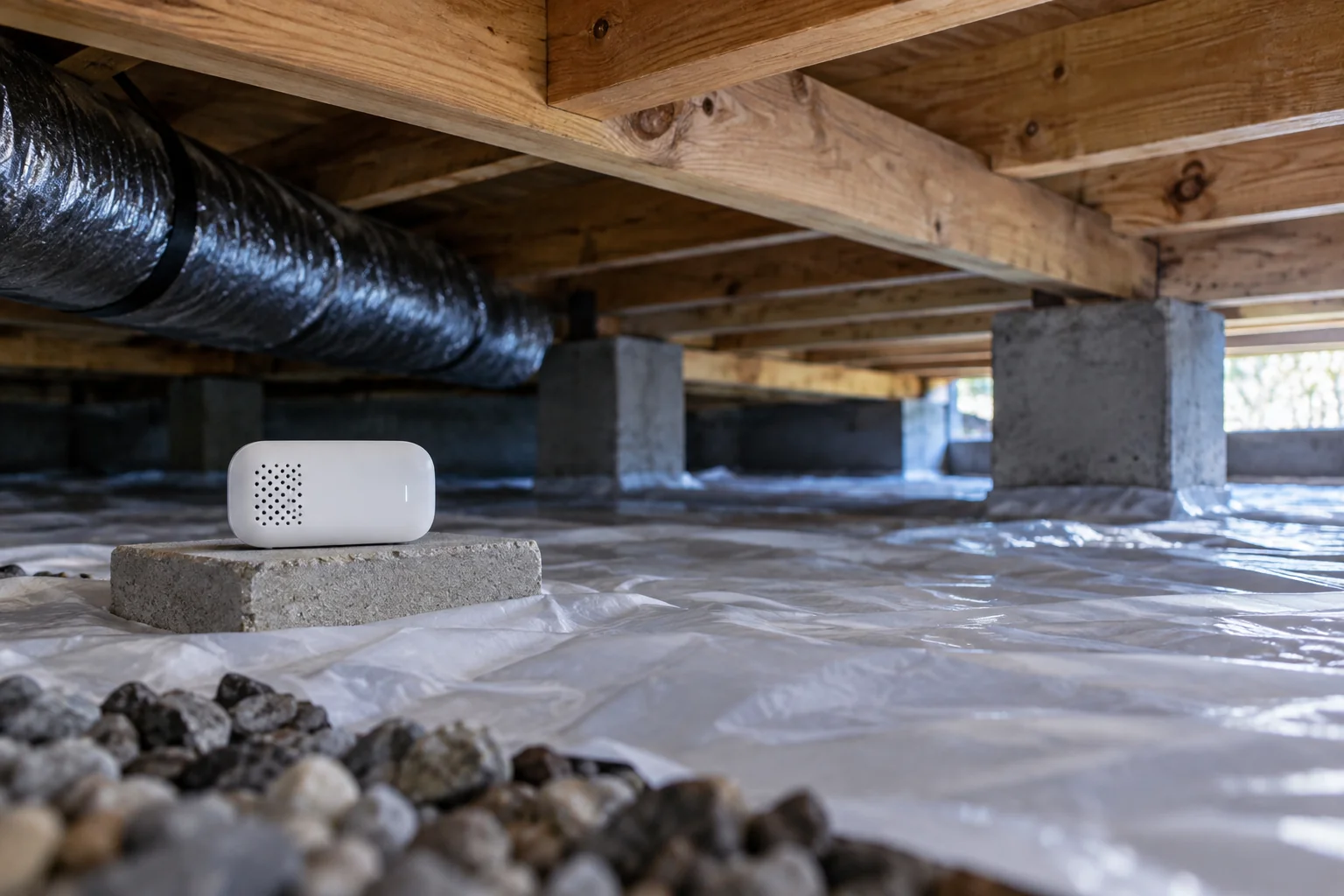
Ask how the installer will document concealed work and verify moisture performance after completion. Agree on sensor locations and what a return visit covers. Distinguish product warranties from labor and water-entry exclusions.
Choose a complete, understandable scope rather than the quote with the largest liner thickness in its headline. Material properties matter, but they are only one part of the system.
At a glance: choose your next check
| Proposal component | Question to ask |
|---|---|
| Ground covering | How are seams, piers and wall connections detailed? |
| Water management | What handles rain entry or water beneath the liner? |
| Drying and monitoring | How will the finished assembly control vapor and be checked? |
Terminology varies. Compare the written scope, not the package name.
Sources & editorial method
The linked references support the underlying principles. The observation sequence and examples are original editorial guidance, not an inspection, product test or installation specification.
AI-assisted editorial content based on the linked references. Read our methods and review limitations.