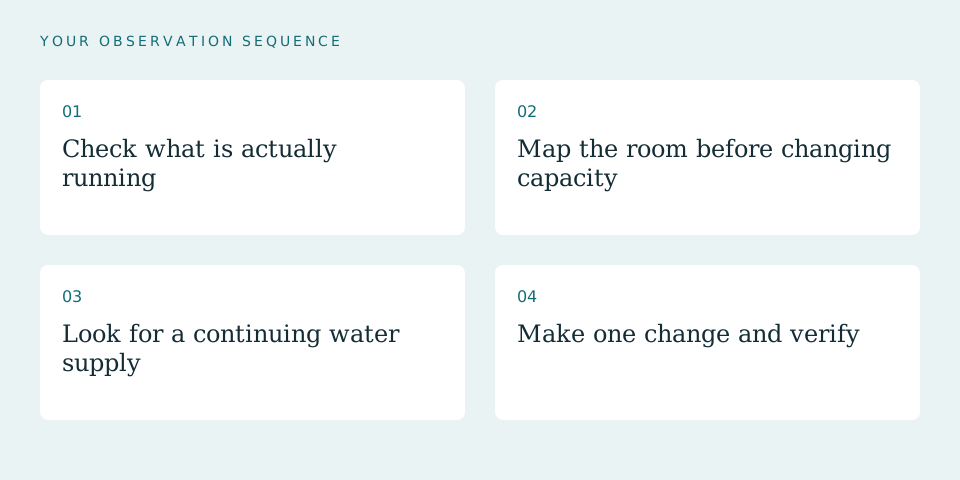
01Check what is actually running
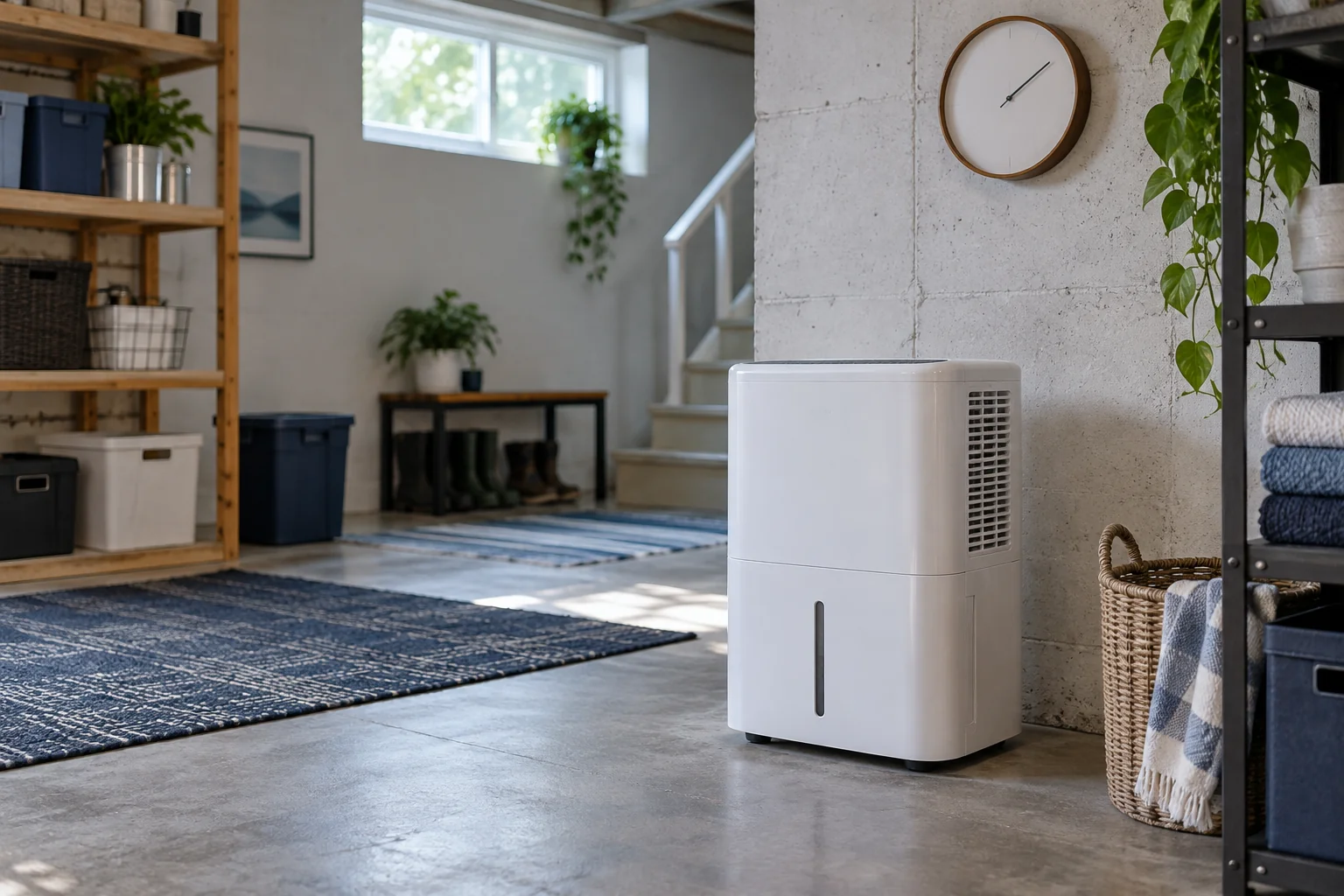
A fan can run when the compressor is resting, defrosting or waiting for the humidistat. Read the display and the model manual. Record the mode, setpoint, room temperature and whether the tank or drain receives water during a comparable period. Never remove an energized cover to investigate.
Compare readings from a room sensor with the appliance display. A sensor beside the warm outlet samples different air from one across the room. Keep the room sensor in a representative location and allow readings to settle.
02Map the room before changing capacity
Draw the basement as connected zones. Mark closed doors, storage walls, laundry equipment and the appliance. If the center improves but an enclosed corner remains humid, increasing capacity may not solve the air-path problem. Follow the specified inlet and outlet clearances and relocate boxes obstructing airflow.
Record whether windows or exterior doors are open. A machine treating continually arriving outdoor air faces a different load from one treating a closed room. Ventilation choices also need to respect combustion and indoor-air requirements.
Related check: Is It Normal for a Dehumidifier to Run All the Time? →
03Look for a continuing water supply
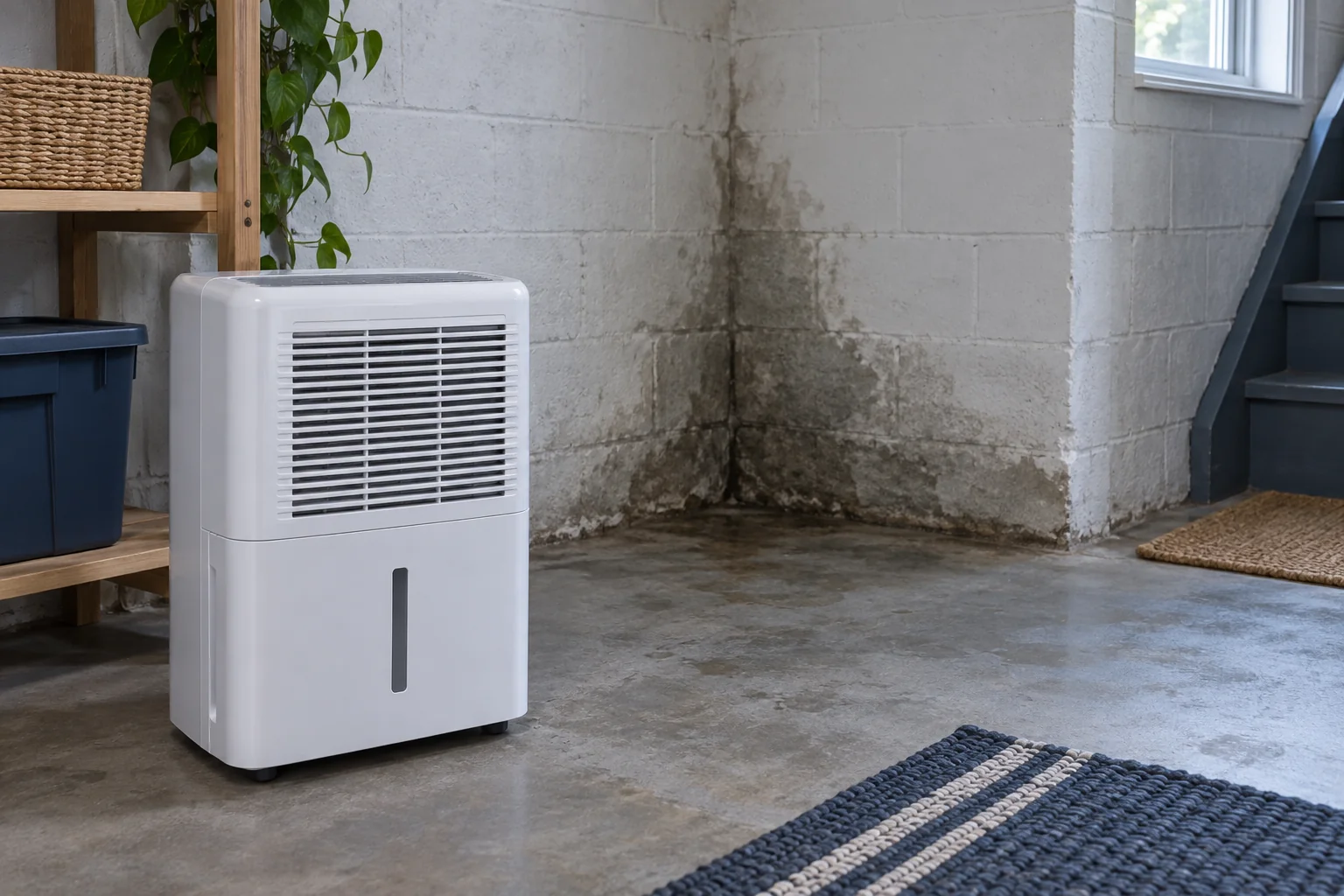
Compare dry-weather days with rain events. New wet marks at a wall-floor joint, a plumbing connection or a window deserve their own investigation. An appliance can remove evaporating water while the building continues to take in more.
If the drain is blocked or the bucket switch stops operation, correct that using the manual before judging capacity. If temperature is outside the operating range, compare equipment designed for those conditions.
04Make one change and verify
Keep a short record of humidity, temperature, water collection and weather before and after each change. A falling room reading with persistent local wetness points to a remaining local problem. No improvement despite correct setup is a reason to check the equipment and building with qualified help.
Bring the model number, room layout and log to that conversation. Avoid selecting a second unit solely because the first machine runs for many hours.
Sources & editorial method
The linked references support the underlying principles. The observation sequence and examples are original editorial guidance, not an inspection, product test or installation specification.
AI-assisted editorial content based on the linked references. Read our methods and review limitations.