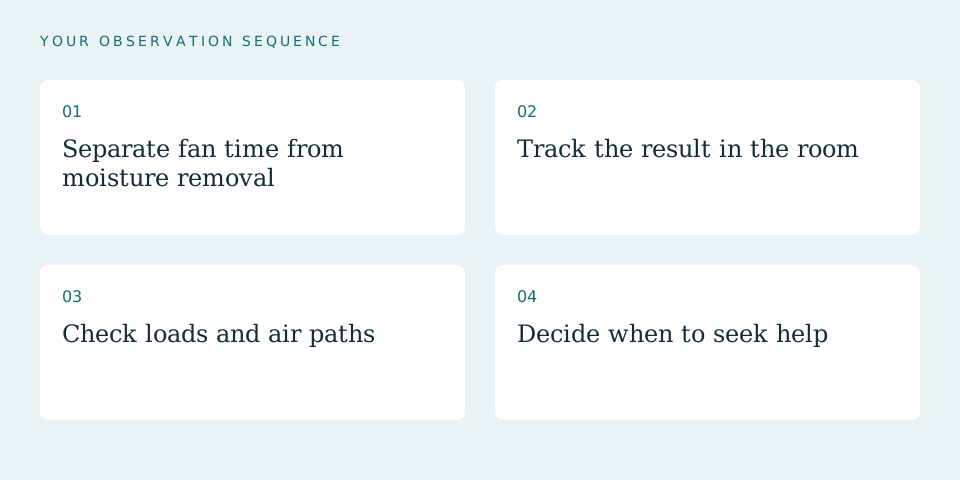
01Separate fan time from moisture removal
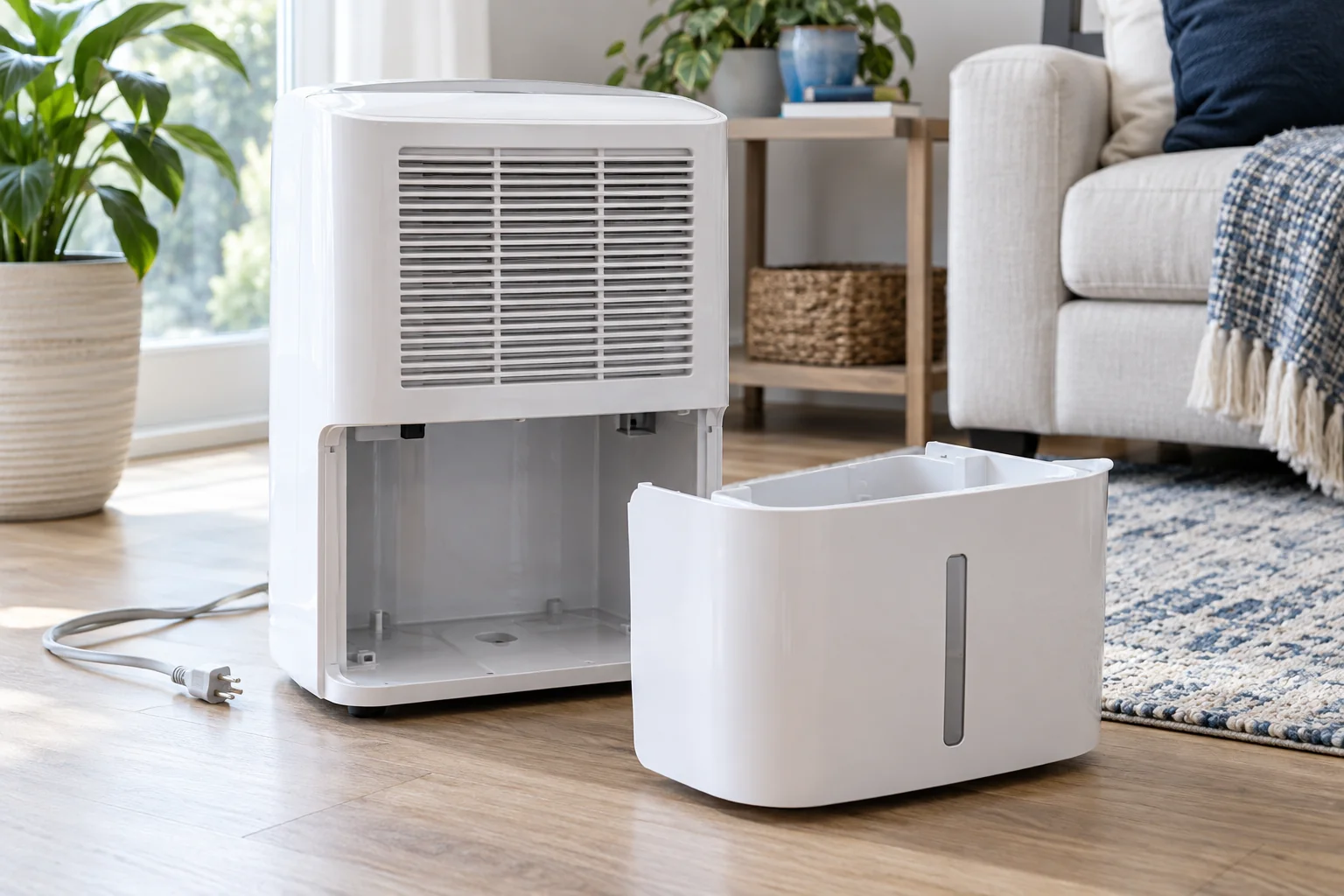
Check the manual’s description of fan behavior and humidistat cycles. A running fan does not establish that the compressor is operating continuously. Record the displayed mode and any defrost or tank indicators.
If you are estimating electricity cost, use measured energy over time when possible. Multiplying rated power by every audible fan hour can overestimate or misrepresent consumption.
02Track the result in the room
Log temperature and RH at a representative location, not just beside the appliance. Record water collection when practical and note whether the room is still drying from a known event.
A stable improvement is different from days of operation with no meaningful change. Local wetness can persist even when general room air improves.
Related check: Why Is My Basement Still Humid With a Dehumidifier? →
03Check loads and air paths
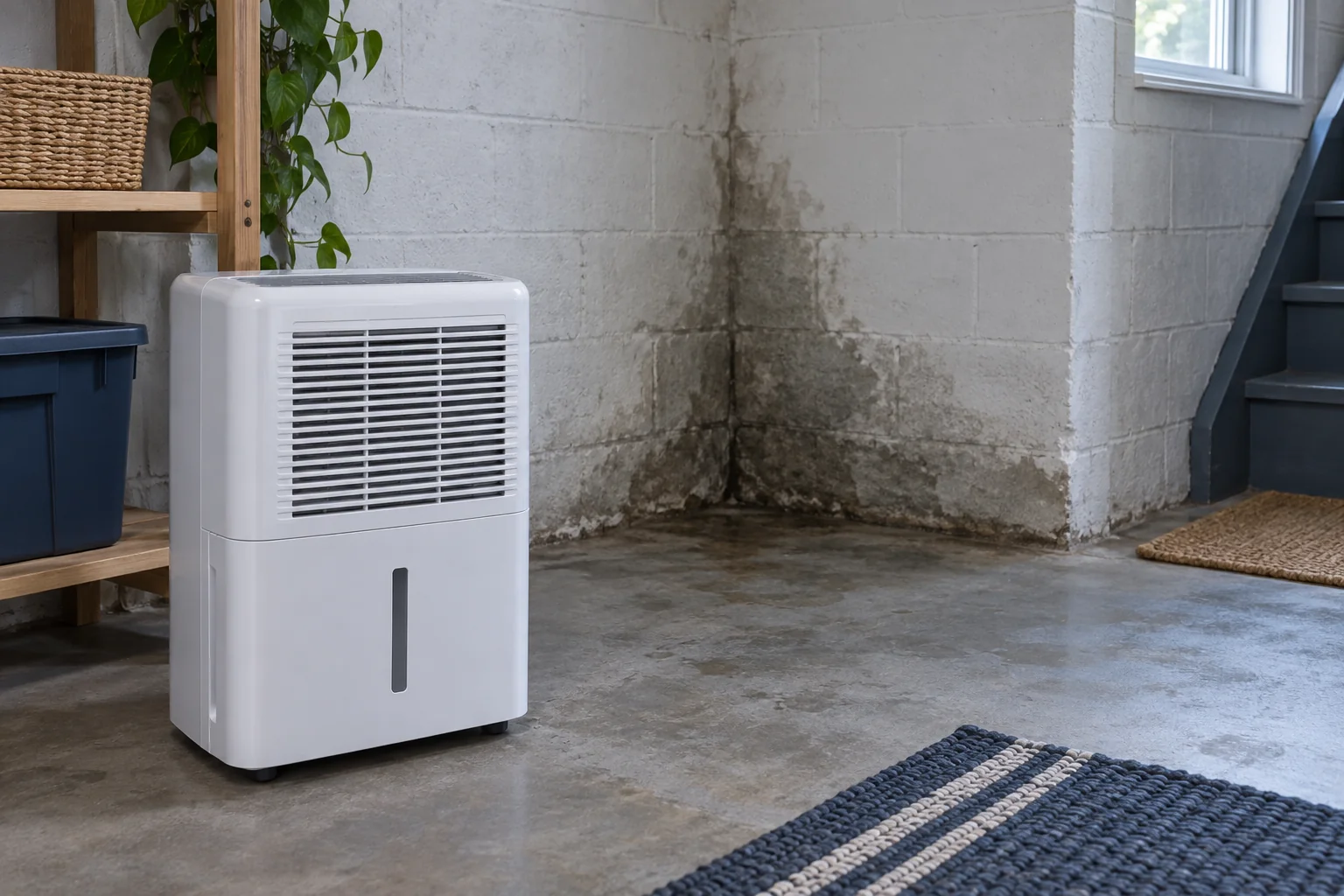
Open exterior windows, active water entry, wet materials and adjoining spaces can maintain a moisture load. Check those conditions before lowering the setpoint repeatedly. Follow ventilation and combustion-air requirements for the building.
Doors and storage can prevent the intended room from exchanging air with the unit. Review placement and clearances, then verify the capacity reference and temperature range.
04Decide when to seek help
Unusual heat, odor, electrical faults or persistent error codes require the manufacturer’s safety instructions and qualified service. Never defeat a shutoff to maintain continuous operation.
If correct operation cannot control conditions, ask whether the remaining issue is equipment capacity, air distribution or a building water source. Those require different remedies.
Sources & editorial method
The linked references support the underlying principles. The observation sequence and examples are original editorial guidance, not an inspection, product test or installation specification.
AI-assisted editorial content based on the linked references. Read our methods and review limitations.