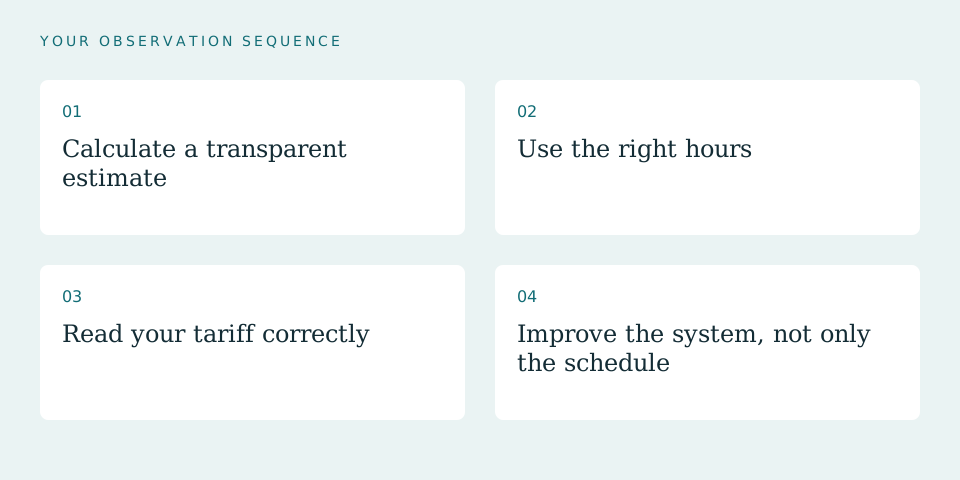
01Calculate a transparent estimate
Energy in kWh equals watts divided by 1,000, multiplied by operating hours. Cost equals energy multiplied by your price per kWh. Keep the currency consistent; the same arithmetic works for dollars, pounds or another currency.
For a 400 W load running eight hours per day for 30 days: 0.4 × 8 × 30 = 96 kWh. At 0.25 per kWh, the energy charge is 24.00 in that currency. This is an example, not a forecast or quoted tariff.
02Use the right hours
An appliance’s fan and compressor can cycle differently. If wattage changes during operation, a single nameplate number does not capture the pattern. Use a suitable energy meter only within its electrical ratings and the appliance’s instructions.
Alternatively, compare your smart-meter records carefully while accounting for other household loads. Whole-house changes do not isolate the dehumidifier automatically.
Related check: Is It Normal for a Dehumidifier to Run All the Time? →
03Read your tariff correctly
Use the applicable marginal energy rate. Time-of-use rates require separating consumption into their time bands. Standing charges that you pay regardless of appliance use are not additional dehumidifier energy cost.
Taxes, tiered prices and demand charges can complicate the calculation. The simple calculator intentionally models one constant rate.
04Improve the system, not only the schedule
Look for avoidable moisture sources and drainage problems before cutting runtime enough to let conditions deteriorate. Compare equipment using a relevant efficiency measure and appropriate capacity, rather than wattage alone.
Recalculate after changes using observed consumption and room conditions. A lower bill is not an improvement if persistent wetness returns.
At a glance: choose your next check
| Example input | Value |
|---|---|
| Power and runtime | 400 W × 8 hours/day × 30 days |
| Energy calculation | 0.4 kW × 240 hours = 96 kWh |
| Cost at 0.25 per kWh | 96 × 0.25 = 24.00 in the entered currency |
Illustrative constant-power calculation. Your appliance cycles and your tariff may vary.
Sources & editorial method
The linked references support the underlying principles. The observation sequence and examples are original editorial guidance, not an inspection, product test or installation specification.
AI-assisted editorial content based on the linked references. Read our methods and review limitations.