How mechanical dehumidification works
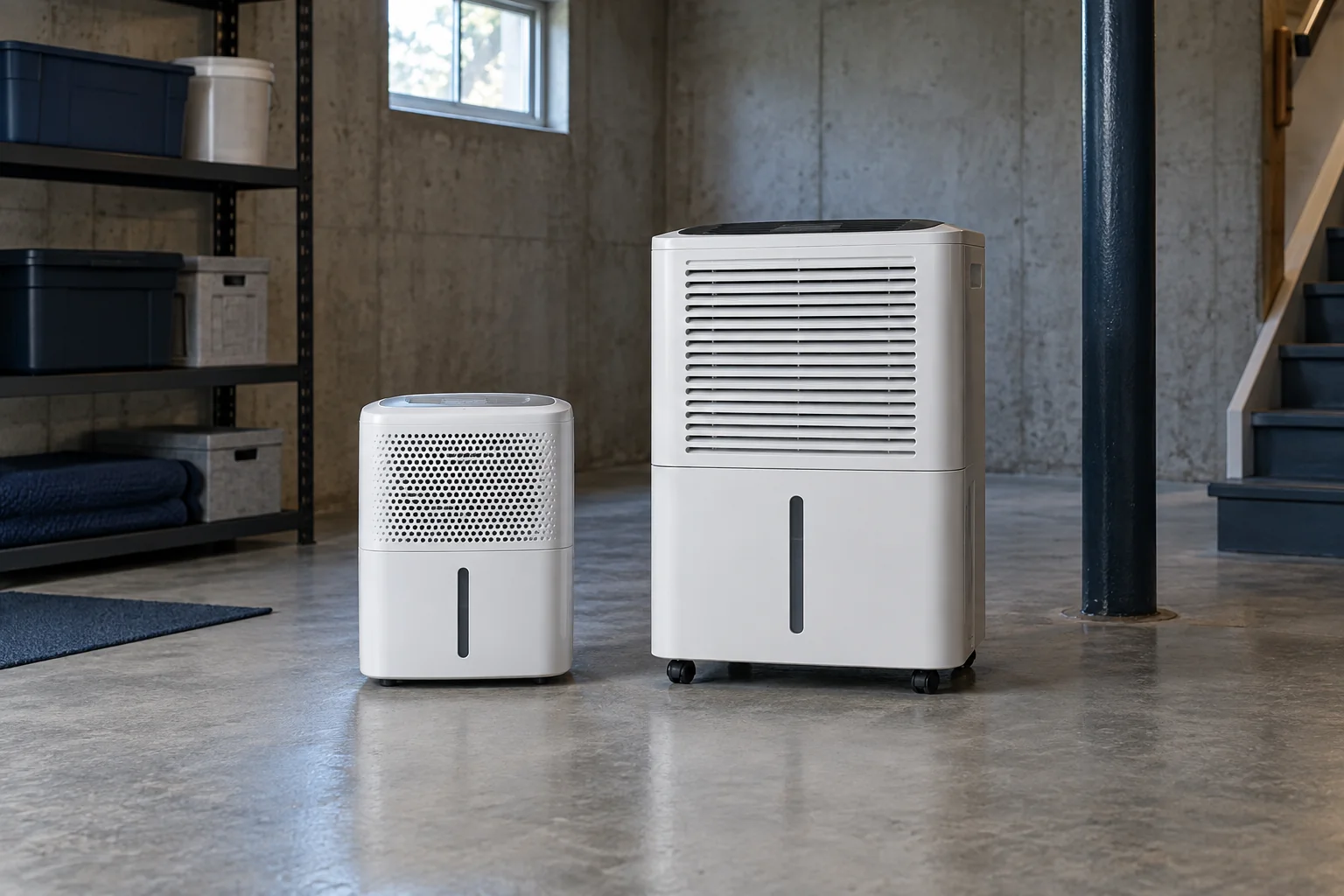
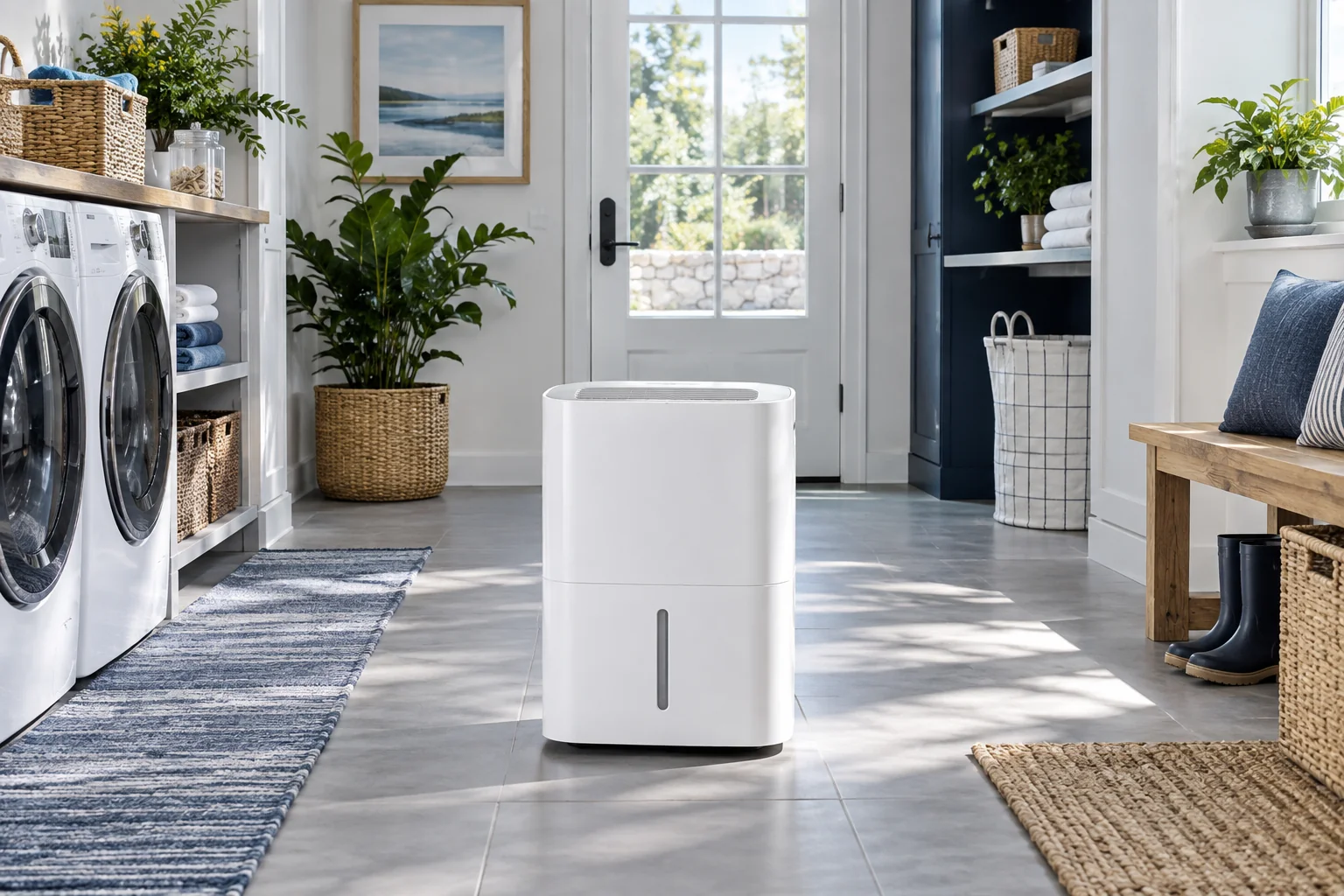
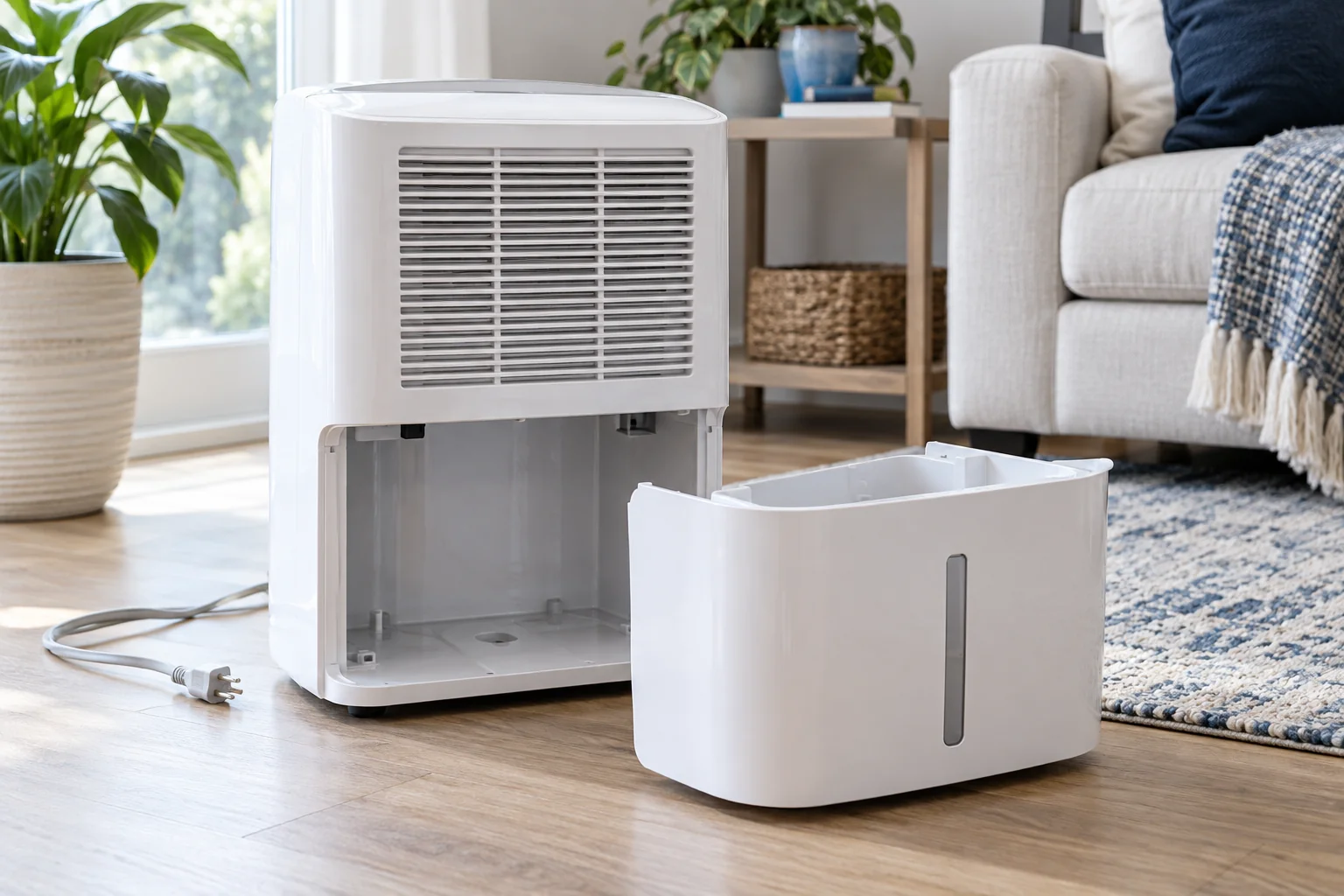
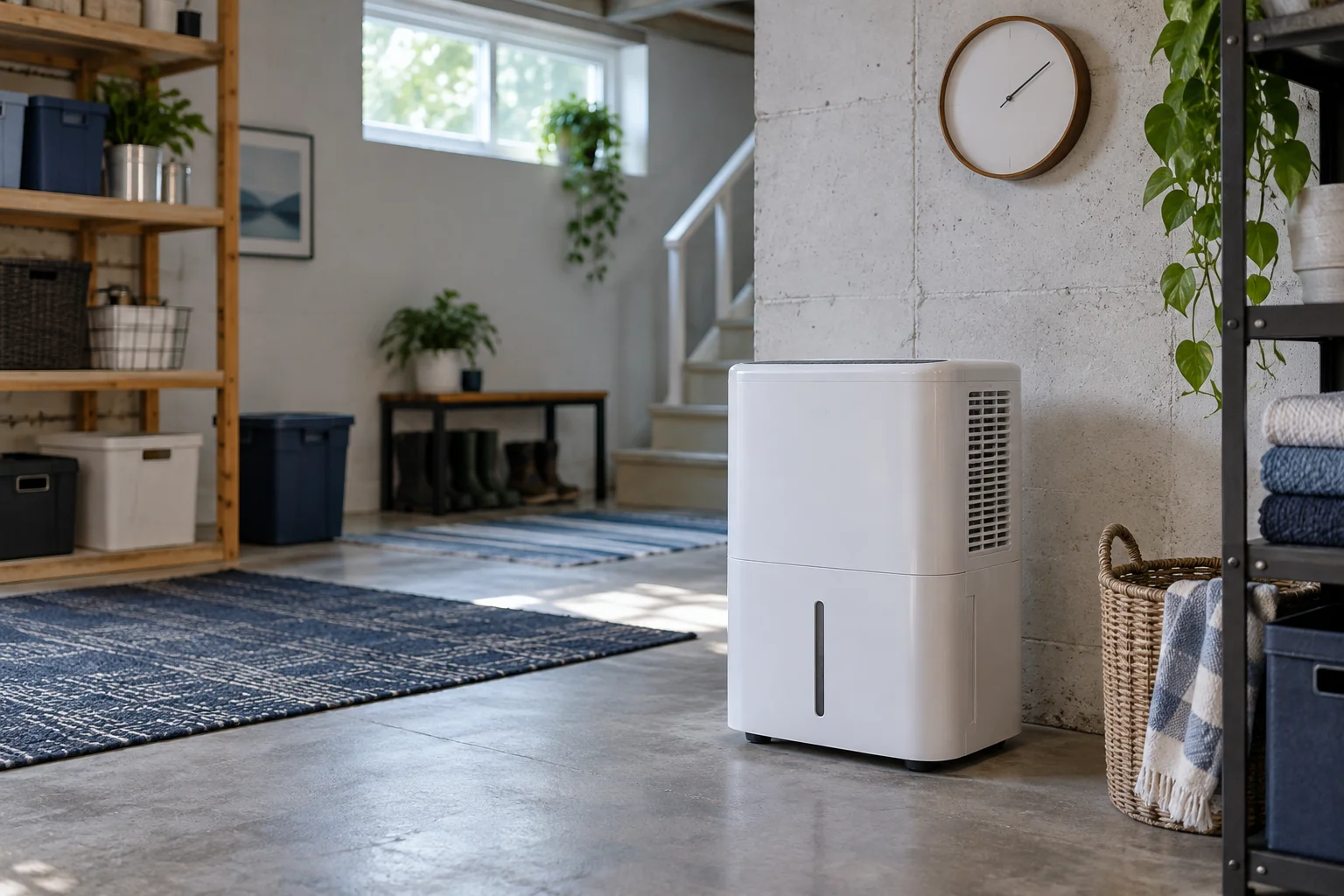
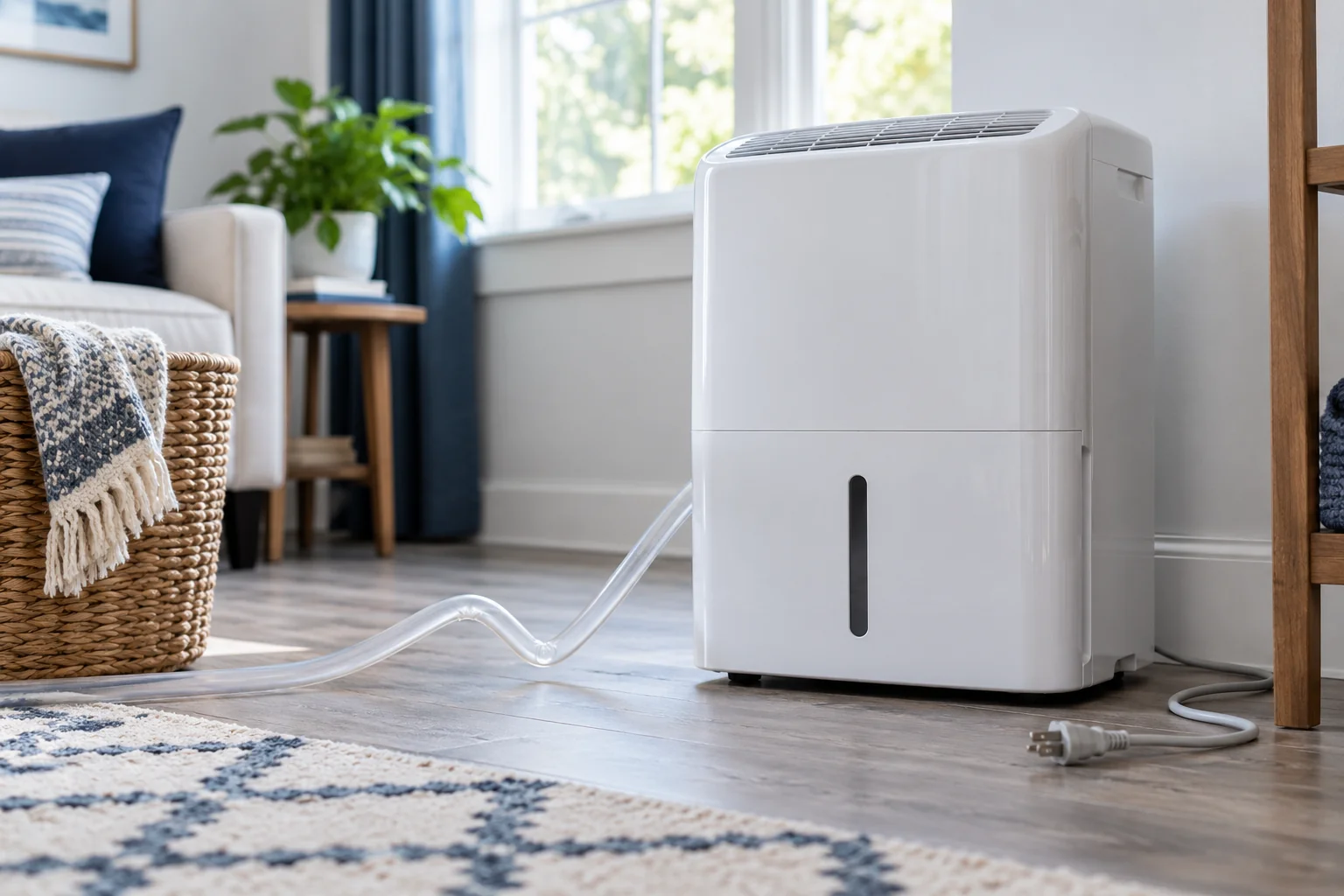
Standard residential dehumidifiers operate using a vapor-compression refrigeration cycle. A fan draws moist room air across cold evaporator coils. When the incoming air is chilled below its dew point, moisture condenses into liquid water and drips into a collection bucket or gravity drain hose. The air is then reheated across condenser coils and exhausted back into the room as dry, slightly warmed air.
Understanding this cycle is key to avoiding common mistakes. In cool spaces (such as basements or unheated crawl spaces below 65°F), evaporator coils can develop frost or ice, triggering defrost cycles that halt moisture extraction. Furthermore, modern DOE standards (AHAM DH-1 2019) rate dehumidifiers at 65°F and 60% RH—producing lower numerical pint ratings (e.g. 50 pints) compared to older 2012 test standards (e.g. 70 pints) for the exact same physical extraction capacity.
Dehumidifier troubleshooting decision matrix
| Symptom or dilemma | Underlying physical cause | Actionable diagnostic guide |
|---|---|---|
| Fan and compressor run non-stop 24/7 | Continuous infiltration of outdoor humid air, open doors, or target RH set too low | Why Dehumidifier Runs Constantly → |
| Appliance runs but bucket remains completely dry | Ambient temperature too low (< 60°F), full float switch stuck, or failed refrigeration charge | Running But Not Collecting Water → |
| Continuous drain hose attached but water still fills bucket | Hose has upward loops, airlock, or internal hose barb blockage | Drain Hose Troubleshooting Checklist → |
| Dehumidifier display says 45% but wall hygrometer says 60% | Microclimate near exhaust air; built-in humidistat reading warmed return air | Dehumidifier vs Hygrometer Readings → |
| Unsure how many pints capacity is needed for room size | Calculate square footage, ambient dampness severity, and ceiling volume | Dehumidifier Capacity Sizing Guide → |
| Concerned about electrical bill impact of continuous running | Estimate power wattage (300W–700W) multiplied by local kWh electricity rates | Dehumidifier Electricity Cost Guide → |