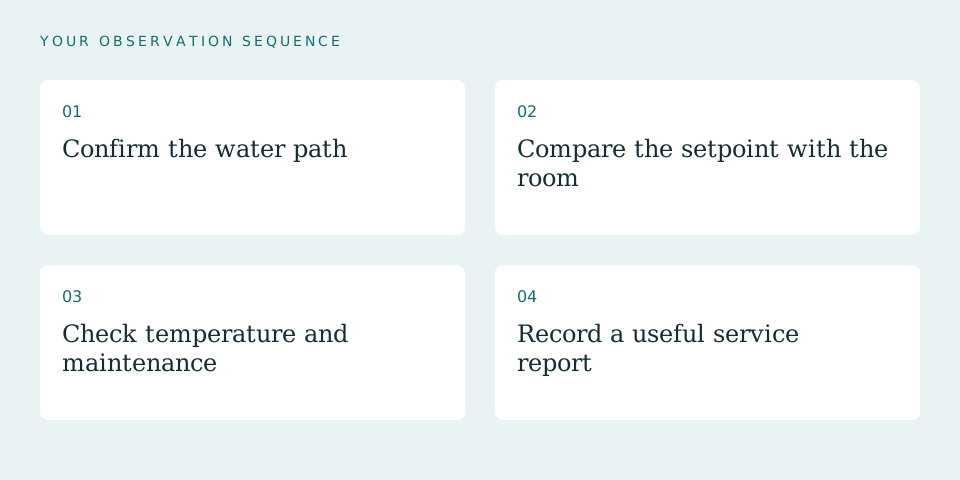
01Confirm the water path
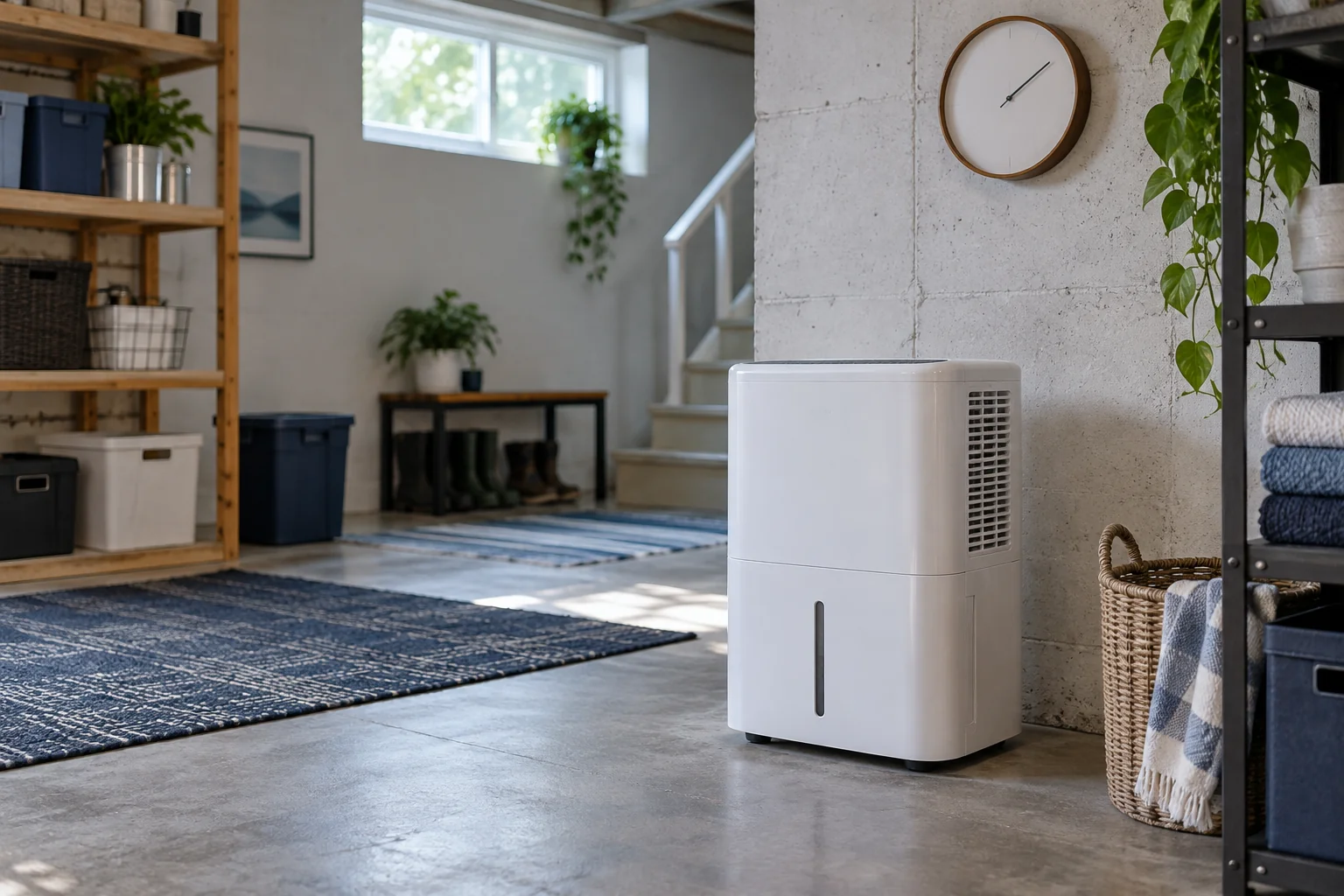
Check whether a continuous drain hose or pump is connected. An empty bucket is normal when water is leaving through the intended drain. Look for leaks along the accessible route without moving energized equipment.
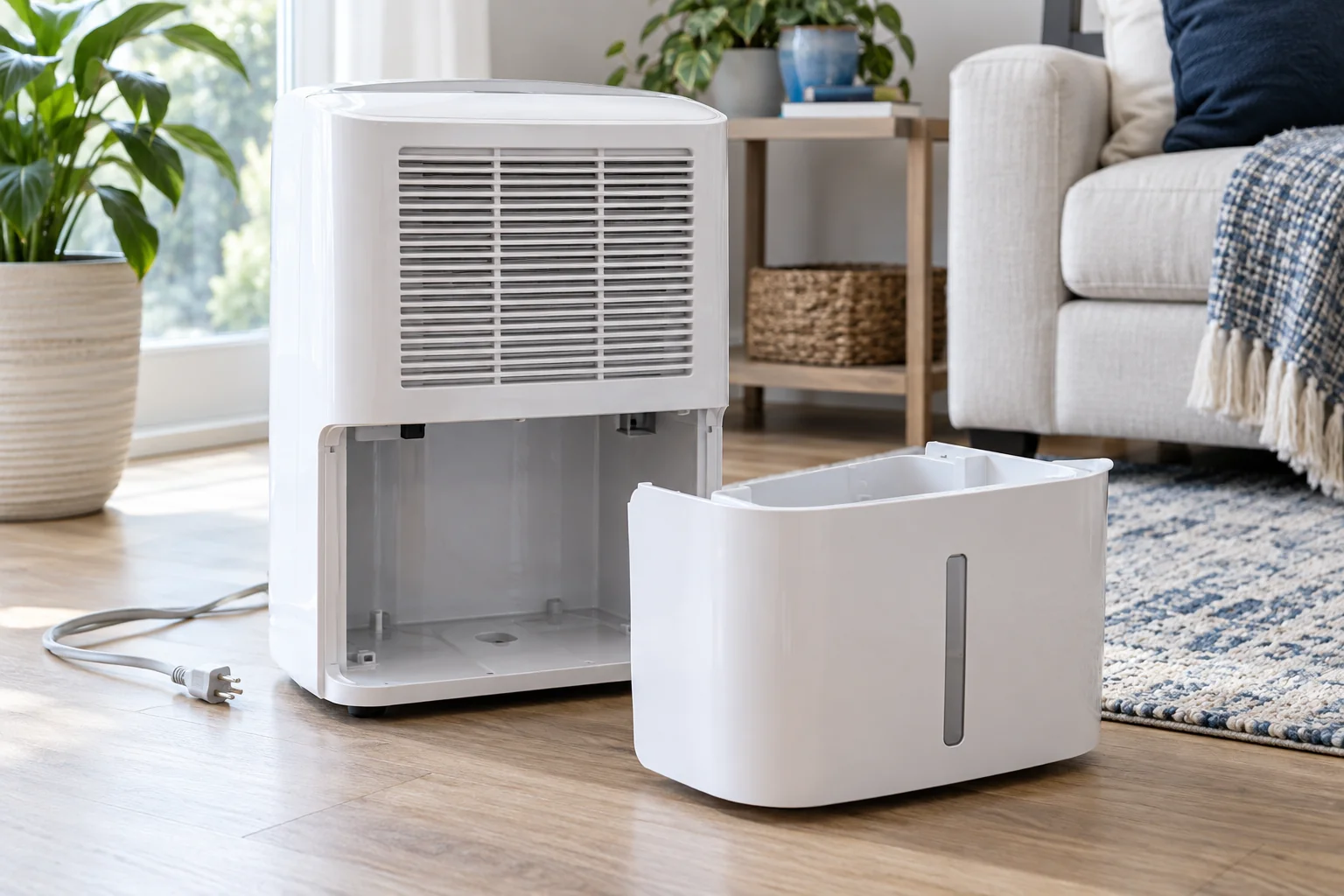
If using the bucket, confirm it is seated according to the manual and that no full-bucket indicator is active. Do not bypass switches or interlocks.
02Compare the setpoint with the room
Record current RH and the chosen target. A unit may stop moisture removal when its control considers the target met, while a fan continues to run. Compare with a separate room sensor and note its location.
Check mode and schedule settings. A timer or fan-only behavior can explain operation that sounds normal but does not collect water.
Related check: Is It Normal for a Dehumidifier to Run All the Time? →
03Check temperature and maintenance
Read the specified operating range. Cold-room operation, defrost cycles and model-specific limits can affect collection. Inspect the filter only as directed, after following the shutdown instructions.
Do not chip ice from coils or open the refrigerant circuit. Error codes, persistent icing or unusual electrical symptoms belong with the manufacturer or qualified service.
04Record a useful service report
Write down model, settings, room readings, indicators and whether any water was collected over a known interval. Avoid treating an arbitrary collection amount as a pass/fail threshold. Actual water removal depends on conditions.
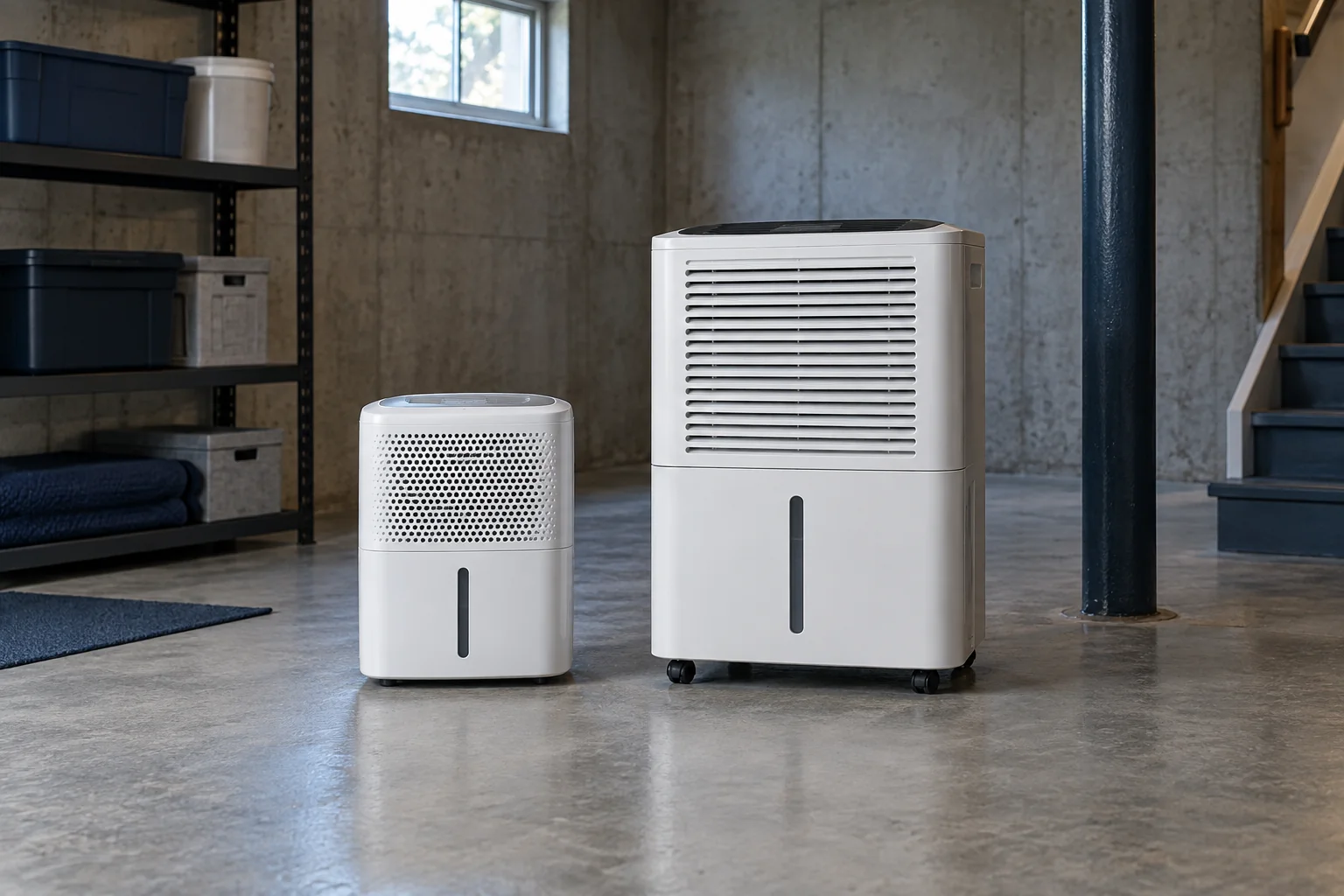
If setup is correct and performance remains poor, contact service with that record. Buying a larger machine before identifying a control or equipment fault may leave the original problem unresolved.
At a glance: choose your next check
| Observation | Check before replacing |
|---|---|
| Bucket empty, drain connected | Confirm whether water is leaving through the drain. |
| Fan audible, humidity near setpoint | Read the manual’s control and fan behavior. |
| Cold room or persistent ice | Check operating limits and manufacturer service guidance. |
Never bypass a safety switch or open an energized appliance.
Sources & editorial method
The linked references support the underlying principles. The observation sequence and examples are original editorial guidance, not an inspection, product test or installation specification.
AI-assisted editorial content based on the linked references. Read our methods and review limitations.