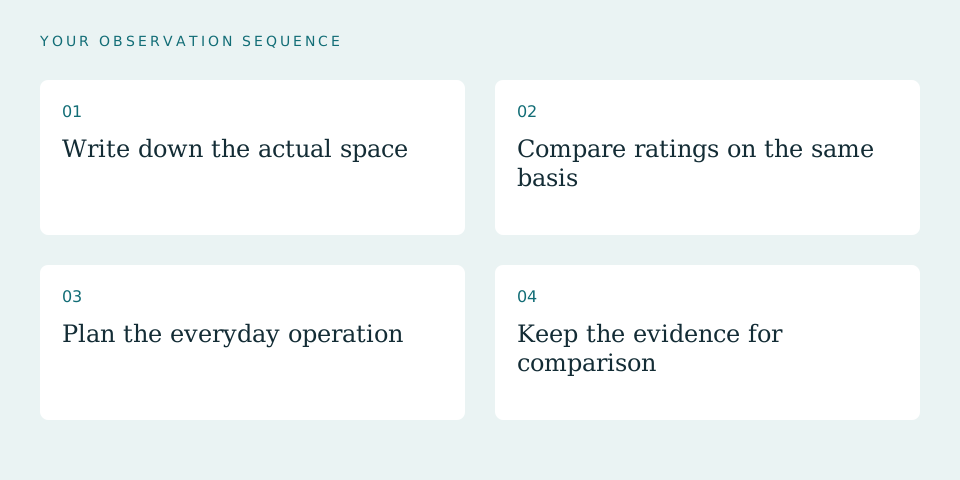
01Write down the actual space
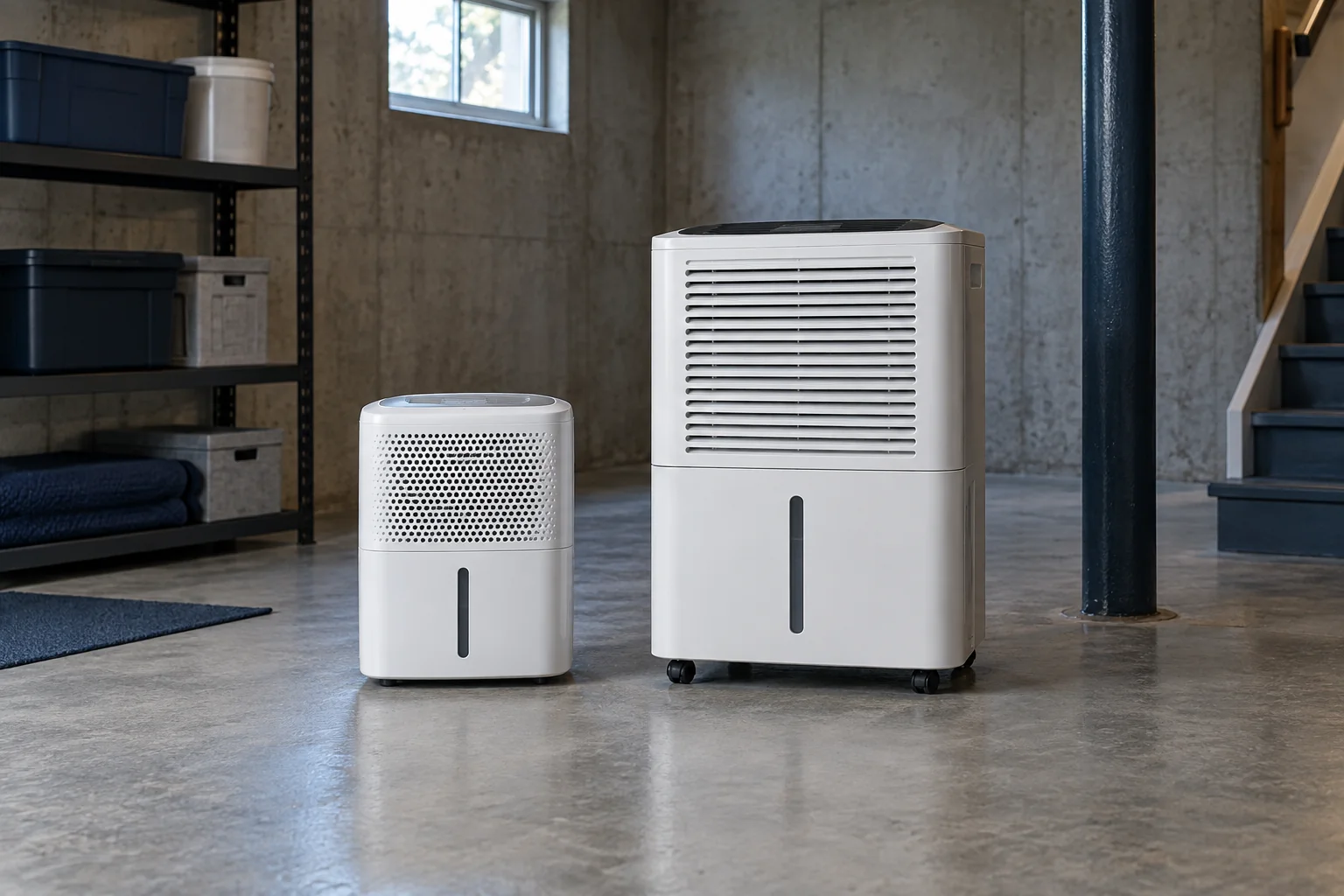
Measure the connected floor area and sketch doors or partitions. Record typical temperature and humidity before equipment runs. A manufacturer’s room-size claim does not describe every divided basement or crawl-space layout.
Document active water entry separately. A new appliance cannot repair a plumbing leak or redirect rainwater, and those problems can distort the apparent moisture load.
02Compare ratings on the same basis
Use the published capacity reference as a starting band, then check each model’s current specifications and test conditions. Do not compare an old label with a newer rating as if their test conditions were identical.
Review the operating-temperature range, defrost behavior and efficiency information. A lower wattage alone does not establish lower energy use for the same moisture-removal task.
Related check: What Size Dehumidifier Do I Need? →
03Plan the everyday operation
Decide whether you can empty a bucket consistently or need continuous drainage. Confirm gravity slope or pump limits in the manual and identify a suitable discharge location before buying.
Check physical dimensions, inlet and outlet clearances, outlet requirements, filter access and bucket removal space. Include the hose route and service access in your room sketch.
04Keep the evidence for comparison
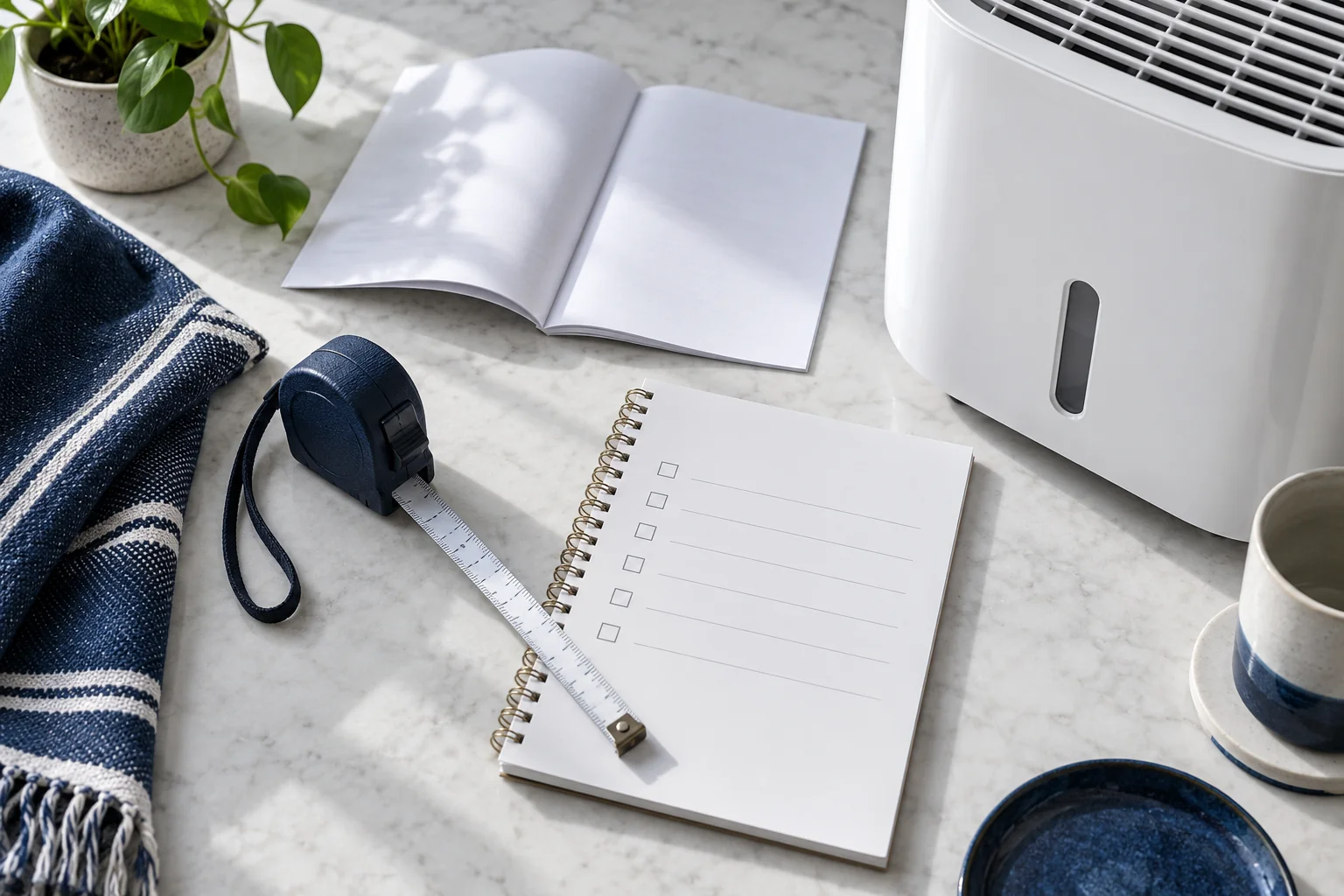
Make a short comparison sheet with model, capacity basis, temperature range, drainage, efficiency, dimensions, warranty and service route. Leave a blank where a specification is unavailable instead of filling it with a guess.
After installation, keep the receipt and manual and record room conditions through ordinary use. Verify that the intended areas improve. Return and warranty arrangements are product-specific; review the actual terms rather than assuming an online recommendation covers them.
Sources & editorial method
The buying worksheet is an original editorial comparison method. No products were independently tested or ranked.
AI-assisted editorial content based on the linked references. Read our methods and review limitations.