01Start with the location and timing
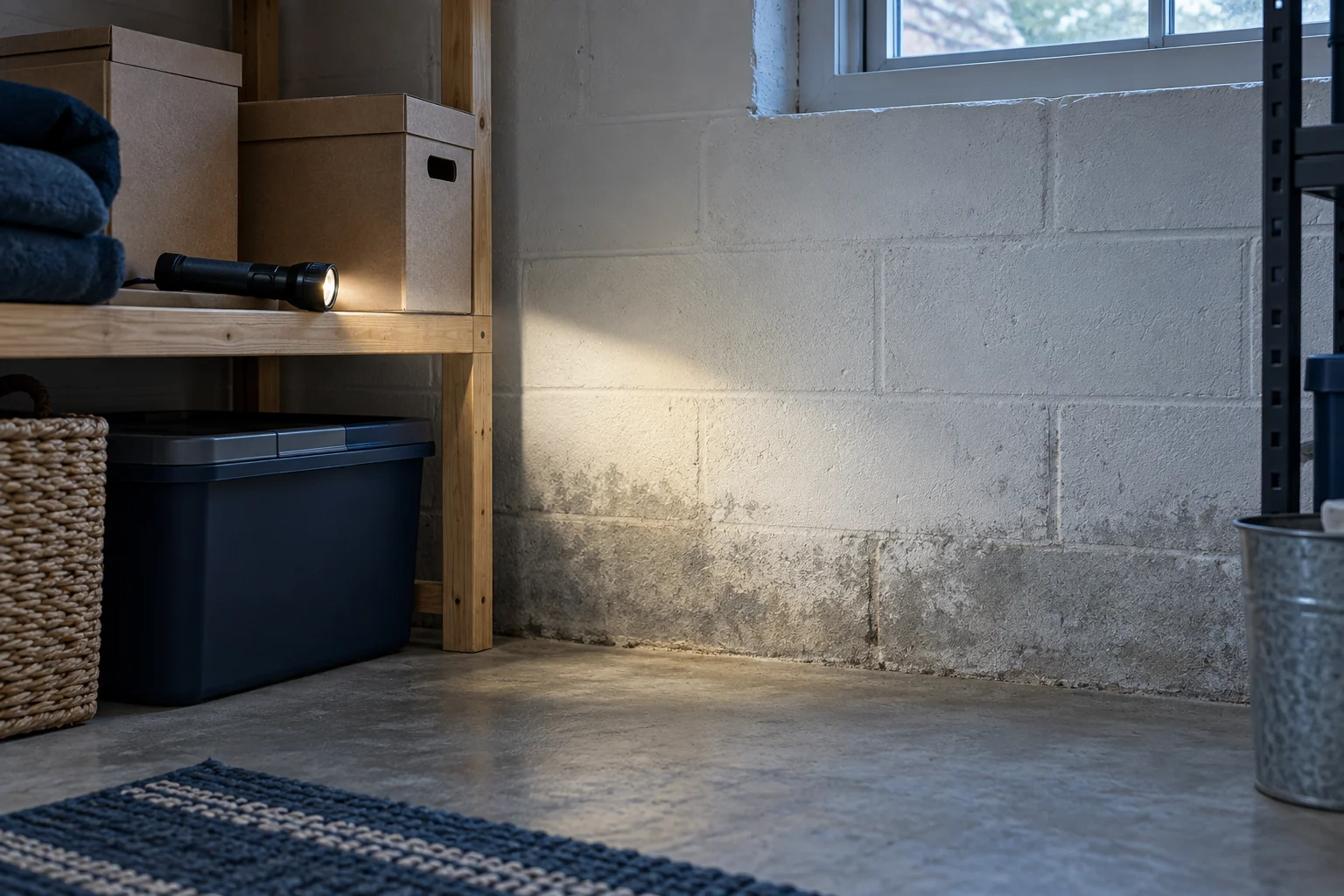
Note where the odor is strongest from an ordinarily accessible area. Compare a storage cupboard, wall edge, floor drain and laundry area without opening wall cavities or moving suspect materials unnecessarily. Record whether the odor follows rain or returns after the room has been closed.
Do not use fragrance as a diagnostic test. Masking an odor makes it harder to compare conditions and does not address its source.
02Inspect ordinary moisture reservoirs
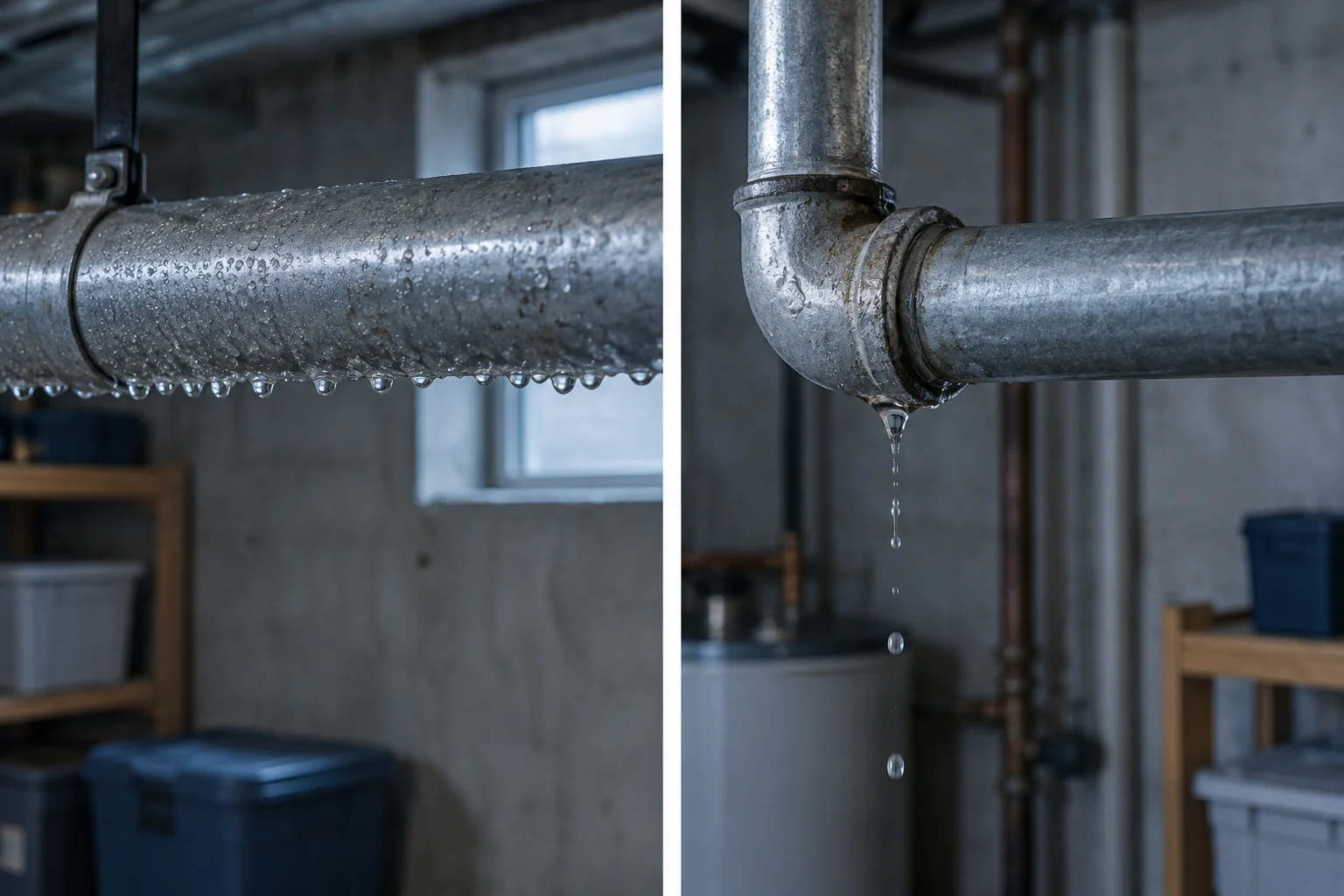
Check the outside of stored cardboard, the underside of accessible furniture, laundry drainage and visible plumbing. Look for dampness, staining and recurring condensation. Avoid disturbing visibly affected materials or entering unsafe spaces.
Move dry possessions into a dry location while investigating. If a box is already damp, putting it into a closed plastic tote can retain moisture; dry or appropriately handle the contents first.
Related check: Basement Condensation or a Leak? How to Compare the Clues →
03Build a record that a professional can use
Take humidity and temperature readings in the main room and near the affected zone, letting each sensor settle. Add dates, weather and photographs of visible changes. Ordinary humidity readings cannot rule out moisture inside a wall or under flooring.
If the odor persists without an accessible explanation, arrange a building-moisture investigation. Health symptoms require appropriate medical advice, separate from the building inspection.
04Avoid premature conclusions
Do not declare a basement mold-free because its humidity dropped, or assume that every odor means extensive mold. EPA guidance distinguishes situations suitable for limited homeowner handling from larger or complicated damage. Use that guidance and local qualified help when the situation is uncertain.
After the moisture source is addressed, compare odor and readings through another similar weather event. A short improvement followed by recurrence means the investigation is incomplete.
Sources & editorial method
The linked references support the underlying principles. The observation sequence and examples are original editorial guidance, not an inspection, product test or installation specification.
AI-assisted editorial content based on the linked references. Read our methods and review limitations.