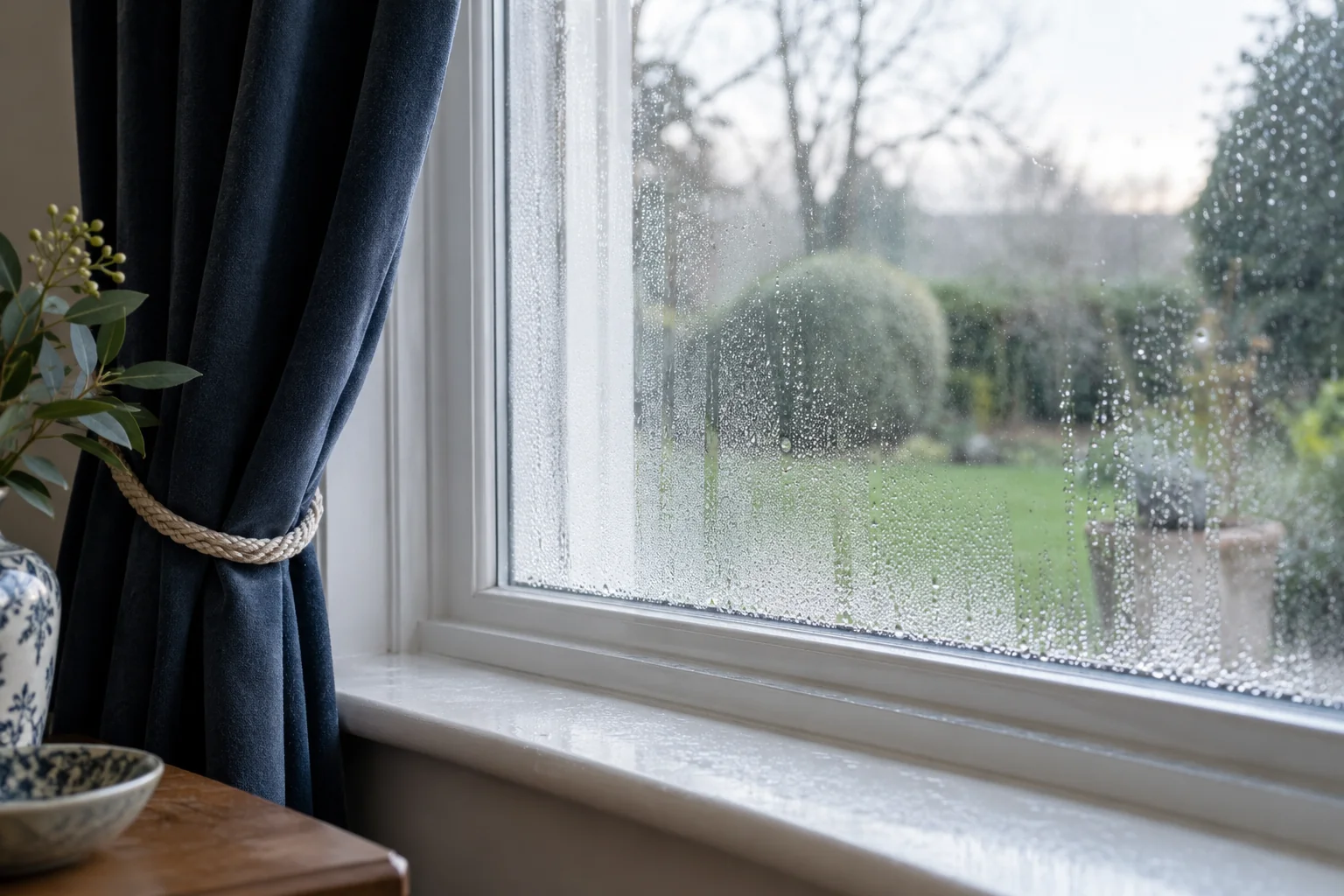
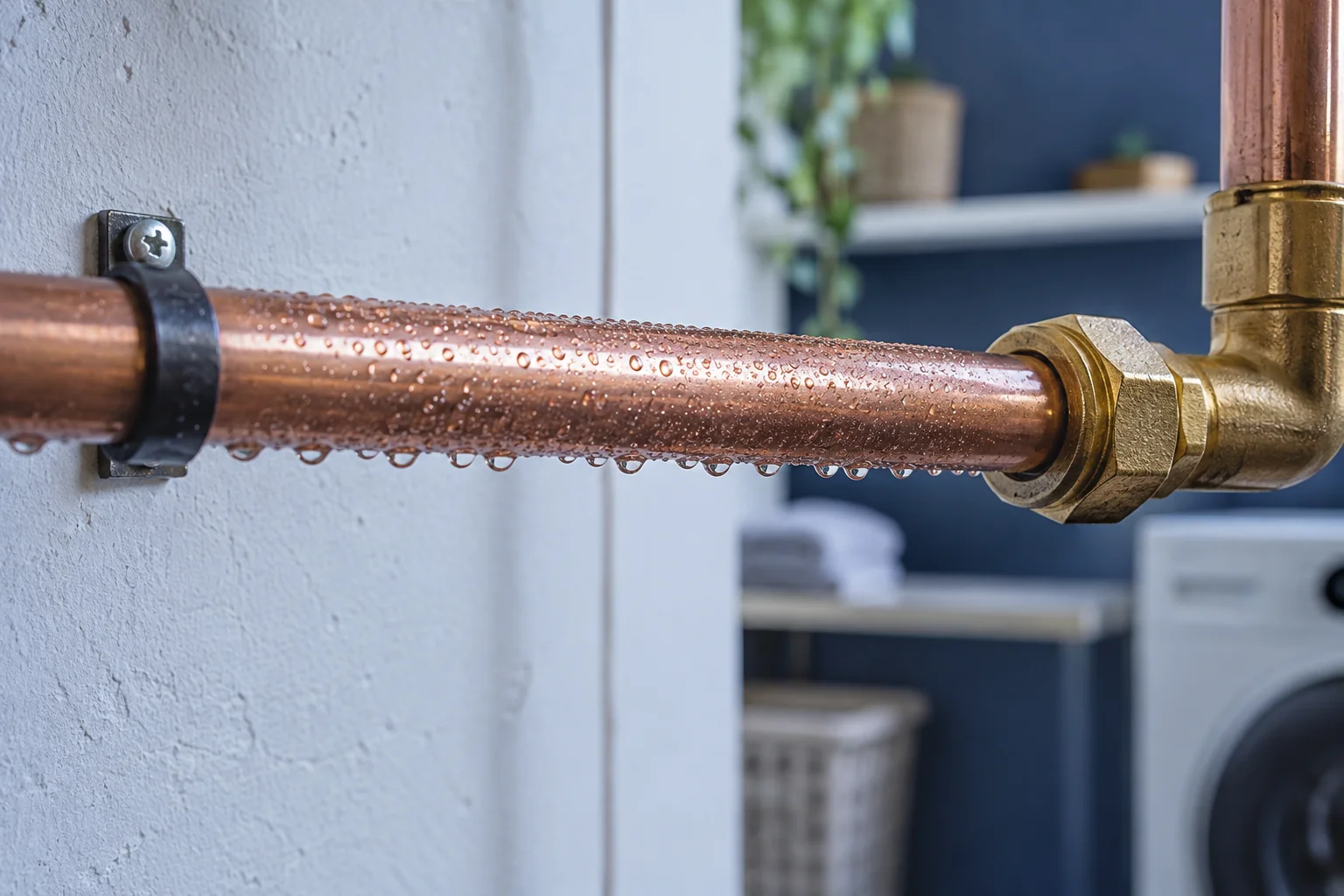
The physics of indoor condensation
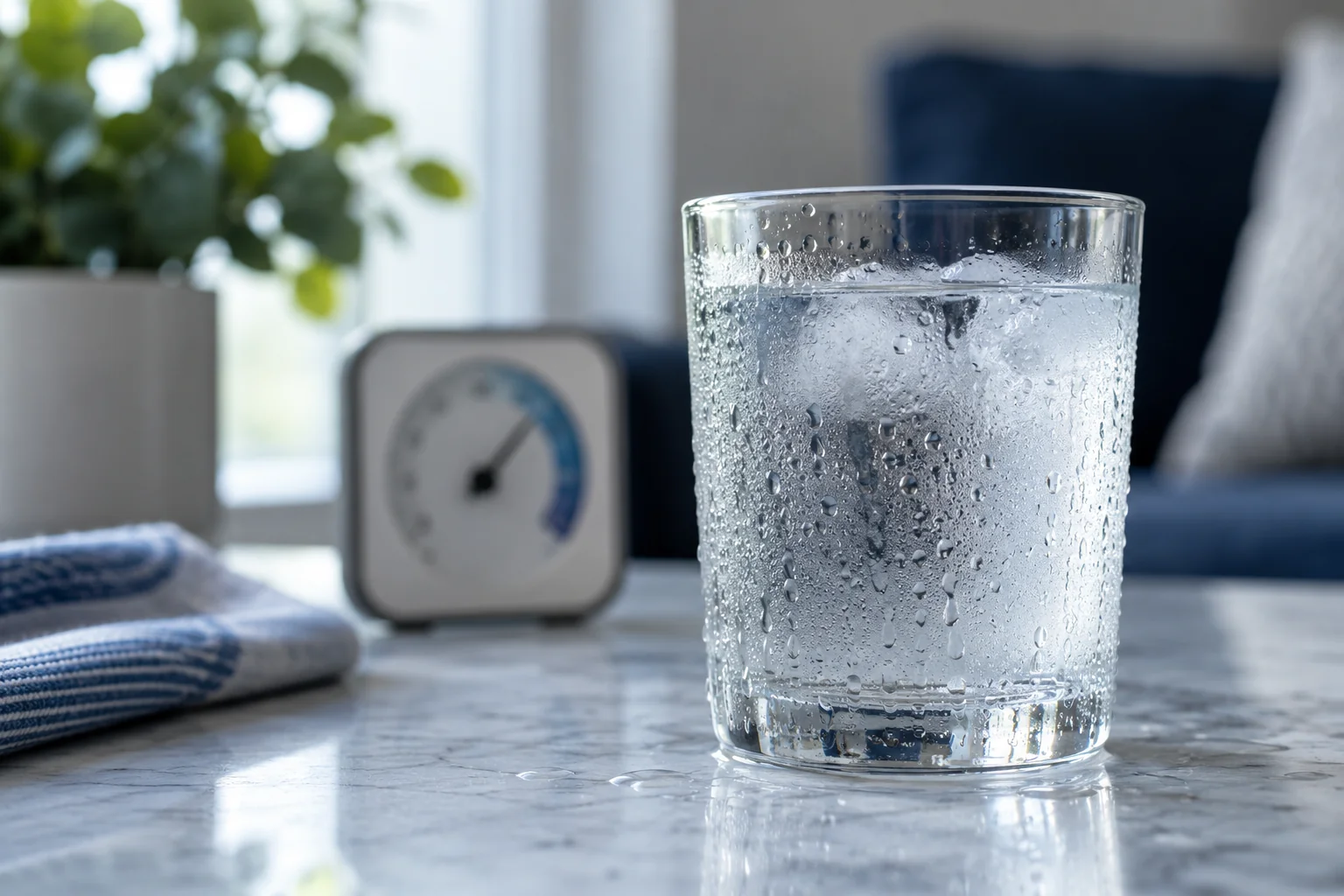
Condensation is not a mysterious defect—it is pure physics governed by psychrometrics. Air holds water vapor in quantities determined by its temperature: warm air can suspend substantially more water vapor than cold air.
The dew point is the temperature to which air must be cooled for water vapor to condense into liquid water. Whenever air contacts any building surface (such as window glass, copper cold-water pipes, uninsulated exterior corners, or concrete slabs) that is at or below the indoor dew point, moisture instantly changes state from vapor to liquid droplets. Resolving condensation requires either lowering indoor humidity (source extraction, ventilation, or dehumidification) or raising surface temperatures (insulation, thermal breaks, or improved room airflow).
Condensation diagnostic decision matrix
| Surface where water forms | Diagnostic check | Recommended comprehensive guide |
|---|---|---|
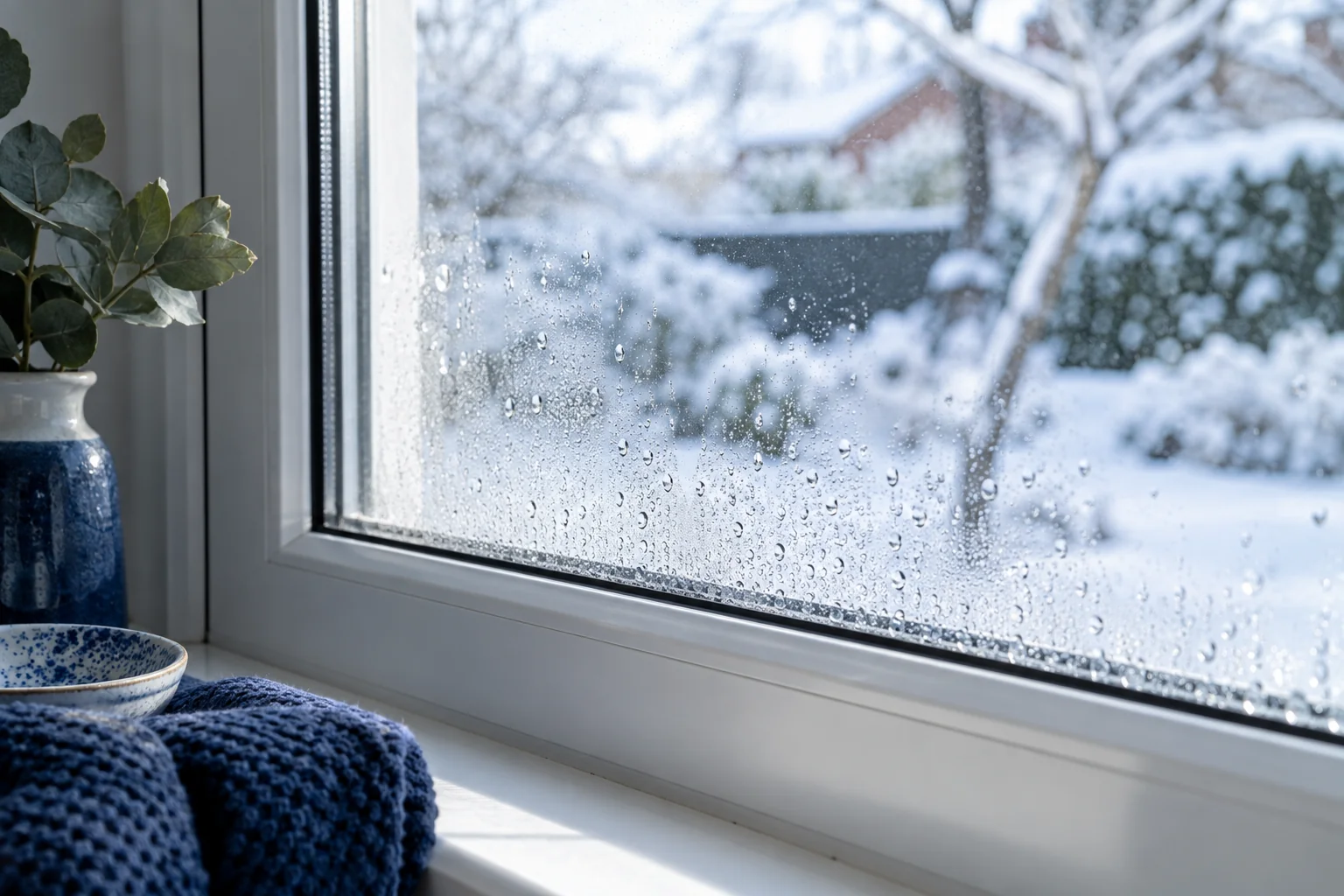
| Indoor glass surface of windows during winter | Indoor RH too high for cold outside glass temperature | Winter Window Condensation Guide → |
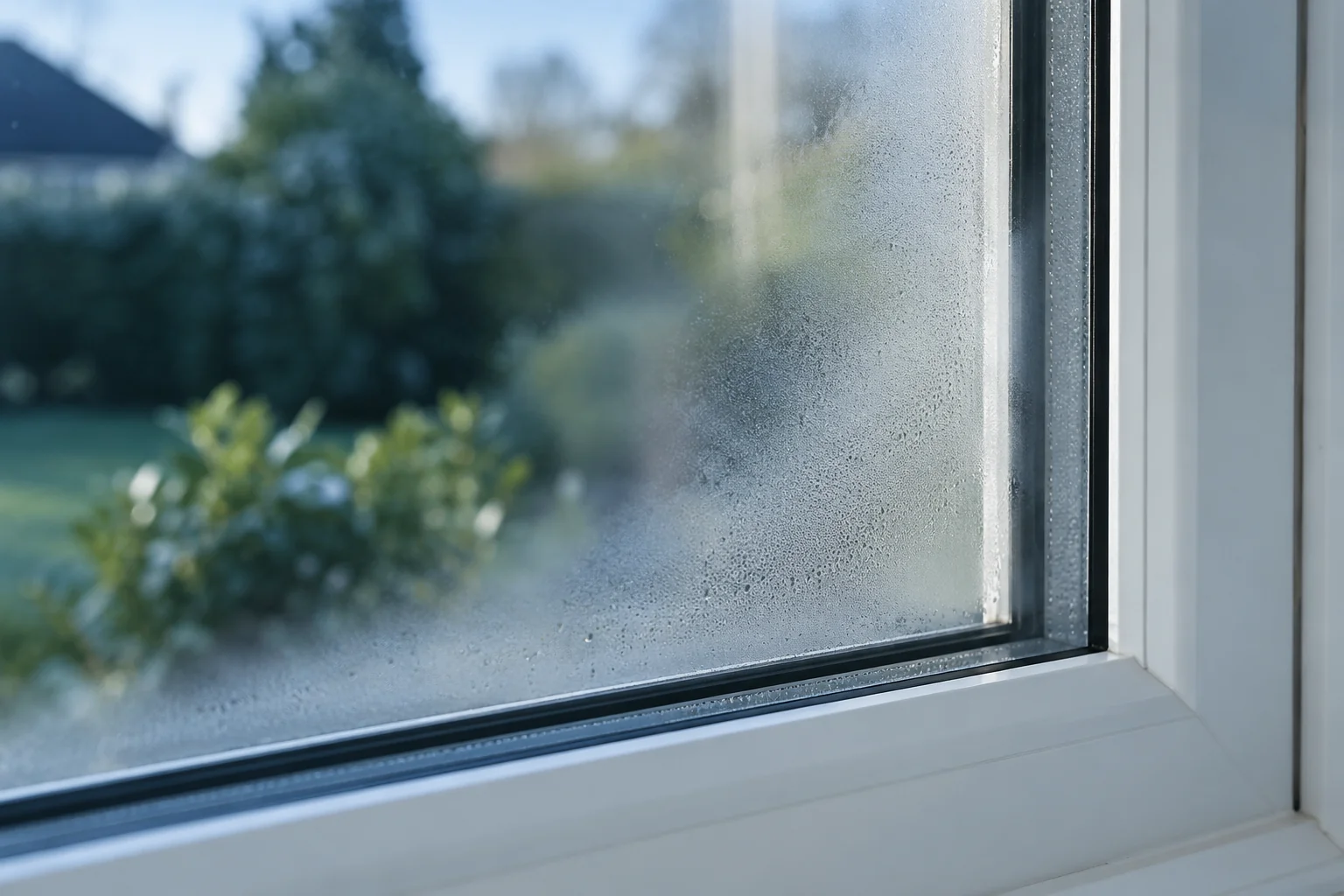
| Mist or droplets trapped between double panes | Glazing seal failure; inert gas leaked out, desiccant saturated | Condensation Between Panes Guide → |
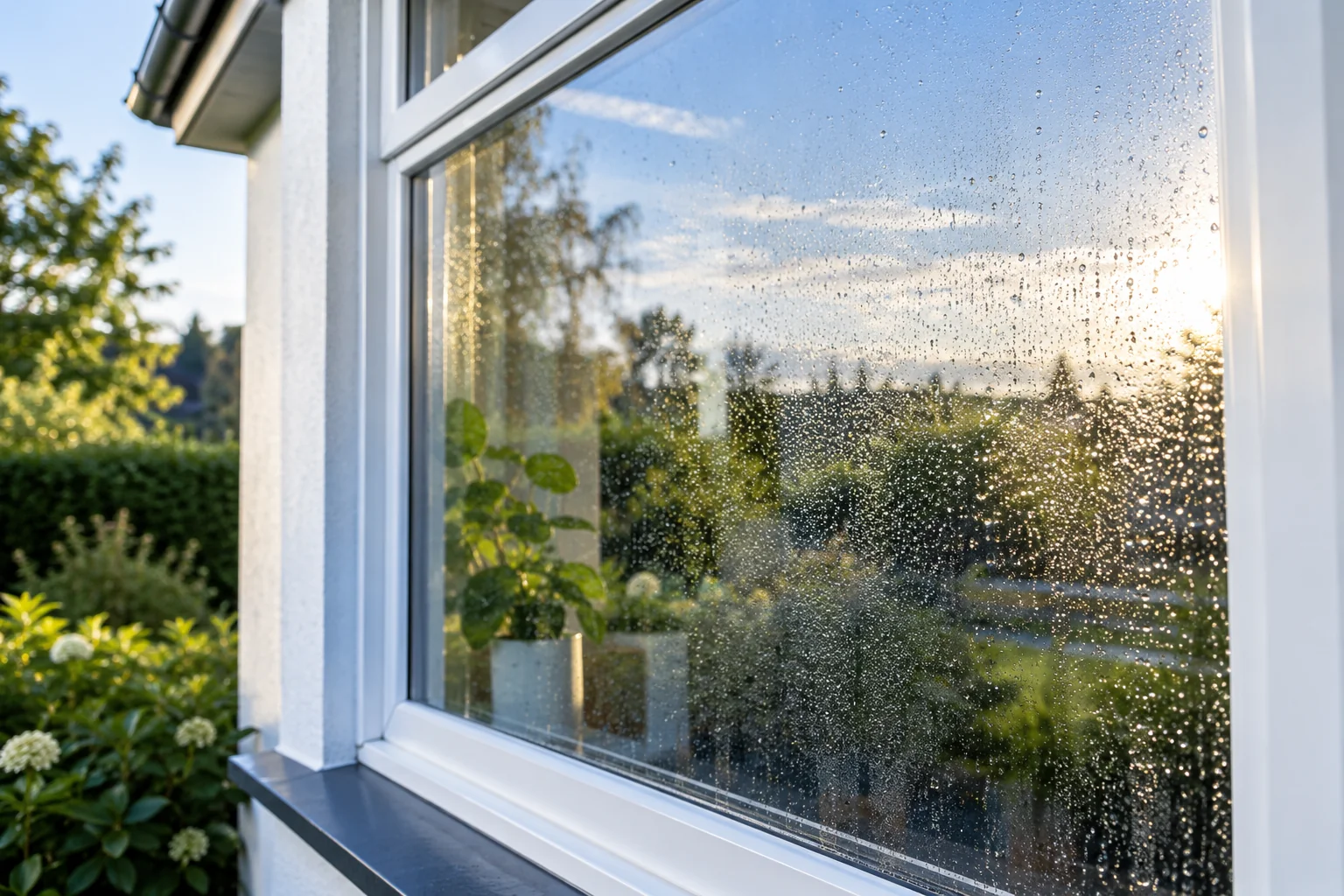
| Exterior glass surface in early morning | Radiation cooling on high-efficiency low-E glass (harmless) | Exterior Window Condensation → |
| Heavier window dampness behind closed drapes | Curtains trap cold air pocket while preventing room heat circulation | Condensation Behind Curtains → |
| Water beads along length of copper plumbing line | Cold incoming well or municipal water chilling pipe below dew point | Sweating Pipes vs Plumbing Leak → |
| Determining exact condensation risk temperature | Calculate dew point from air temperature and relative humidity | Homeowner’s Dew Point Guide → |