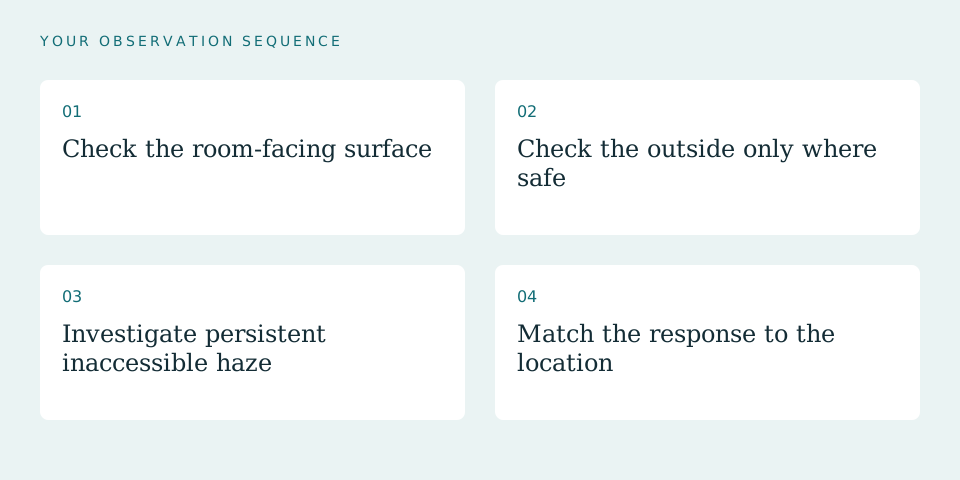
01Check the room-facing surface
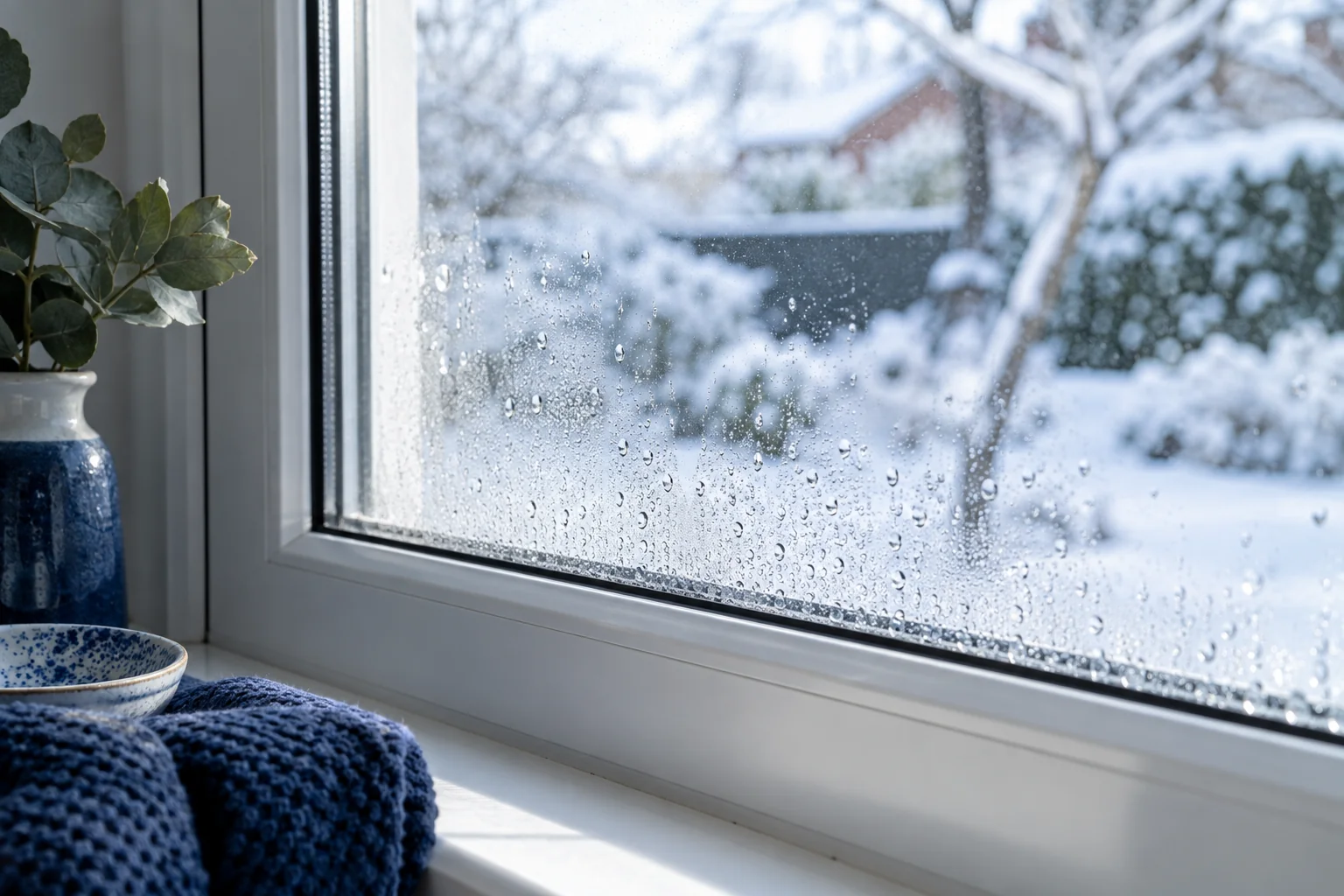
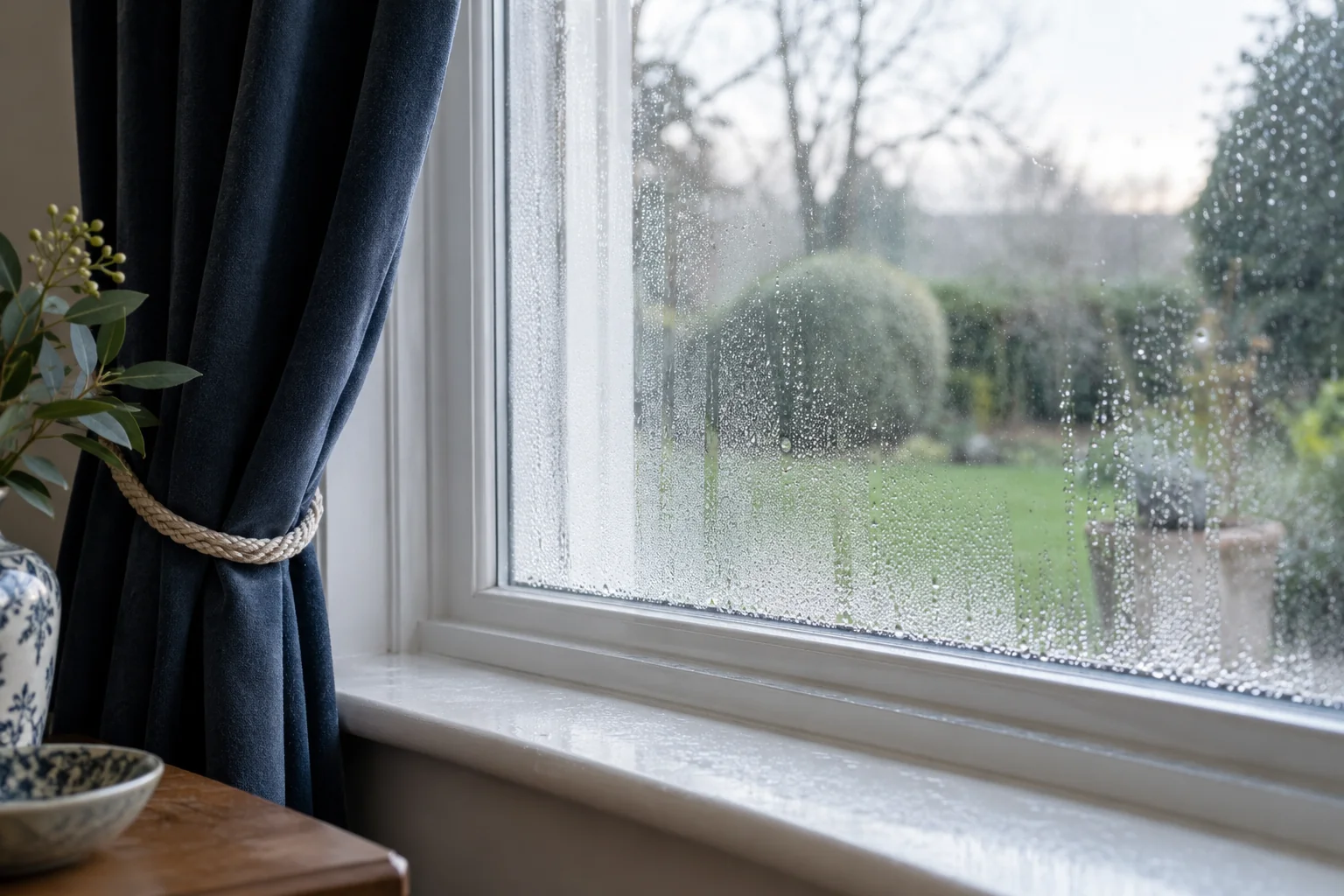
From inside, gently wipe a small accessible area with a suitable dry cloth. If it clears, the moisture was on the room side. Record whether curtains were closed and whether the water appeared overnight.
Do not scrape glass, remove glazing beads or use a ladder to complete a basic observation. Cleaning and access should follow the window manufacturer’s instructions.
02Check the outside only where safe
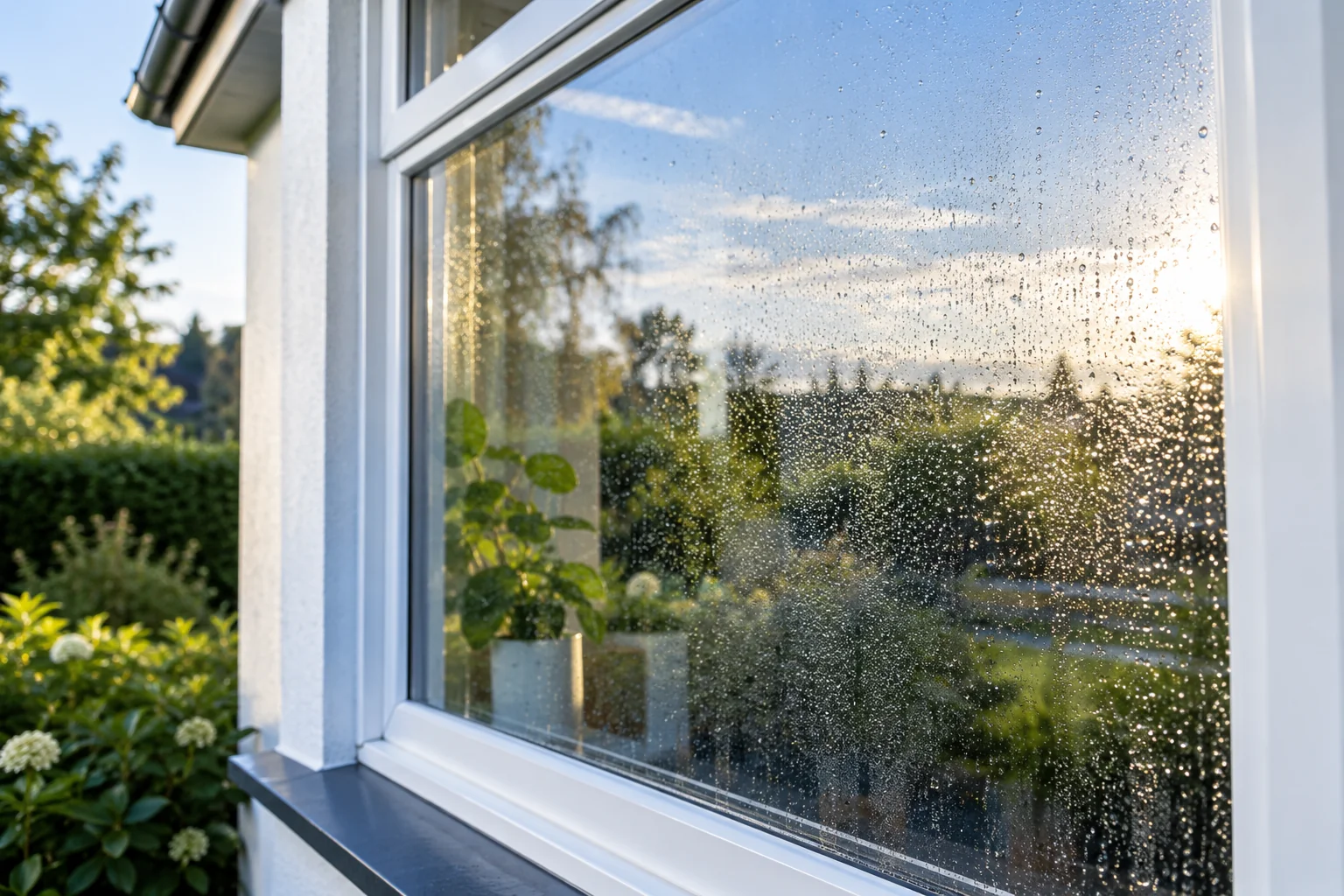
If the inside wipe changes nothing, look from a safe ground-level position. Outdoor moisture may change as weather and sunlight change. An inaccessible upper-floor window does not justify leaning out or climbing without appropriate equipment.
If neither accessible surface can be checked, record that uncertainty rather than labeling it a seal failure. Reflections, dirt and films can resemble fogging.
Related check: How to Stop Window Condensation in Winter →
03Investigate persistent inaccessible haze
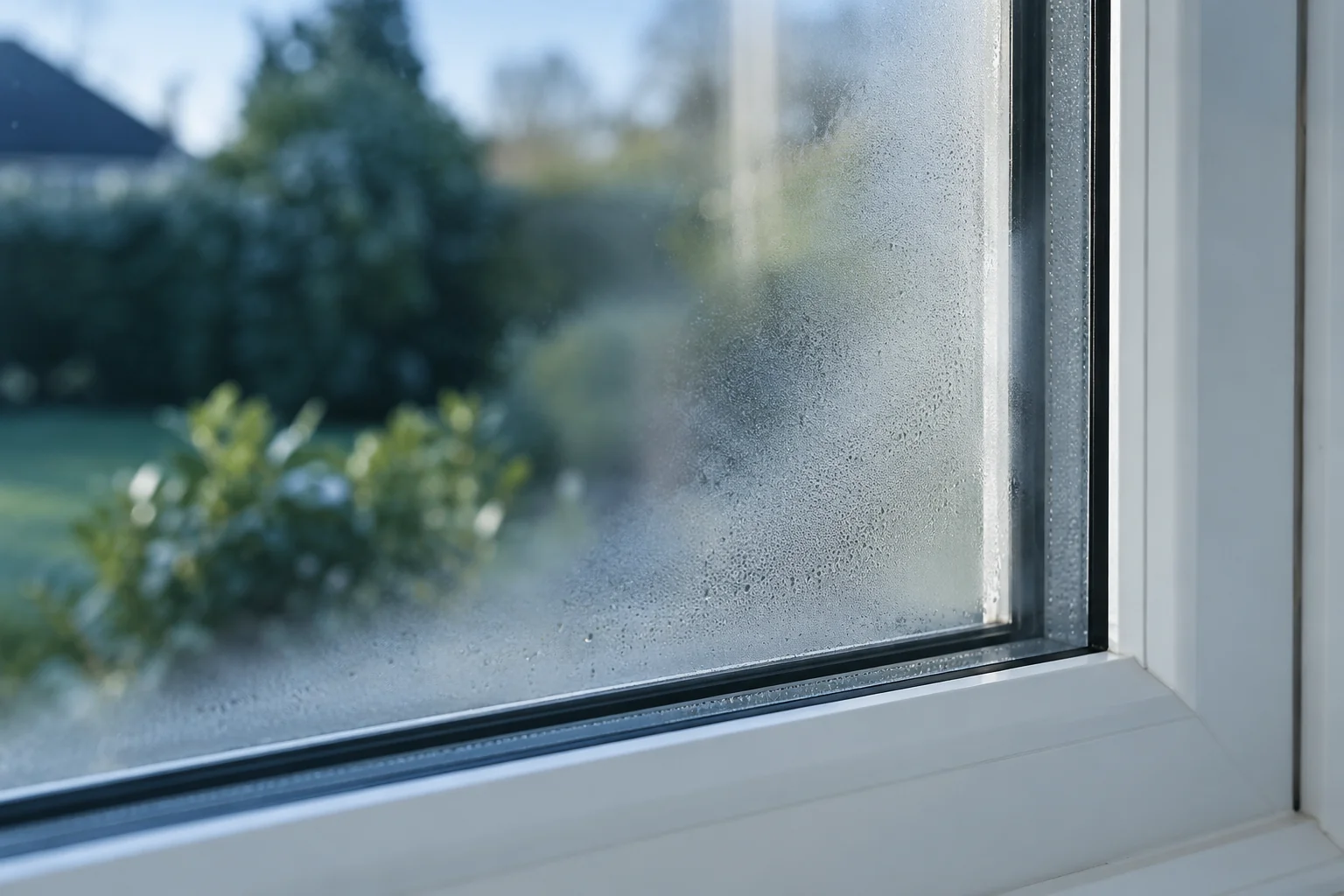
Moisture apparently inside an insulated glass unit warrants inspection by the manufacturer or a qualified glazing professional. Record the window identification, age if known and warranty documents. Do not promise yourself that reducing room humidity will clear moisture inside a sealed assembly.
Ask the professional to distinguish moisture from surface contamination and explain whether repair concerns the glass unit, sash or entire window.
04Match the response to the location
For room-side condensation, compare humidity and cold-surface conditions. For exterior dew, document the pattern before assuming the room is too humid. For suspected internal glazing moisture, seek a window-specific assessment.
Whichever surface is wet, protect nearby finishes from repeated water and investigate damage. The location test is a routing step, not a complete inspection.
At a glance: choose your next check
| Location | Useful next step |
|---|---|
| Room-facing glass | Check indoor moisture and cold-surface conditions. |
| Outdoor-facing glass | Compare outdoor weather and whether the pattern clears. |
| Apparently within glazing | Ask the manufacturer or a glazing professional to inspect. |
Use safe, accessible surfaces only. Inaccessible haze cannot be conclusively located with this check.
Sources & editorial method
The linked references support the underlying principles. The observation sequence and examples are original editorial guidance, not an inspection, product test or installation specification.
AI-assisted editorial content based on the linked references. Read our methods and review limitations.