01Record the pattern before cleaning
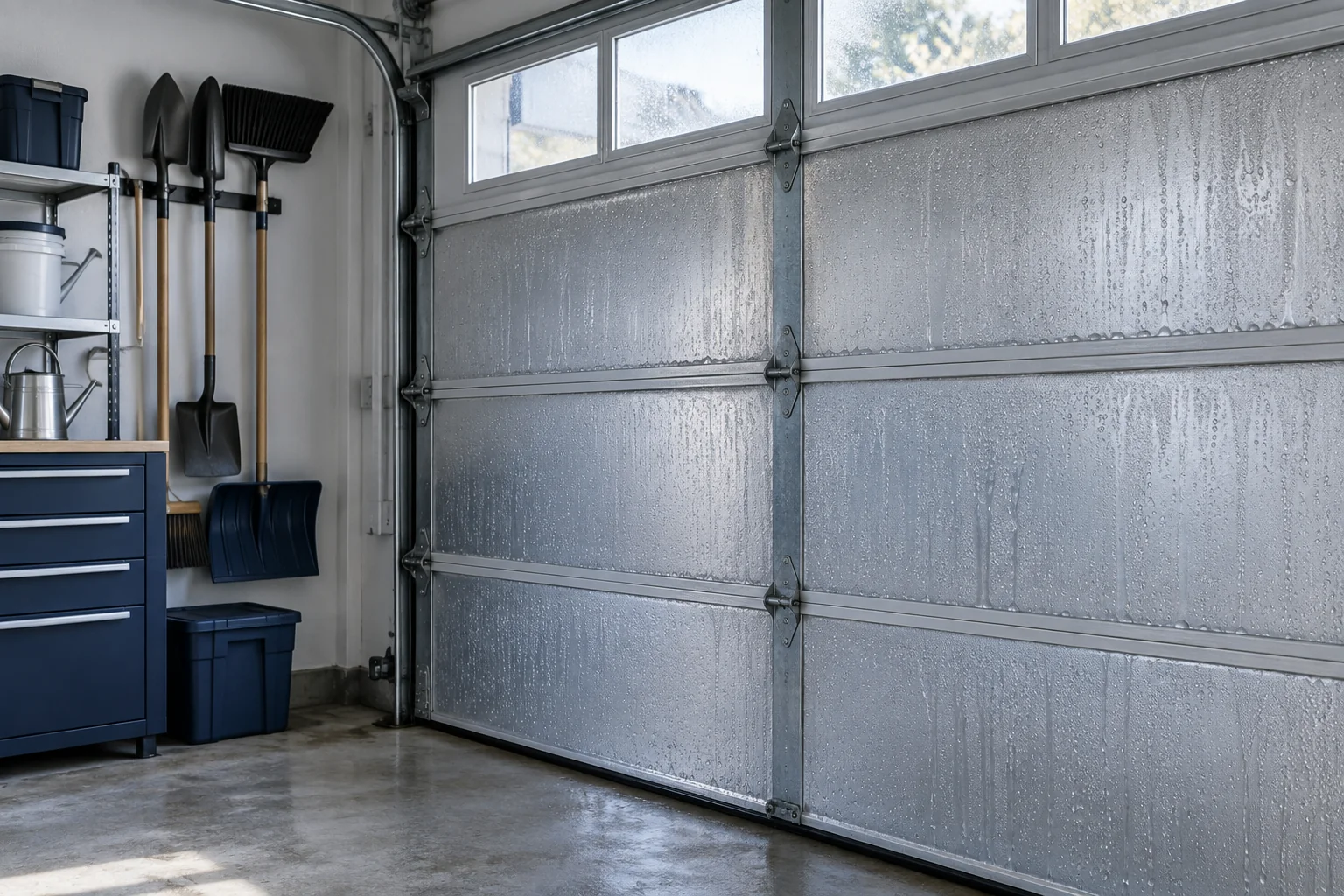
Photograph wet and dry areas from a safe position. Note whether dampness is widespread, follows cracks, appears at the door or sits beneath a parked vehicle. A vehicle can bring rainwater or snow into the garage.
Keep people away from slippery areas and electrical hazards. Do not run a vehicle to warm or dry an enclosed garage.
02Compare the event with changing weather
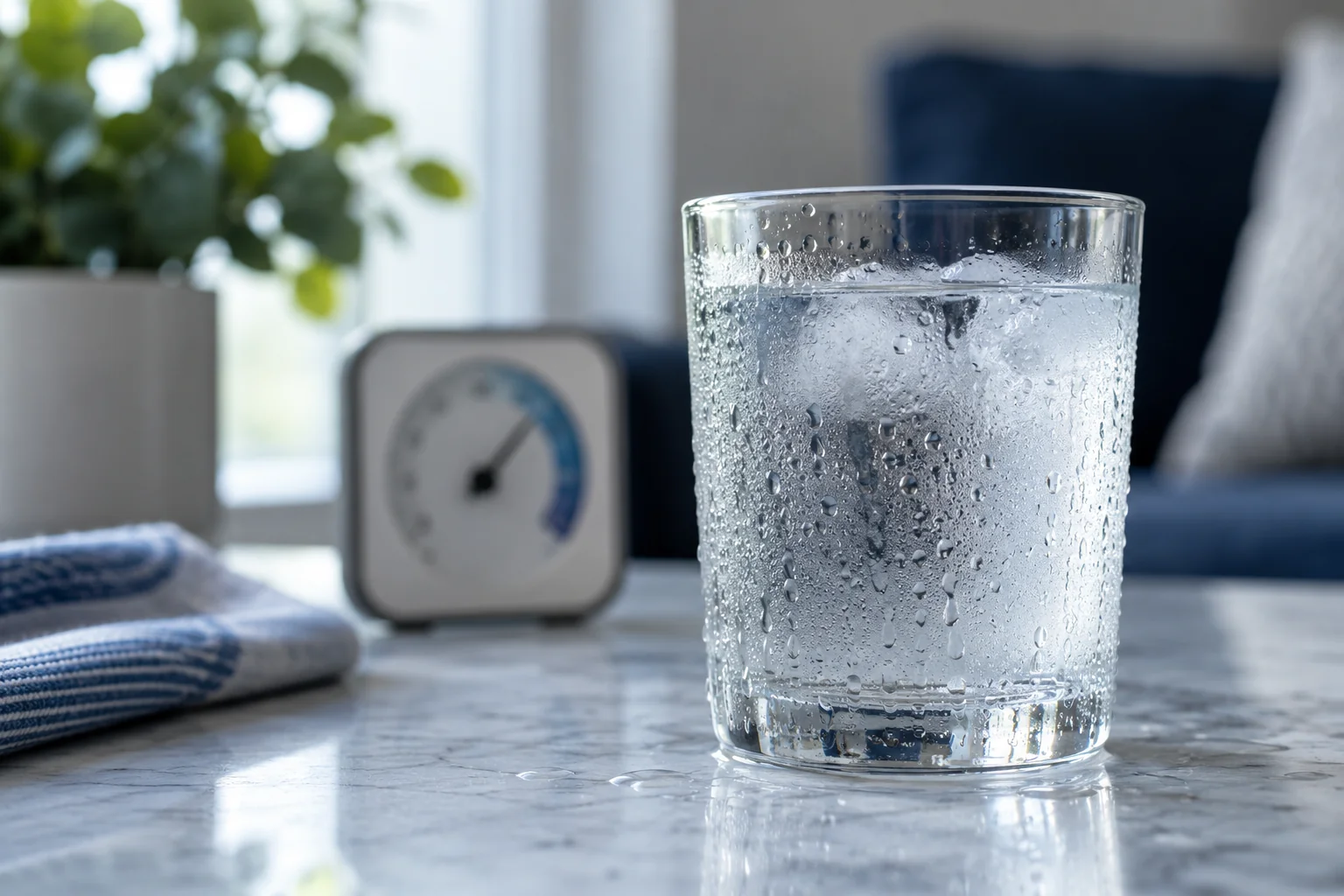
Did a warm humid period follow cool weather? Compare air dew point with a safely measured floor temperature. A slab below dew point supports condensation as a possibility.
If water follows rainfall and starts along a wall or door threshold, inspect drainage and entry routes from safe accessible positions. Both mechanisms can occur during the same event.
Related check: Garage Condensation: Causes, Checks, and Practical Fixes →
03Avoid interpreting one patch test as proof
A temporary covering changes local evaporation and temperature. Moisture around it does not, on its own, establish a complete slab diagnosis or coating specification. For flooring work, use the testing method required by the product and qualified installer.
Do not buy a coating to conceal recurring wetness before its source and substrate requirements are understood.
04Choose the next inspection
For possible condensation, log air and surface conditions through another similar weather change. For suspected water entry, document the route and arrange drainage or building assessment.
If wetness persists or stored items are being damaged, bring the record to a qualified professional. A fan may change drying speed but does not resolve every source of floor moisture.
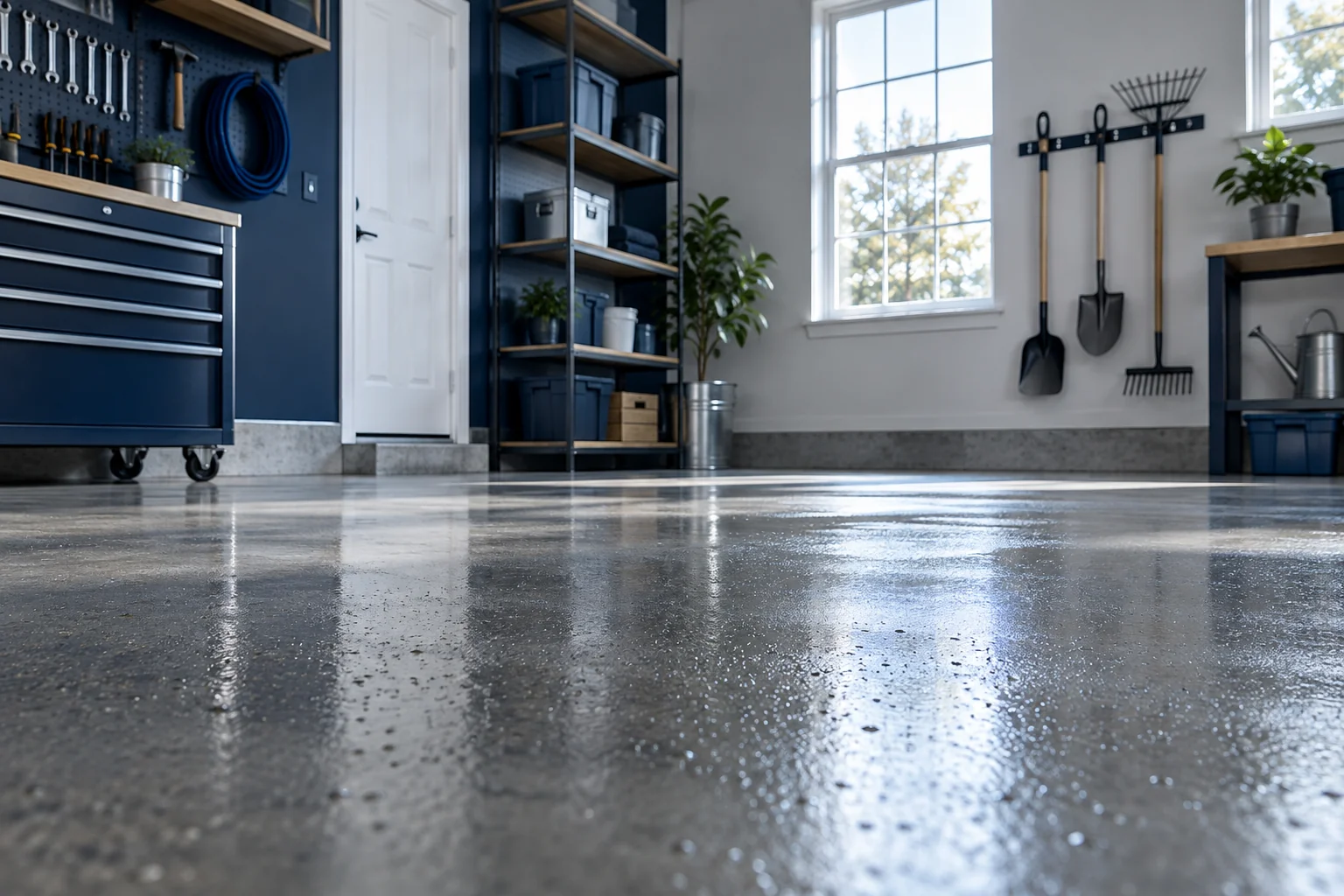
The slab looks wet during a humid warm-up
Illustrative situation · not a case report
Map whether the film is widespread or follows a localized path from a doorway or crack. Compare the safely measured slab surface with air dew point while wetness is appearing. A dew-point match supports condensation but does not exclude moisture below the slab.
What to do with the observation
Do not select a coating solely from an informal observation. Persistent or unexplained slab wetness may require appropriate testing before flooring or coatings are specified.
At a glance: choose your next check
| Pattern | Next comparison |
|---|---|
| Broad wetness after warm humid air arrives | Air dew point versus safely measured slab temperature. |
| Water near the door during rain | Threshold and exterior water path. |
| Water beneath a parked car | Rain, snow or vehicle-related liquid; identify before handling. |
A condensation explanation does not rule out water entry.

Check the pattern before selecting a coating
Condensation is plausible when warm humid air meets a cooler slab, especially during a weather change. Moisture from below or from rain entering at the door can create a similar-looking surface. Note the weather, the first area to get wet, the location of any puddles, and whether the problem occurs near joints and wall edges.
A temporary plastic-sheet check is only a clue, not a complete flooring specification. Before applying a sealer or coating, follow the product’s required moisture-testing method and consult a qualified installer if readings or water entry are uncertain. A penetrating treatment does not repair a groundwater problem, and a dehumidifier will not stop bulk water from crossing a threshold.
Sources & editorial method
- National Weather Service: Humidity and dew point ↗
- American Concrete Institute (ACI) 302.2R: Guide for Concrete Slabs that Receive Moisture-Sensitive Flooring Materials ↗
- ASTM International: ASTM D4263 Standard Test Method for Indicating Moisture in Concrete by Plastic Sheet Method ↗
The linked references support the underlying principles. The observation sequence and examples are original editorial guidance, not an inspection, product test or installation specification.
Published by Dry Home Logic. Read our editorial policy.