The science of relative humidity measurement
A single instantaneous humidity reading is rarely enough to diagnose a home moisture problem. Relative humidity (RH) is intimately coupled with temperature: as air temperature drops, its relative humidity automatically rises even if the actual quantity of water vapor in the room remains completely unchanged.
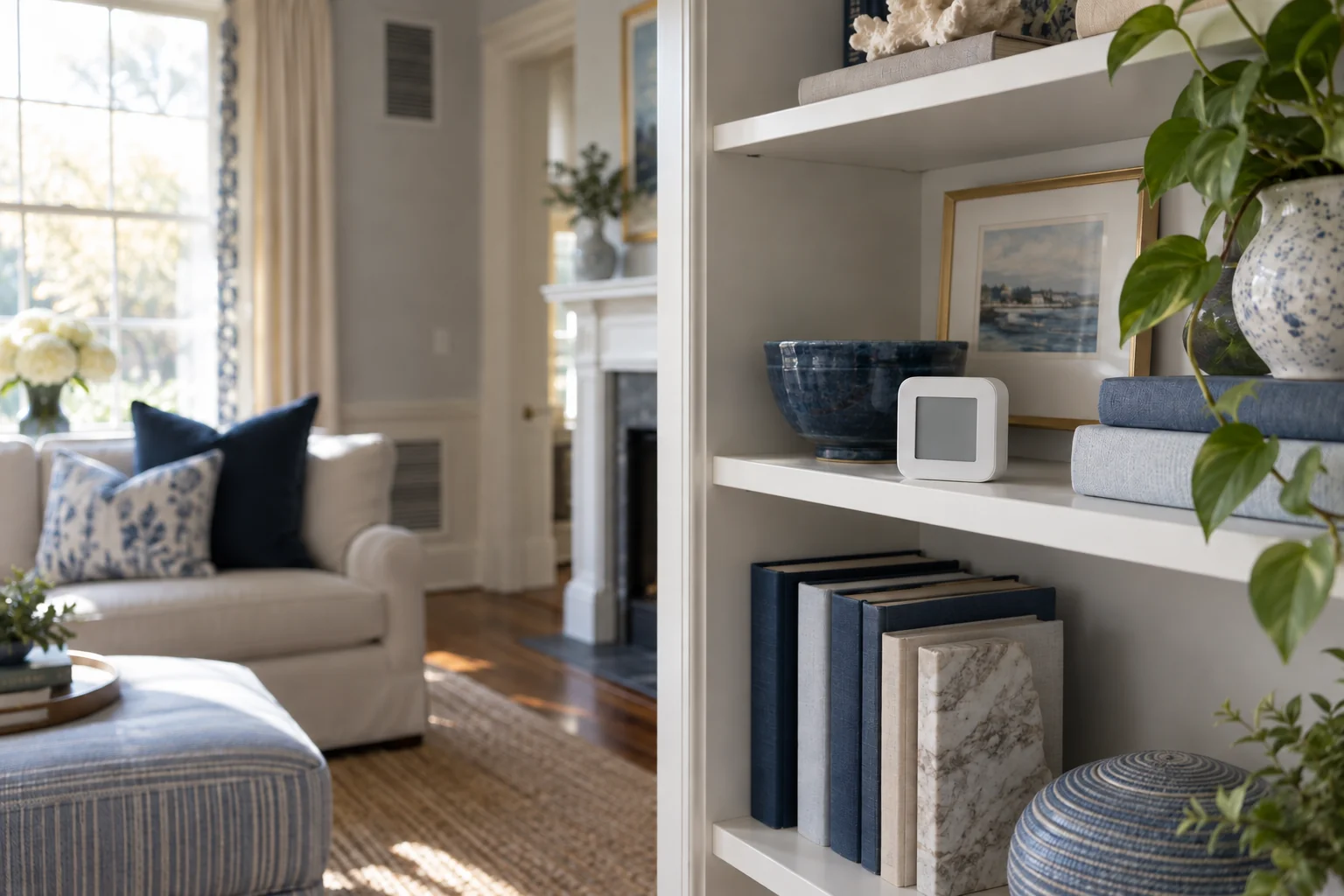
Standard consumer digital hygrometers utilize thin-film capacitive sensors with typical factory tolerances of ±3% to ±5% RH. Placing a sensor on an uninsulated exterior wall, on a window sill, directly beside a concrete floor, or within the draft of an HVAC supply register will produce localized microclimate distortions of 10% to 20% RH. To achieve actionable data, hygrometers must be placed at breathing zone height (4 to 5 feet above the floor) on interior partition walls away from direct thermal influences, and tracked over a multi-day observation window.
Humidity monitoring decision matrix
| Measurement challenge | Best diagnostic practice | Recommended guide |
|---|---|---|
| Where to place sensors for reliable basement and room readings | Interior partition shelf, 4–5 ft high, away from dehumidifiers and vents | Hygrometer Placement Guide → |
| Differentiating persistent chronic moisture from brief weather spikes | Record AM and PM readings alongside outdoor rainfall and ventilation | Seven-Day Humidity Log Workflow → |
| Comparing multiple digital hygrometers that disagree by 5–8% | Perform a 75% RH salt calibration test to establish sensor offset | Sensor Calibration & Placement → |
| Logging daily readings with an easy printable worksheet | Use our standardized blank 7-day observation template | Printable Observation Sheet → |